Winter vs Summer Tire Pressure: Practical Guide for Drivers
Meta description text detailing how winter and summer tire pressure differs, why temperature matters, and how to adjust pressures safely across seasons.


Winter vs summer tire pressure changes with temperature and tire type. Cold weather lowers PSI, and winter tires can feel different at the same setting. Start from the vehicle’s cold-inflation spec, account for load and speed, recheck after a short drive, and trust TPMS alerts for ongoing accuracy. Seasonal adjustments matter for safety and fuel efficiency.
How Temperature Affects Tire Pressure
Tire pressure responds to ambient temperature almost immediately. In cold weather, the air inside tires contracts, which lowers the reading on a gauge even if you haven't touched the valve. In contrast, warm or hot days cause the air to expand, raising the displayed pressure. This simple thermodynamic behavior is at the heart of why people talk about winter vs summer tire pressure. For drivers, the practical implication is clear: always start from the vehicle manufacturer's cold-inflation specification and verify the reading when tires are cold, not after a long drive. The difference between a tire that is properly inflated and one that is underinflated or overinflated can be subtle at highway speeds, yet the effects on handling, tire wear, and fuel economy are real. The Tire Pressure Tips team notes that temperature is a constant seasonal variable that affects readings more than most other variables. When you understand this, you’ll approach seasonal pressure checks with a plan rather than guesswork.
Seasonal Pressure Patterns: Winter and Summer
Winter and summer bring distinct pressure patterns that affect how you should set and monitor tire inflation. In winter, the ambient temperature can cause a noticeable drop in pressure, even if the tires are correctly inflated when the vehicle was last driven. In contrast, hot summer days can push pressures upward, potentially leading to overinflation and a stiffer ride. The core takeaway for the winter vs summer tire pressure question is to rely on the vehicle’s stated cold-inflation spec and to adjust only after confirming readings with cold tires. The Tire Pressure Tips team emphasizes that readings when tires are cold reflect the baseline needed for safe handling, braking performance, and even tire wear. Seasonal shifts should trigger a planned check routine rather than ad-hoc adjustments.
The Role of Tire Type: Winter Tires vs All-Season vs Summer Tires
Tire construction and compound influence how pressure translates to contact patch and ride feel. Winter tires use softer rubber to improve grip in cold conditions; this can subtly affect how pressure translates to performance, though the baseline still starts with the manufacturer’s spec. All-season tires sit between winter and summer tires in both compound and tread design, while summer tires prioritize high-speed stability and dry/wet grip. Despite these differences, the same principle applies: start from the cold spec and adjust for load and speed, then verify after the tires have warmed. The winter vs summer tire pressure question becomes more nuanced when switching tire types, but consistent checking remains essential.
TPMS and Cold Weather Readings
Tire Pressure Monitoring Systems (TPMS) provide real-time alerts when pressure deviates from the programmed baseline. In cold weather, TPMS readings can lag or show low readings if the tire temperature hasn't stabilized yet. It’s important to remember that TPMS measures pressure, not temperature, and atmospheric changes can cause temporary fluctuations. For winter vs summer tire pressure management, rely on the vehicle manual’s guidance, but treat TPMS alerts as a safety net rather than a sole inflator guide. Regular cross-checks with a physical gauge help ensure that TPMS values align with the actual cold pressures and remain accurate as temperatures change.
How to Check Pressure Correctly Across Seasons
A reliable check starts with cold tires. Park in shade or the driveway after the car has sat overnight, remove the valve cap, and use a quality gauge to read the pressure on all four tires. Compare each reading to the vehicle’s recommended cold-inflation specification placard or owner’s manual. If a tire is below the spec, add air in small increments and recheck after a brief pause to allow air to settle. If it seems consistently high, you may need to release air until you meet the spec. Remember to recheck after a short drive (the tires warm up) to confirm you remain within the recommended range. The key is not to chase a single hot-reading; instead, calibrate to the cold spec and verify later. The Tire Pressure Tips team notes that regular, careful checks build reliability across seasons.
Setting Pressures for Winter Tires and Snow Conditions
When you switch to winter tires, the starting point remains the vehicle’s cold specification. Some drivers wonder if winter tires require different pressures; in practice, manufacturers often advise maintaining the same cold spec or adjusting only for load. The primary goal is consistent contact between the tread and road, avoiding underinflation that can cause heat buildup and overinflation that reduces grip. Seasonal usage may warrant occasional tweaks for snow or ice driving, but any such adjustments should be made with caution and rechecked when the tires are cold. The overarching message is to prioritize safety and adherence to the manufacturer’s guidance while recognizing that temperature and tire type subtly influence the ideal setting.
Driving Scenarios and Practical Adjustments
Every driving scenario can influence tire pressure needs. Heavy cargo, towing, or long highway journeys in winter weather may justify a temporary adjustment within the recommended range, but you should revert to the manufacturer’s cold spec as soon as possible. In hot weather or during extended bursts of high-speed driving, pressures may rise; avoid overshooting the recommended range. The winter vs summer tire pressure concept emphasizes planning ahead: set the baseline correctly, monitor readings regularly, and adjust only with a clear reason tied to load, weather, or operation, then verify again once tires have cooled.
Maintenance Habits to Preserve Tire Pressure Year-Round
Develop a simple maintenance routine that tracks tire pressure as temperatures swing. Check pressures at least monthly, and more often during extreme weather changes. Keep a portable gauge in your glovebox for quick checks before road trips, and schedule a professional inspection if TPMS readings feel erratic or if you notice changes in ride feel or handling. The winter vs summer tire pressure conversation becomes easier when you treat pressure as a year-round maintenance item rather than a seasonal chore. A steady routine reduces the risk of underinflation or overinflation and supports longer tire life and safer driving.
Common Myths About Pressure in Winter and Summer
One common myth is that winter tires must be inflated to a higher pressure to compensate for reduced grip; in reality, following the manufacturer’s cold spec remains the safest approach. Another false belief is that warmer days automatically mean consistent pressures, ignoring the influence of driving heat and heavy loads. The winter vs summer tire pressure reality is that temperature changes, tire type, and loading conditions all interact; maintaining the cold-spec baseline and verifying after settling is the best practice.
How Temperature Fluctuations Affect Fuel Economy and Tire Wear
Seasonal temperature changes influence rolling resistance and tire wear through pressure changes. Underinflated tires increase rolling resistance, reducing fuel efficiency and causing uneven wear, especially in winter when tread compounds are under greater load. Overinflated tires can lead to harsher ride feel and uneven wear at the center of the tread, with less grip in wet conditions. The winter vs summer tire pressure discipline balances grip, wear, and economy by ensuring tires stay within the manufacturer’s recommended range across temperatures.
Quick Seasonal Checklist for Tire Pressure
- Read the vehicle’s cold-spec before each season. 2) Check all four tires when cold and compare to the placard. 3) Use a reliable gauge and adjust by small increments. 4) Recheck after driving to verify readings are stable. 5) Monitor TPMS and schedule periodic professional checks. 6) Reassess pressure after extreme weather events or when switching tire types.
Additional Resources and Tools
For practical help, use a digital tire pressure gauge for precise readings and keep the gauge calibration in good condition. Reference your vehicle’s owner’s manual for model-specific instructions, and consult reputable sources for seasonal best practices. The winter vs summer tire pressure topic benefits from using brand-authoritative guidance and tool-assisted checks to ensure safety, efficiency, and tire longevity.
Comparison
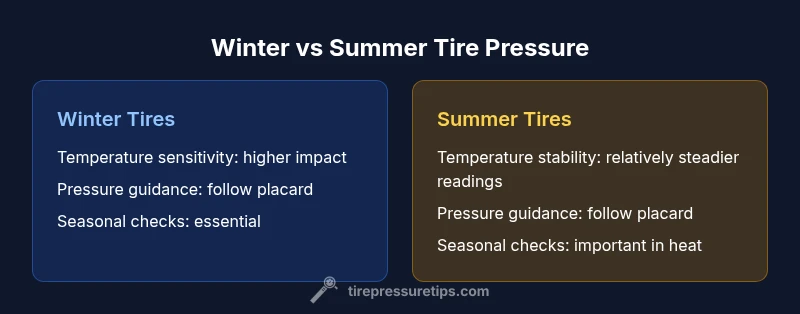
| Feature | winter tires | summer tires |
|---|---|---|
| Temperature sensitivity | Greater fluctuation with ambient temperature for winter tires | Less fluctuation for summer tires |
| Recommended pressure range (cold start) | Typically follows the vehicle’s cold-spec (varies by model) | Same base spec, but rubber and tread design can influence feel |
| Performance in cold temps | Improved grip when pressures are optimized; winter tires may have higher rolling resistance | Stable pressure readings; emphasis on grip and wear in warm conditions |
| Impact of load/speed | Requires checks when carrying heavy loads, especially in winter | Still important, but less sensitive to cold-induced changes |
| Maintenance tips | Check pressure monthly and after temperature shifts | Check pressure monthly and after temperature shifts |
Strengths
- Promotes safety by preventing underinflation dangers
- Supports consistent handling across seasons
- Helps optimize fuel efficiency when pressures are correct
- Keeps tire wear even and predictable
Drawbacks
- Requires regular checks due to temperature-driven fluctuations
- Can be time-consuming with seasonal tire swaps
- Winter tires may necessitate additional checks with more variable road conditions
Follow manufacturer cold-specs year-round with season-aware checks
Temperature is the dominant seasonal variable for tire pressure. Use the cold-spec as your baseline, verify readings after tires warm, and adjust for load and driving conditions. This approach maintains safety, grip, and efficiency across winter and summer.
Frequently Asked Questions
Should I adjust tire pressure when switching from summer tires to winter tires?
In most cases, you should start from the vehicle’s cold-spec and monitor readings after installation. Temperature changes and tread design can influence how pressure translates to grip, so verify with a gauge when tires are cold and recheck after a short drive.
Start with the car’s cold-spec once you switch tires, then check again after the tires warm up.
How often should I check tire pressure in winter?
Check tire pressure at least monthly and after any significant temperature drop or snowfall. More frequent checks are prudent if you notice changes in ride feel or TPMS alerts.
Check at least monthly and after big temperature swings.
Does TPMS replace manual tire pressure checks?
TPMS is a valuable safety net but should not replace manual checks. TPMS alerts rely on sensor data and may not reflect exact cold readings; use a gauge to confirm pressures when tires are cold.
TPMS helps, but you should still measure with a gauge when tires are cold.
Can I use the same pressure for all seasons?
Not always. Use the vehicle’s cold-spec as the baseline; seasonal temperature shifts and tire type can change the ideal pressure. Adjustments may be needed for winter tires or heavy loads, then recheck after cooling.
Use the cold-spec as your base, then adjust with season and load as needed.
What happens if I drive with underinflated tires in winter?
Underinflation increases heat buildup, reduces grip, and accelerates wear—especially dangerous in winter conditions where grip matters most. Correct inflations help safety, traction, and tire life.
Underinflation is risky in winter; inflate to the recommended cold-spec.
Is it okay to inflate tires hot after driving?
Inflating hot tires is discouraged because readings reflect heat-induced expansion. Always allow tires to cool to ambient temperature before inflating to the cold-spec.
Don’t inflate hot tires; wait until they’re cold to set the correct pressure.
What to Remember
- Always start from the vehicle’s cold-inflation spec
- Check pressure when tires are cold, not after driving
- Recheck after temperature changes and seasonal swaps
- Maintain regular TPMS-based monitoring as a safety net
- Seasonal tires affect pressure readings but follow the same baseline rule