Cold Tire Pressure vs Summer: Understanding Temperature Effects on Tire Pressure
Learn how cold tire pressure vs summer heat affect PSI readings, tire wear, safety, and fuel economy. This analytical guide covers measurement timing, TPMS interplay, and best practices to maintain optimal tire pressure across seasons.


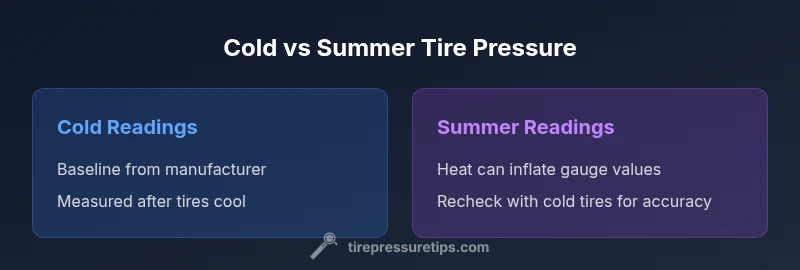
In cold weather, tire pressure sits at baseline; as temperatures rise, air expands and tire pressure increases. The key to accurate readings is to check tires when they are cold and compare to the vehicle’s recommended cold PSI. In summer heat, hot tires can overstate pressure on a gauge, so verify with a cold start and follow TPMS alerts for safety.
Temperature and Tire Pressure Basics
Tire pressure is not a fixed number; it shifts with ambient temperature. The phrase cold tire pressure vs summer captures a core truth: when tires are cold, the air inside is at or near the baseline pressure, and as the environment warms, air expands and pressure rises. This relationship is why manufacturers specify a recommended cold PSI rather than a hot reading. For drivers, this means that the same tire can appear inflated when measured in heat, while the same vehicle may require a different target when temperatures are cooler. According to Tire Pressure Tips, temperature fluctuations are among the most common reasons readers struggle with consistent readings. This article uses the term cold tire pressure vs summer to anchor practical guidance. Always start from the vehicle’s listed cold pressure, and calibrate only after tires have cooled for several hours. By doing so, you align your readings with the manufacturer’s intent and reduce safety risks across seasons.
How Temperature Affects Tire Pressure Readings
Temperature changes influence tire pressure through air expansion and contraction. When the air inside a tire warms, it expands and increases the pressure measured by gauges. Conversely, cooling causes the air to contract and pressure to drop. This isn’t just a theoretical concept: it explains why a tire that seems underinflated in cold weather can appear overinflated after a long drive in the heat. Tire Pressure Tips Analysis, 2026 notes that even modest temperature shifts can create noticeable deviations from baseline readings. The practical implication is simple: use cold readings for baseline targets and treat any hot-reading as a potential indicator, not a final adjustment. The goal is consistency—measure under controlled conditions and avoid reacting to heat-driven fluctuations in real-world driving.
Measuring Correctly: Cold Readings vs Warm Readings
To measure correctly, always check tire pressure when the tires are cold. This usually means the car has been parked for at least three hours and not exposed to direct sun or recent driving. Remove the valve cap, press the gauge onto the valve stem, and compare the reading to the vehicle’s cold PSI specification. If you must check after a drive, let the tires cool down before making adjustments; otherwise you may overinflate to compensate for heat buildup. A practical rule is to set your target pressure based on the cold reading, then re-check in the morning or after a long cooling period. Document and compare cold vs hot readings over time to understand how your local climate affects your tires—this is the core idea behind the cold tire pressure vs summer discussion. Tire Pressure Tips emphasizes that habit builds reliability.
Seasonal Variations: Summer Heat and Tire Pressure
Summer brings heat, humidity, and longer driving periods, often amplifying pressure readings on gauges. The perceived ease of reading can tempt people to adjust based on a hot measurement, which can cause overinflation and erratic handling. In high-temperature days, a tire that reads at the upper end of the target range on the gauge may actually be within spec when cold. The opposite can occur on cool mornings—the gauge may show a lower reading than expected. The main takeaway is to base adjustments on cold readings and use hot readings only as a sign to recheck after cooling. This advice aligns with best practices outlined by Tire Pressure Tips for seasonal transitions. By acknowledging the cold tire pressure vs summer dynamic, drivers can maintain consistent grip and tire wear.
Practical Scenarios: Daily Driving, Loads, and TPMS
Daily commuting often involves routine temperature swings, especially in regions with variable climate. When you add heavy loads or towing, the internal heat generated during operation can further influence tire pressure readings. Use a two-step approach: (1) set pressures to the cold specification, and (2) recheck after the tires have cooled following a driving cycle. TPMS provides a helpful alert if a pressure deviation occurs, but it is not a substitute for manual gauges. Tire Pressure Tips suggests using TPMS as a supplementary check and relying on cold readings for accurate baseline adjustments. In seasonal transitions, note how your readings drift and adjust your maintenance schedule accordingly. This disciplined approach helps preserve tire tread, improves fuel economy, and maintains predictable handling.
Maintenance Routine Across Seasons
A dependable maintenance routine accounts for weather-driven pressure changes and tire wear patterns. Begin each season by verifying the vehicle’s cold PSI specification and inspecting tires for wear, cracks, or damage that can influence pressure stability. Create a simple log: record the cold readings once a month and before long trips, especially after extended heat waves or cold snaps. This practice reduces the risk of underinflation or overinflation, both of which can affect braking performance and steering response. Tire Pressure Tips emphasizes consistency and documentation as keys to long-term performance, helping drivers translate the cold tire pressure vs summer concept into actionable maintenance routines.
Common Mistakes and How to Avoid Them
A frequent mistake is trusting a hot reading to set tire pressure, assuming the gauge will converge to a safe range when the tire cools. Another error is neglecting to recheck after ambient temperature shifts or after driving in heat. A third pitfall is failing to account for seasonal tires, which may behave differently under temperature changes. By avoiding these missteps and sticking to cold-read-based adjustments, you can ensure that your tires stay within the manufacturer’s recommended range. Tire Pressure Tips recommends building a simple seasonal checklist to ensure you never skip a cold-reading comparison.
Safety and Performance Implications
Temperature-driven pressure changes can influence grip, braking distance, and hydroplaning risk. Underinflated tires in cool weather may wear prematurely and heat up quickly if driven aggressively, while overinflated tires in hot weather can reduce traction, increase road noise, and create a harsher ride. The cold tire pressure vs summer concept helps explain why early-season checks matter and why drivers should rely on cold-based measurements for baseline adjustments. By aligning pressure with the recommended cold PSI and validating with TPMS, you maintain safer handling across a wide range of temperatures.
Step-by-Step Checklists
- Park in shade and allow tires to cool for at least three hours. 2) Remove valve caps and measure with a reliable gauge. 3) Compare to the vehicle’s cold PSI specification. 4) Adjust in small increments to stay within the recommended range. 5) Recheck after a cooling period and log the results for seasonal reference. 6) Use TPMS as a secondary check. Following these steps ensures that your cold tire pressure vs summer adjustments stay accurate over time.
Quick Reference: When to Check and How to Adjust
When temperatures shift dramatically, perform a targeted check: first, confirm your baseline by measuring cold; then account for the ambient temperature with a final confirmation after the tires have cooled. If you’re uncertain, consult the vehicle manual or a tire professional. The goal is to maintain a consistent baseline that aligns with the manufacturer’s guidance and supports safe handling in both cold and warm conditions.
Comparison
| Feature | Cold tire pressure readings | Summer/Hot-weather tire pressure readings |
|---|---|---|
| Temperature effect on PSI readings | Baseline when cold | Inflated by ambient heat |
| Measurement practice | Measure when cold for baseline | Avoid relying on hot readings; re-check after cooling |
| Safety implications | Underinflation risk in cold readings | Overinflation risk in hot readings |
| Maintenance approach | Regular checks before trips and after temp swings | Seasonal calibration following weather changes |
| Best use case | Frequent temperature swings regions | Stable climates with consistent checks |
Strengths
- Clear guidance on measurement timing and methods
- Supports safety and tire wear by maintaining correct pressure
- Helps improve fuel efficiency and handling when done consistently
- Reduces risk of unsafe readings due to temperature swings
Drawbacks
- Confusion between cold vs hot readings can lead to adjustment errors
- Requires regular checks, which may seem time-consuming
- TPMS readings can mislead if not cross-checked with a manual gauge
- Older tires or unusual tire designs may respond differently to temperature changes
Cold-based checks and awareness of temperature effects yield safer, more consistent tire pressure
A disciplined approach—measure cold, use the cold spec as the target, and verify with TPMS—offers the most reliable path through seasonal changes. This aligns with Tire Pressure Tips guidance and helps maintain predictable handling across temperatures.
Frequently Asked Questions
Why should I measure tire pressure when tires are cold?
Cold readings provide the baseline pressure specified by the manufacturer. Measuring after driving in heat or after exposure to sun can give a false sense of safety because the air inside has expanded. By starting from a cold reading, you ensure the tire pressure aligns with the vehicle’s intended operating range.
Measure when cold to get the right baseline for safety and performance.
How does summer heat affect tire pressure readings?
Heat expands air and raises tire pressure readings on gauges. This can make tires seem overinflated when they are hot, leading to unnecessary adjustments. Always confirm with a cold reading to keep your pressures within the recommended range.
Summer heat can make hot readings higher; recheck when cold.
Can TPMS replace manual tire pressure checks?
TPMS is a valuable warning tool but should not replace manual checks. TPMS can alert you to unsafe pressure changes, but it may not reflect precise PSI, especially during temperature swings. Use TPMS as a supplement to, not a substitute for, regular gauge checks.
TPMS helps, but you still need a gauge for accuracy.
What is the best practice for checking tire pressure across seasons?
Check pressure with cold tires, ideally at the same time of day in similar ambient conditions. Recheck after notable temperature shifts and before long trips. Maintain a simple seasonal log to track how readings drift with weather changes.
Check cold readings, recheck after temperature changes.
What should I do if my tires show different readings at different times of the day?
Variations are normal due to temperature changes. Rely on cold readings for setting targets and recheck after cooling. If large differences persist, inspect for leaks or damage and consider a professional check.
Normal daily changes happen; look for persistent anomalies.
What to Remember
- Check tires when cold before trips
- Temperature shifts alter psi readings
- Use TPMS alongside manual gauges
- Log seasonal changes for consistency