Temperature Change Tire Pressure: A Practical Guide
Discover how temperature changes affect tire pressure, why it matters for safety and fuel economy, and how to check and adjust your tires correctly through seasonal shifts.


You will learn how temperature changes affect tire pressure and how to check and adjust your tires safely. This quick guide summarizes why readings vary with heat and cold, when to measure, and how to inflate to the vehicle’s recommended PSI for reliable handling and tire longevity. Expect practical steps you can use right away.
What happens when temperature changes tire pressure
Air inside tires behaves like a gas: it expands when warm and contracts when cool. As a result, tire pressure tends to rise during operation as the tires heat from friction and braking, and drop when tires cool in cold weather. The magnitude of the change depends on tire size, pressure level, and how rapidly you drive, but it is a real, repeatable effect. This is why you’ll often notice that a tire read higher in the afternoon than in the early morning. Tire Pressure Tips emphasizes that temperature change is a predictable factor in tire maintenance, not a one-off anomaly. The practical takeaway: always check tire pressure when tires are cold and use the vehicle’s recommended PSI as your baseline.
How temperature affects tire pressure: the everyday impact
Understanding the physics helps you make sense of everyday observations. When tires heat up during driving, the air inside expands, raising the pressure on the gauge. Conversely, parking in shade or overnight cooling lowers the reading. The result is a day-to-day drift that can accumulate across a season. The Tire Pressure Tips team notes that these fluctuations are normal; the goal is consistency: keep your tires within the vehicle’s recommended range and recheck after temperature swings.
Seasonal considerations: winter, summer, and shoulder seasons
Seasonal temperature swings can cause noticeable changes in tire pressure. In cold months, the air inside tires is denser and pressure reads lower; in hot months, it reads higher due to expansion. Drivers often notice readings drift by a few psi as temperatures shift between morning and evening. To maintain even wear and responsive handling, plan a quick pressure check when temperatures shift significantly and always default to the door jamb sticker values.
Checking pressure: when and how to measure
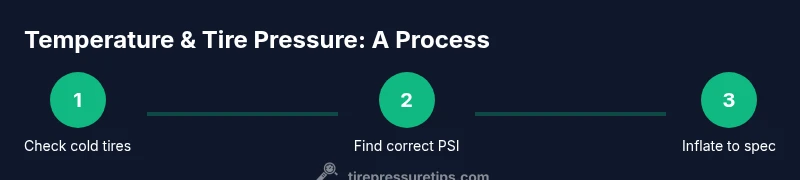
Check tire pressure when tires are cold, ideally before any driving or after the car has sat for several hours. Use a reliable gauge and compare the reading to the vehicle’s recommended PSI from the door jamb sticker or owner’s manual. If readings are too high or too low, adjust in small increments and recheck after a few minutes. Keep a small notebook or digital log to track changes over weeks and seasons. From a practical standpoint, consistency matters more than chasing an exact number at every moment.
How to adjust to the vehicle's recommended PSI
Your car’s recommended PSI is the target for both front and rear tires. Start by verifying the exact numbers in your owner’s manual or the door jamb sticker, noting any front/rear differences. Inflate or deflate in small steps, then recheck with the gauge after the tires have cooled. If you must inflate at a gas station, do so slowly and verify the final reading again after you’ve parked for a few minutes. Consistency matters, so use the same gauge for all measurements.
Common mistakes and safety warnings
Common mistakes include inflating while the tires are hot, using the wrong gauge, and ignoring the door-jamb specifications. A frequent hazard is overinflating to meet an artificial target, which can reduce traction and cause uneven wear. Never exceed the tire’s maximum inflation printed on the sidewall. If a tire consistently reads low, inspect for leaks, punctures, or valve stem issues. Safety first: improper inflation can affect braking, steering, and tire life.
The role of TPMS readings and what to do if the alarm is triggered
Tire Pressure Monitoring Systems (TPMS) provide a convenient alert when a tire is underinflated. A TPMS warning should prompt a quick check, but readings can differ from the gauge due to sensor calibration and ambient temperature. Always confirm with a physical gauge when you see a warning. If readings are off or the TPMS light persists after inflation, seek service to verify sensor integrity or possible leaks.
Practical tips for different climates and loads
In hot climates or with heavy loads, tire pressures can rise quickly due to sustained heating. Plan checks after long drives or at the end of a hot day, not in the morning cold. Winter conditions require more frequent checks because cold air lowers readings and road salt can creep into valve stems. Maintain consistent inflation according to the vehicle manufacturer’s recommendations and adjust seasonally as needed while monitoring changes with a log.
Maintenance mindset: year-round pressure management
Make tire pressure checks part of a monthly routine, and before long trips or seasonal changes. Keep a gauge in your glove compartment and note the readings during each season to observe trends. A simple habit—check cold, adjust to spec, recheck after driving a short distance—will protect tire life, improve fuel economy, and enhance safety.
Tools & Materials
- Tire pressure gauge(Choose a reliable gauge (digital or dial) with PSI measurement and a clear scale; accuracy matters.)
- Vehicle owner's manual or door jamb PSI sticker(Use these sources to confirm the recommended PSI for front and rear tires.)
- Air source (air compressor or gas station pump)(Optional, but helpful for adjusting pressure when you’re at home or near a station.)
- Clean, dry rag(Wipe valve stems and gauge to prevent moisture from affecting readings.)
- Notebook or digital log(Track readings over time to spot trends related to temperature changes.)
Steps
Estimated time: 30-45 minutes
- 1
Prepare vehicle and reading environment
Park on a level surface and let tires cool if you’ve just driven. Gather your gauges and source documents. Ensure you have clear lighting and no air drafts that could affect the reading.
Tip: Always check readings when cold to avoid inflated numbers caused by heat. - 2
Find the correct PSI values
Locate the door jamb sticker or refer to the owner's manual for forward and rear tire PSI values. Note any differences between axles.
Tip: If you cannot find values, contact the vehicle manufacturer or a trusted service technician. - 3
Check current tire pressure
Using your gauge, measure all four tires once they’ve cooled for an accurate baseline. Record each value for reference.
Tip: Use the same gauge for consistency across checks. - 4
Inflate or deflate to reach the recommended PSI
If any tire is below or above the target, adjust in small increments. Recheck after a few minutes to account for gauge settling.
Tip: Make incremental adjustments to avoid over-correction. - 5
Recheck and record readings
After adjustments, recheck all tires, especially the ones you touched. Log the results for seasonal tracking.
Tip: Keep a log to notice patterns related to weather changes. - 6
Maintain a routine
Include tire pressure checks in your monthly or seasonal maintenance routine and before long trips.
Tip: A simple year-round schedule improves safety and efficiency.
Frequently Asked Questions
Why does temperature affect tire pressure?
Temperature changes affect the air inside tires: heat makes air expand and pressure rise, while cold makes it contract and pressure fall. This is a natural gas behavior that influences readings and tire performance.
Temperature changes cause air to expand when warm and contract when cold, so tire pressure readings vary with the weather.
Should I check tire pressure when the tires are cold?
Yes. Measuring when tires are cold provides the most accurate baseline for inflation, especially before trips or after seasonal changes.
Yes, check when the tires are cold for an accurate reading.
How often should I check tire pressure?
Check at least once a month and before long trips, with extra attention during seasonal transitions.
Check at least monthly and before long trips, especially when seasons change.
What risks come with underinflated tires?
Underinflated tires wear faster, reduce fuel efficiency, and can affect handling and braking. It also increases the chance of a blowout under heavy load.
Underinflation can hurt wear, fuel economy, and safety.
How do I know the correct PSI for my vehicle?
Check the door jamb sticker and the owner’s manual; some vehicles have different front and rear values.
Your car's door sticker shows the correct PSI; some cars have different values for each axle.
What if the TPMS shows a warning after I adjust pressure?
If the warning persists, recheck with a gauge, look for leaks, and have the system inspected if readings remain abnormal.
If TPMS stays on after inflation, recheck and inspect for leaks or sensor issues.
Watch Video
What to Remember
- Check tires when cold for accuracy.
- Temperature affects tire pressure; adjust with seasonal changes.
- Follow manufacturer PSI from the door jamb sticker.
- Use a reliable gauge and be consistent.
- Monitor TPMS alerts and inspect tires regularly.