Temperature and Tire Pressure: A Practical Guide
Learn how temperature affects tire pressure, how to check accurately, and how to adjust for seasonal changes to maintain safety, efficiency, and tire life.


Temperature and tire pressure are tightly linked: as ambient temperature changes, tire air expands or contracts, altering readings on gauges and TPMS. In this guide, you’ll learn how weather affects pressure, how to check accurately, how to compensate for seasonal shifts, and practical steps to keep tires safe and efficient.
Why Temperature and Tire Pressure Matter
According to Tire Pressure Tips, temperature and tire pressure belong together in practical driving. Every day you drive, tires experience temperature changes from the road, sun, and ambient air. Temperature affects the air inside the tire: cooler air contracts and reduces pressure, while warmer air expands and increases pressure. These shifts can alter handling, traction, tread wear, and fuel efficiency. Because most vehicles rely on TPMS readings in addition to a manual gauge, understanding the basics helps you interpret numbers correctly and maintain a safe, efficient ride.
How Temperature Affects Tire Pressure (Qualitative)
Tires are sealed containers. When the air inside them is heated by the road or sun, the pressure rises; when they cool, the pressure drops. This effect is why winter months often show lower readings than summer months on the same gauge. The Tire Pressure Tips team emphasizes that readings can vary even if the tires look fine, simply due to ambient temperature. Always check readings when tires are cold and compare to the vehicle’s recommended range. If your readings differ significantly from the target, recheck after a short cool-down to confirm.
Seasonal Guidance: Cold Weather vs Warm Weather
Seasonal shifts demand a simple habit: check tires more often as seasons change. In cold weather, expect lower readings and plan for a slight adjustment when tires cool after exposure to cold air. In hot weather, overinflation risk grows; allow for natural pressure increases and verify the actual pressure with a gauge before long trips. The goal is to maintain the tire pressure within the manufacturer’s recommended range for optimal contact patch and mileage.
How to Check Pressure Correctly: Tools and Process
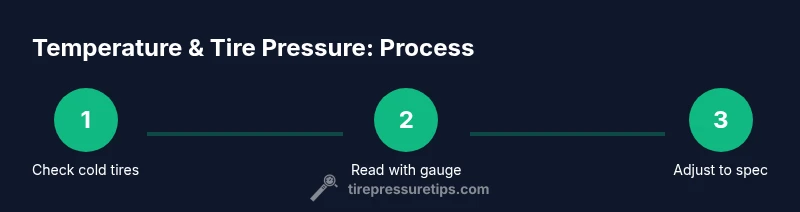
Tools: a reliable tire pressure gauge (digital preferred for accuracy), access to an air source (air compressor or shop), and a copy of the vehicle’s recommended tire pressure (from the owner’s manual or a sticker on the door jamb). Process: measure when tires are cold, remove the cap, place gauge on valve stem, read pressure, compare to spec, add air if needed, recheck after closing cap. TPMS readings should corroborate the manual gauge; if not, have the system checked.
Common Mistakes and How to Avoid Them
Common mistakes include inflating after a hot drive, relying solely on TPMS readings, ignoring the spare tire, and using old gauges. To avoid these, always measure with a calibrated gauge when tires are cold, cross-check TPMS with a manual reading, check all tires including the spare, and periodically recalibrate your gauge.
Interpreting TPMS Readouts vs Manual Gauges
TPMS signals alert when a tire is under or over the recommended range but do not provide precise PSI values. A manual gauge gives a numeric measurement you can track over time. Use both: read with the gauge, then verify with TPMS, and adjust per the manufacturer’s spec. After adjustments, re-check to ensure consistency across all sensors and pressures.
Safety, Maintenance, and Seasonal Considerations
Maintaining correct tire pressure supports safe handling, braking, and tire wear, especially during extreme temperatures or long trips. In cold weather, expect lower baseline readings and verify adjustments before winter driving. In hot weather, monitor for overinflation risk due to heat exposure. Regular checks, aligned with the vehicle’s spec, are a simple, impactful habit for ongoing safety.
AUTHORITY SOURCES
- https://www.nhtsa.gov/road-safety/tires
- https://www.nist.gov/topics/thermodynamics
- https://aaafoundation.org
Tools & Materials
- Digital tire pressure gauge(Calibrated, with PSI and kPa readouts)
- Air compressor or access to an air source(Prefer a low-volume unit for precise topping up)
- Owner’s manual or door jamb placard(To verify the manufacturer-recommended tire pressure)
- Notebook or mobile log(Record tire pressures over time to track changes)
Steps
Estimated time: 15-25 minutes
- 1
Prepare and position
Park on a level surface, turn off the engine, and ensure tires are cool before starting. This ensures readings reflect true pressure rather than recent heat.
Tip: If you’ve just driven, wait until tires cool before measuring. - 2
Check all tires
Remove valve caps and wipe stems clean. Check each tire, including the spare if you rotate it regularly. Use a consistent gauge for comparability.
Tip: Work from front to back to avoid missing any tire. - 3
Read with gauge
Attach the gauge to the valve stem and take a steady reading. Note the value and compare to the vehicle spec.
Tip: If the gauge reads inconsistently, recalibrate or test with a second gauge. - 4
Adjust to spec
If below spec, add air in small increments and recheck after each addition. If above, release air gradually and recheck.
Tip: Do not overinflate beyond the max tire pressure listed on the sidewall. - 5
Repeat and record
Recheck all tires after adjustments and document the final readings for future reference.
Tip: A simple log helps you notice slow leaks or trends over time. - 6
Validate TPMS
If readings differ from TPMS, verify sensor accuracy or reset the TPMS according to the owner’s manual.
Tip: TPMS should corroborate but not replace manual checks.
Frequently Asked Questions
How does temperature affect tire pressure?
Temperature changes cause air inside tires to expand or contract, altering pressure readings. Readings tend to be lower in cold weather and higher in hot weather, so regular checks help maintain safe pressure.
Temperature changes cause air inside tires to expand or contract, which changes the pressure readings. Check regularly and adjust to the recommended range.
When is the best time to check tire pressure?
Check when tires are cold, either before driving or after the tires have had time to cool. This ensures readings reflect true pressure.
Check tires when they’re cold, before driving or after they’ve cooled, to get accurate readings.
Can TPMS readings be wrong due to temperature?
Yes, temperature can influence TPMS readings. Cross-check with a manual gauge to confirm the actual tire pressure.
Temperature can affect TPMS readings; verify with a manual gauge.
Should I adjust tire pressure for winter or summer?
Yes, keep the tire pressure within the manufacturer’s recommended range as seasons change, and re-check after significant weather shifts.
Seasonal changes call for checks to keep tires within spec.
Do I need to check the spare tire pressure too?
Yes, the spare tire should be kept at the proper pressure just like the others, especially during seasonal checks.
Yes—maintain proper pressure in the spare as well.
What should I do if TPMS and gauge readings disagree?
Rely on the manual gauge for the exact pressure and reset or recalibrate TPMS if needed after adjustments.
If readings disagree, trust the gauge and recheck the TPMS after adjustments.
Watch Video
What to Remember
- Check tires when cold to get accurate readings
- Use both TPMS and a manual gauge for reliability
- Seasonal temperature changes affect pressure and should be monitored
- Maintain pressures within vehicle-spec recommendations