Tire Pressure and Temperature: Essential Safety Guide
Discover how tire pressure and ambient temperature interact, how to check accurately, and when to adjust. A practical guide covering TPMS, tools, and safety best practices to keep you safe on the road.


Master the link between tire pressure and ambient temperature to improve safety, fuel economy, and tire longevity. This guide explains how temperature changes affect PSI, how to use TPMS data effectively, and how to adjust pressures to manufacturer specifications. You’ll need a reliable tire gauge, an inflator or air source, and the vehicle’s recommended pressure data from the door placard or owner’s manual.
What tire pressure and temperature mean for your vehicle
Tire pressure and temperature are linked through basic gas behavior: as temperature rises, air expands and PSI can rise; when it’s cold, air contracts and PSI can fall. For drivers, understanding this relationship helps avoid underinflation or overinflation, which can affect handling, braking, and tread wear. According to Tire Pressure Tips, maintaining the manufacturer’s recommended cold pressures provides a reliable baseline that accounts for most daily conditions. In practice, check pressures when tires are cold and before heavy driving to get accurate readings. Regular checks help catch gradual leaks and seasonal shifts, ensuring consistent performance across weather conditions.
Ambient temperature, driving conditions, and PSI changes
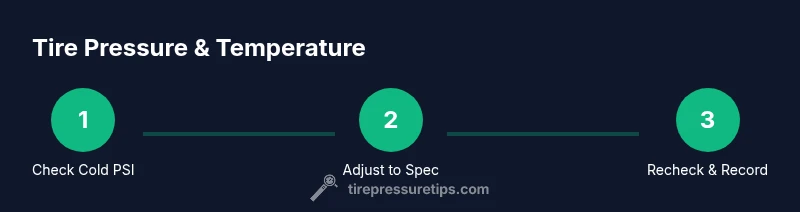
Ambient temperature and road heat influence tire pressure during a trip. A hot day or long highway run can increase PSI by a few tenths, while a cold morning can drop PSI noticeably. The effect of temperature is more pronounced on larger tires and on vehicles with heavy loads. Regular checks help catch gradual slow leaks and seasonal shifts. TPMS alerts can warn you if a tire falls outside the target range, but they don’t always reflect the exact pressure after driving. Bake the concept into your routine: measure cold, adjust to spec, then recheck after a drive.
TPMS, sensors, and choosing the right pressures
TPMS is a valuable safety feature; it alerts when a tire is underinflated but does not replace a precise measurement with a gauge. Always rely on the door placard and tire sidewalls for the recommended pressures, and verify with a manual gauge. Tire Pressure Tips analysis shows that drivers who cross-check TPMS alerts with a manual gauge achieve more consistent pressures. Remember that different tires, rims, and loads can require small pressure adjustments; follow the label on the door jamb and the tire sidewall.
How to check tire pressure accurately: a quick overview
Reading tire pressure accurately starts with preparing the car and tools, then measuring when the tires are cold. Use a reliable gauge, reference the correct cold pressure from the placard, and ensure you press the gauge onto the valve stem straight to get an instant reading. Avoid inflated guesses or using the pressure you felt after a long drive, since heat can skew results. Consistency is the goal: check regularly and log readings to notice gradual changes.
Temperature swings across seasons and adjustments
Seasonal shifts necessitate adjustments to tire pressure because air density and tire temperature change with the weather. In cold weather, pressures tend to drop; in hot weather, they tend to rise. The right approach is to check pressures when the tires are cold for the most accurate readings and follow the recommended cold-pressures from the placard. If you routinely drive short trips, a more frequent cadence of checks is advised to catch leaks or slow punctures early.
Common mistakes and how to avoid them
Avoid inflating to the maximum sidewall pressure in search of a stiffer ride; this reduces contact patch and grip, especially in wet conditions. Do not rely solely on TPMS; always verify with a gauge. Don’t ignore the spare tire: it also has a pressure specification and should be checked periodically. Finally, don’t mix tire brands or models on the same axle without manufacturer guidance, as this can create uneven handling.
Safe practices for monitoring and adjusting pressure on the road
Always park on a flat, level surface and engage the parking brake before checking pressures. Use the cold- tire baseline for accurate readings, and inflate or deflate in small increments. After adjusting, recheck all tires to confirm the target pressures have been reached. If you notice a rapid pressure drop, stop driving and inspect for a puncture or valve stem issue; seek professional help if needed.
Real-world scenarios: urban commute vs highway driving
For urban commutes with frequent stops, tire pressure tends to vary less due to short trips, but cold starts can yield lower readings in the morning. On long highway drives, heat builds in tires and PSI can rise; adjust to the recommended cold pressure and recheck after the trip to avoid overinflation. Pair checks with a quick visual inspection of tread wear and sidewall condition to catch issues early.
Putting it into practice: a simple maintenance routine
A practical routine is to check tires on a monthly basis and before long trips. Start with a cold reading, adjust to the placard pressure, then recheck after a few miles of driving. Keep a compact gauge in the glove box and log your readings in a small notebook or app for trend tracking. This habit reduces the risk of uneven wear and improves fuel efficiency.
Tools & Materials
- Tire pressure gauge (digital or analog)(Ensure calibration and accuracy; cross-check with a known-good gauge occasionally)
- Air compressor or access to inflation station(Prefer a gauge on the inflator for quick cross-checks)
- Vehicle door placard or owner's manual(Provides manufacturer-recommended cold pressures (front/rear))
- Wheel chocks or bricks(Prevent wheel movement; use on a level surface)
- notebook or digital log tool(Record readings for trend tracking)
Steps
Estimated time: 25-45 minutes
- 1
Gather tools and locate correct pressures
Collect a reliable gauge, air source, and the vehicle’s cold-pressure specification from the placard or manual. Confirm you’re reading the correct front vs rear values and note any variations by axle. This step ensures you inflate to the right target.
Tip: Have the gauge ready and practice a quick seal on the valve stem to reduce reading variability. - 2
Park on a level surface and ensure cold tires
Turn off the engine, apply the parking brake, and let the car sit for at least 3 hours or drive a few miles only if you’re preparing for a post-drive check. Cold readings are essential for accuracy because heat from driving artificially raises PSI.
Tip: If you recently drove, wait until tires have cooled to re-check. - 3
Measure current pressures with accuracy
Remove the valve cap, press the gauge onto the valve stem firmly, and read the PSI on the gauge. Repeat for each tire to confirm consistency. Record the numbers for future comparisons.
Tip: Take two readings per tire to confirm accuracy. - 4
Adjust to the manufacturer’s specification
Inflate or deflate in small increments (1-2 PSI at a time) until each tire matches the cold-pressure value on the placard. Do not exceed the maximum listed on the tire sidewall; stay within the recommended range.
Tip: Use incremental adjustments and recheck after each change. - 5
Recheck and seal the vehicular tires
Recheck all tires after adjustments, re-tighten valve caps, and ensure no air escapes. Confirm that all four tires are within the recommended range and log the final readings.
Tip: Keep valve caps clean; a missing cap can allow slow air loss. - 6
Check the spare tire as part of routine
If your vehicle has a spare with a mounted pressure, verify it matches the recommended cold pressure. Spares can be different in type and require separate attention.
Tip: Rotate your spare check into monthly routines. - 7
Document and schedule future checks
Record the final pressures and set reminders for monthly checks or seasonally adjusted schedules. A simple log helps identify gradual leaks or unusual changes.
Tip: Set a calendar reminder to ensure consistency.
Frequently Asked Questions
What is the relationship between temperature and tire pressure?
Temperature affects air density; warmer air expands, increasing PSI, while cooler air reduces PSI. This is why many drivers check cold pressures and adjust for seasonal changes.
Temperature affects PSI because warm air expands and cool air contracts. Check cold pressures for accuracy and adjust with seasonal awareness.
Should I inflate tires when they’re hot?
Inflating while hot can overestimate the needed pressure; always aim to check and adjust when tires are cold before driving or after they’ve cooled.
No, you should not inflate tires when they’re hot. Check them when cold for accurate readings.
Do all tires require the same pressure?
No. Pressures vary by axle, tire size, and load. Always follow the vehicle placard and tire sidewall specifications for each tire.
Not all tires share the same pressure. Use the placard values for front and rear tires.
How often should I check tire pressure?
Check at least monthly and before long trips, plus any noticeable changes in handling or fuel economy. Temperature shifts can alter readings, so periodic checks are essential.
Check at least once a month and before long trips; temperature shifts make regular checks important.
What is a safe PSI range for my tires?
The safe range is the manufacturer-recommended cold pressure. Do not exceed it; the sidewall number is a maximum, not a target.
Stick to the cold-pressure spec from the placard; avoid inflating beyond the recommended range.
Is it okay to drive with underinflated tires?
Driving with underinflated tires increases wear, reduces efficiency, and raises the risk of blowouts. Inflate to the recommended level as soon as possible.
No, underinflated tires are risky. Inflate to the recommended pressure promptly.
Watch Video
What to Remember
- Check tires cold for accurate readings.
- Know how temperature affects PSI and adjust accordingly.
- TPMS helps but isn’t a replacement for a gauge check.
- Keep tire pressures within the manufacturer’s recommended range.
- Log readings monthly to catch slow leaks or changes.