Adjust Tire Pressure for Temperature: A Practical Guide
Learn how ambient temperature affects tire pressure and how to adjust it safely with practical steps, essential tools, and maintenance tips from Tire Pressure Tips to keep your tires in peak condition.


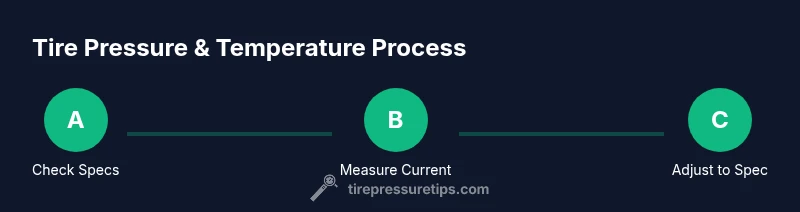
Temperature changes affect tire pressure, so always adjust toward the vehicle’s specified psi when tires are cold. Start by locating the recommended pressure on the door jamb sticker or manual, then check with a gauge after tires have cooled for several hours. Inflate or deflate as needed to match the spec, and recheck after temperature shifts.
Temperature and Tire Pressure: An Overview
Temperature directly influences the air inside your tires. Colder air reduces internal pressure, while warmer air increases it. This means that your tire pressure can drift as outdoor conditions shift from cool mornings to hot afternoons. According to Tire Pressure Tips, understanding this relationship helps drivers avoid underinflation in winter and overinflation in heat waves. Keeping the recommended psi as a baseline gives you a reliable target for all weather. Use the door jamb sticker or your vehicle's manual to confirm the exact numbers for front and rear tires. Regular checks—especially after long drives or heavy loads—keep the pressure aligned with the manufacturer’s specification. Regular checks also help verify readings with a reliable gauge and catch potential TPMS issues early.
How Temperature Affects Tire Pressure in Real Life
Temperature shifts throughout the day are not just a weather concern; they affect your tires every time you drive. In cool mornings, tire pressure tends to be lower; as asphalt heats up and tires warm, pressure may rise. This natural behavior means that a tire that reads correctly at dawn could be overinflated by late afternoon. Tire Pressure Tips analysis shows that some variation is normal, but large swings can degrade fuel efficiency and tire wear. Drivers should use the same cold-measurement method to set a baseline and then adjust when the environment is expected to change significantly. If you expect a temperature swing of several degrees, plan a check before embarking on a long trip or freight haul. The goal is to maintain the vehicle at the manufacturer’s recommended psi, not a number that fluctuates with the weather.
Measuring Tire Pressure: Tools and Best Practices
To measure pressure accurately, you need a reliable gauge and a procedure that minimizes heat-built-in variability. Always measure when tires are cold—ideally after the car has sat for at least three hours or before you drive in the morning. Remove the valve cap, press the gauge onto the valve stem firmly, and note the reading. If you drive a short distance, wait at least 3 hours before re-measuring; heat from driving can temporarily increase pressure and skew results. Use a gauge with a clear scale and a shutter or reset feature to prevent drift. After obtaining a reading, compare it to the vehicle’s recommended psi. If underinflated, add air until you reach the target; if overinflated, release air gradually and recheck. When possible, test all four tires to ensure uniform contact with the road and balanced handling. Keep spare tire pressure checked separately, since it can differ.
Adjusting Tire Pressure for Temperature Changes
The core adjustment principle is simple: return tires to the recommended cold-psi target, then account for any planned temperature exposure. In practice, this means checking pressure in a controlled manner and inflating or deflating to the spec rather than chasing a number that may drift with the day’s weather. If you anticipate a drastic cold snap, perform a preemptive check on a cold tire and top off to the specified level. Conversely, if you anticipate hot weather or a long highway run, recheck after you park and let tires cool. This discipline minimizes underinflation and overinflation during temperature swings. The act of maintaining correct pressure supports better fuel efficiency, tire wear, and braking performance.
Temperature Effects by Season and Climate
Seasonal changes amplify small pressure shifts. Winter mornings can deliver underinflated tires due to cold ambient temperatures, while summer heat increases internal pressure. In high-altitude or desert regions, temperature fluctuations can be more pronounced and frequent. By establishing a winter maintenance routine—check pressure when tires are cold and adjust to spec—you reduce the risk of tire damage and poor handling. Temperature-aware maintenance also helps when tires age and sensors degrade. Note that cold-weather tires may have different recommended pressures, especially when installed on some SUVs and light trucks. Always verify the recommended values for your specific model and tire type.
Practical Scenarios: Daily Commute, Road Trips, and Weather
Consider a typical commute that begins with a cold morning and warms up during the drive. Start with the recommended psi and avoid inflating based on how the tires feel. For road trips, pack a portable air pump and a gauge so you can adjust at rest stops if temperatures change along the route. If you drive in extreme heat, park in shade when possible and recheck the tires after you return to the vehicle to avoid heat-influenced readings. When weather forecasts predict rapid temperature changes, schedule a quick pre-drive check to maintain performance. These scenarios illustrate why temperature-aware pressure management is part of regular maintenance, not a one-off task.
Maintenance Habits: Scheduling Checks and Records
Set a regular cadence for tire pressure checks as part of your maintenance calendar. A simple habit—check monthly and before long trips—reduces risk and keeps your tires within specification. Use a log to record the date, tires checked, readings, and adjustments. This creates a trend you can reference during seasonal transitions. If you notice persistent changes beyond a few psi, there may be an issue with a valve stem, TPMS sensor, or the tire itself, and you should seek professional inspection. Tire Pressure Tips emphasizes that proactive checks save money and extend tire life when combined with proper inflation.
Common Mistakes to Avoid
Avoid inflating or deflating based on a single reading or on the assumption that all tires must be equal under different loads. Each tire can behave slightly differently due to wear, load, and manufacturing tolerances. Do not rely on the TPMS readout alone; use a physical gauge to verify. Do not ignore temperature-driven changes, especially before long trips or in extreme weather. Finally, avoid measuring immediately after a high-speed drive; the heat can skew readings and lead to improper inflation.
Tools & Materials
- Tire pressure gauge (digital or analog)(Calibrated and with at least a 2-3 PSI readability range)
- Air pump or compressor(Ensure it can reach the vehicle's recommended PSI)
- Owner's manual or door jamb sticker(Current recommended tire pressures for all tires)
- Valve core tool and spare valve caps(For maintenance and replacement)
- Tire tread gauge and pressure log(To monitor pressure trends over time)
Steps
Estimated time: 15-25 minutes
- 1
Locate the recommended pressure
Find the exact cold-inflation pressure for your vehicle in the owner’s manual or on the door jamb sticker. Record separate values if your car has different pressures for front and rear tires. Use that baseline as your target before any adjustment.
Tip: Verify both front and rear tire pressures, as they are not always identical. - 2
Check tires when cold
Ensure tires have cooled for several hours (ideally overnight) before measuring. Warm tires read higher and can mislead your target. If you’ve just driven, wait for a cool-down period before remeasuring.
Tip: Take readings in the morning for consistency. - 3
Measure current pressure
Remove the valve cap and press the gauge firmly onto the valve stem. Read the pressure on the gauge and compare with the manufacturer’s target. Repeat on all tires to confirm a pattern.
Tip: Do not reuse a partially seated gauge; a proper seal matters. - 4
Inflate or deflate to target
If below target, add air in small increments and recheck. If above target, release air until you reach the specified level, then recheck. Avoid over-correcting in one step.
Tip: Check the pressure again after adjustments to confirm accuracy. - 5
Recheck after temperature shift
If you expect a temperature change, remeasure after the tires have cooled to see if the pressure drifted. If drift occurred, adjust again to the target.
Tip: Schedule routine checks during seasonal transitions. - 6
Check all tires and spare
Ensure all four tires and the spare have inflation close to the target. Uneven pressures can affect handling and tire wear.
Tip: Don't neglect the spare; it often gets overlooked. - 7
Record results and maintain
Document readings and any adjustments in a log. This creates a baseline and helps detect slow leaks or sensor issues over time.
Tip: Keep the log in the glove box or the car app for easy access.
Frequently Asked Questions
Why does temperature affect tire pressure?
Air expands when it heats up and contracts when it cools down. Tire pressure mirrors these changes, so ambient temperature can move psi up or down even if the tires aren’t leaking.
Temperature changes cause air inside tires to expand or contract, changing the pressure.
Should I check tire pressure every time the temperature changes?
It's wise to check during major temperature shifts and before long trips. Regular checks help maintain safe inflation and fuel efficiency.
Check pressure when you expect a temperature change or before long trips.
Is TPMS readings enough to know my tire pressure?
TPMS helps warn you to underinflation, but it doesn’t replace a manual gauge. Always verify with a physical gauge for accuracy.
TPMS can warn you, but you should still measure with a gauge.
Can I inflate tires to the same psi in winter and summer?
The target pressure should be the manufacturer’s recommended psi, which can vary by temperature and tire type. Recheck seasonally and adjust accordingly.
Follow the recommended psi, and recheck as temperatures change.
What tools do I need to adjust tire pressure?
A reliable tire pressure gauge, an air pump or compressor, and the door jamb sticker with the recommended psi are the essential tools.
You need a gauge, an air pump, and the manufacturer’s psi values.
Should I adjust pressure for the spare tire too?
Yes, check and inflate the spare to its recommended pressure if you regularly use it or if you store it for long periods.
Check the spare’s pressure and adjust if used or stored often.
How often should I log tire pressure readings?
Aim to log readings with seasonal changes or monthly checks, plus before long trips for safety.
Log measurements monthly or during seasonal switches.
Watch Video
What to Remember
- Check tires when cold to set a reliable baseline.
- Always inflate to the vehicle’s recommended psi.
- Measure all four tires and the spare for consistency.
- Document readings to spot leaks or sensor issues.
- Temperature shifts require periodic rechecks to maintain safety.