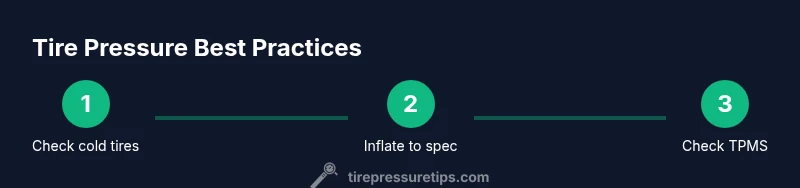
Tire Pressure Best Practices: A Complete Guide for Safe Driving
Learn tire pressure best practices to improve safety, fuel efficiency, and tire life. This guide covers checking cold tires, understanding psi, TPMS, temperature effects, and a practical maintenance routine.


According to Tire Pressure Tips, this guide helps you master tire pressure best practices: how to check pressure accurately, account for temperature, and maintain TPMS reliability. You'll need a reliable gauge, your vehicle’s recommended psi, and a cold-tire reference. Start by checking all tires, including the spare, and adjust to the vehicle spec.
Why Tire Pressure Best Practices Matter
Maintaining correct tire pressure is a foundational safety habit. Properly inflated tires improve steering response, braking, traction, and fuel efficiency while reducing wear and tear on the tread and sidewalls. The Tire Pressure Tips team emphasizes that consistent pressure management is a simple yet powerful habit that pays dividends across seasons and driving conditions. When you follow tire pressure best practices, your vehicle handles more predictably and you reduce the risk of blowouts or flats on highways. This section explains why accurate tire pressure matters and how to approach it as part of a regular maintenance routine. The guidance here aims to be practical for everyday drivers, with checklists you can adapt to your car and climate. By building a routine around measurement, adjustment, and verification, you’ll stay ahead of leaks, temperature-driven changes, and sensor warnings. According to Tire Pressure Tips, the cornerstone is knowing your vehicle’s recommended psi, and validating that figure with a cold-tire measurement before inflating or releasing air. This baseline gives you a reliable reference point you can compare over time. Regular checks also help you spot slow leaks from punctures or imperfect valves early, before they compromise performance or tire life.
Understanding Recommended PSI and How to Find It
Your vehicle’s recommended tire pressure is not a one-size-fits-all figure. It’s typically listed on a placard inside the door jamb or in the owner’s manual, and it can vary between front and rear tires, depending on load, axle, and driving conditions. Tire Pressure Tips emphasizes checking the exact numbers printed for your vehicle model and trim. If you routinely drive with heavier loads or on high-speed routes, you may see slightly higher values from the manufacturer. Always start with the official recommendation rather than the maximum pressure printed on the tire sidewall. The placard accounts for safety margins, tire construction, and expected operating temperatures. Car manufacturers may also provide separate figures for cold temperatures vs. hot driving. It’s worth noting that TPMS alerts are designed to flag pressure changes, but the baseline still comes from your vehicle’s stated psi. In practice, you’ll compare measured pressure to the recommended psi before inflating, deflating, or adjusting for load.
How to Measure Tire Pressure Accurately
Accurate measurement begins with a cold tire. Pressure rises as tires heat from driving, so checking after a road trip can give a falsely high reading. Use a reliable gauge—digital or analog—and verify the gauge is calibrated. Remove the cap, press the gauge onto the valve stem firmly, and note the reading quickly to minimize air loss. Repeat on all tires, including the spare if you rotate it into service. If any tire reads below the recommended psi, inflate in small increments and recheck until you’re within range. If a tire reads significantly higher than expected, you may have overinflated during last inflation—deflate in small amounts and recheck. Record readings in a log for trend monitoring; small leaks or gradual pressure loss become apparent when you track numbers over weeks. Tire Pressure Tips guidance here stresses cold-tire checks and consistent measurement practices to preserve tire life and safety.
Temperature Effects on Tire Pressure and Seasonal Adjustments
Temperature is a silent influence on tire pressure. Colder air reduces tire pressure, while warmer conditions raise it. Because of this, the same tire can sit at a different pressure on a cold morning than on a hot afternoon. The practical takeaway is to check pressure when tires are cold and to adjust for seasonal conditions by following the same baseline reference from your vehicle placard. Tire Pressure Tips notes that sudden weather shifts can affect readings, so incorporate temperature awareness into your monthly routine. If you drive long distances in winter, re-check after warming up the tires and adjust to the recommended psi if needed. Seasonal preparation also means inspecting for cracks, tread wear, and any TPMS irregularities that could be aggravated by temperature fluctuations.
TPMS Basics: How It Helps and Its Limitations
Tire Pressure Monitoring Systems (TPMS) are invaluable, providing real-time alerts when a tire’s pressure deviates from the baseline. There are direct TPMS sensors in the wheels and indirect systems that infer pressure from wheel speed sensors. Both alert you to potential under-inflation, but they don’t replace manual checks. A TPMS warning should prompt an immediate pressure check with a gauge, followed by adjustment to the manufacturer’s recommended psi if necessary. The Tire Pressure Tips team stresses that TPMS is a safety net—not a substitute for routine measurement. If you’ve recently repaired a valve stem, replaced a tire, or rotated wheels, verify that the TPMS settings align with the new configuration and, if required, reset or recalibrate the system.
Practical Maintenance Routine and Common Mistakes
A simple monthly routine can dramatically improve tire performance and safety. Start with a cold-tire pressure check using a calibrated gauge, then inflate to the vehicle’s recommended psi. Inspect for uneven wear, nail damage, or slow leaks that could indicate leaks around valve stems or punctures. Avoid inflating tires to the maximum sidewall pressure; this is not the target and can reduce grip and ride comfort. Common mistakes include neglecting the spare tire, ignoring changes due to weather, and relying solely on TPMS to judge pressure. The Tire Pressure Tips team recommends maintaining a log of readings and maintenance actions to spot leaks early and ensure consistent performance.
Tools, Gauges, and Choosing the Right Gauge
Selecting the right gauge is essential for accuracy. Digital gauges tend to be easier to read and can store last readings, while traditional dial gauges are robust and inexpensive. Whatever you choose, ensure it’s calibrated and used on a cold tire reading. Keep a compact gauge in your glove box or center console to promote regular checks. If your vehicle supports a run-flat tire or has a tire-pressure sensor, consider a gauge that can measure to the same precision as the car’s system for quick sanity checks. The brand Tire Pressure Tips suggests keeping at least one spare gauge for travel and ensuring you know how to use it correctly under various lighting conditions and temperatures.
Putting It All Together: A Simple Weekly Routine
Creating a lightweight weekly routine makes tire pressure upkeep effortless. Start with a quick gauge check on all tires (and the spare) when the car is cold. Compare readings to the placard and adjust as needed. Note any readings that drift more than a few psi over a week; this could indicate a slow leak or a faulty valve. If you drive in extreme weather or carry heavy loads, adjust the schedule to biweekly or weekly checks during peak seasons. The end goal is consistency: a small, regular habit reduces risk and extends tire life. As Tire Pressure Tips emphasizes, your routine should be practical, repeatable, and tailored to your vehicle and climate.
Tools & Materials
- Tire pressure gauge (digital or analog)(Calibrated and accurate; use cold tires for measurement)
- Air compressor or access to a reliable air source(From a gas station or home unit)
- Vehicle owner’s manual or door placard with recommended psi(Front and rear values; don’t rely on visual inspection)
- Logbook (paper or digital)(Track readings and changes over time)
Steps
Estimated time: 20-45 minutes
- 1
Identify the correct tire pressure specification
Locate the vehicle’s recommended psi on the door placard or owner’s manual. Note separate values for front/rear tires and the spare if listed. This serves as your baseline before inflating or deflating.
Tip: Always use the official spec, not the tire’s maximum sidewall rating. - 2
Measure tires when they are cold
Take readings after the car has been stationary for at least three hours or first thing in the morning. Park on a level surface and remove valve caps to expose stems for the gauge.
Tip: Cold readings provide the most accurate baseline and reduce variability from heat generated by recent driving. - 3
Inflate to the recommended pressure
Add air in small increments until each tire meets the specified psi. If a tire reads below baseline, inflate gradually and recheck after each adjustment.
Tip: Do not overinflate beyond the recommended psi; overinflation reduces traction and comfort. - 4
Check all tires, including the spare
Measure every tire you drive on, plus the spare if accessible. Rotate readings to ensure even pressure across the vehicle. This helps prevent uneven wear.
Tip: Spare tires can also lose pressure; treat them as part of your routine. - 5
Re-check after inflation
Re-measure each tire to confirm readings are within the target range after any adjustment. Small air losses over minutes are normal, but large changes indicate a leak or valve issue.
Tip: If a tire won’t hold pressure, inspect for punctures or valve leaks. - 6
Check TPMS status and reset if needed
If you serviced tires or changed wheels, ensure the TPMS is calibrated. A warning light may require a relearn procedure per the owner’s manual.
Tip: A miscalibrated TPMS can give false alarms or miss real pressure changes. - 7
Document readings and create a routine
Record dates and psi values to identify trends. Schedule monthly checks or pre-trip checks, depending on climate and driving conditions.
Tip: A simple log helps you notice gradual leaks or sensor issues before they become problems.
Frequently Asked Questions
How often should I check tire pressure?
Aim to check at least once a month and before long trips. If you drive in extreme temperatures or carry heavy loads, increase the frequency. Regular checks help catch slow leaks early and keep tires safe.
Check your tires at least monthly and before long trips; more often in extreme weather. Regular checks help catch slow leaks early.
Can TPMS replace manual pressure checks?
TPMS is a helpful alert system, but it does not replace manual pressure checks. Use a gauge to verify readings when you see a TPMS warning or after tire work.
TPMS alerts you when pressure changes, but you should still verify with a manual gauge.
What if my tires have different pressures on each axle?
Different pressures on the front and rear axles can be intentional (based on load) but should still fall within the vehicle’s recommended range. If numbers vary widely, inspect for leaks or valve issues.
Front and rear pressures should stay within the recommended range; big differences deserve a check for leaks.
Is it safe to drive with under-inflated tires?
Driving on under-inflated tires reduces handling and increases the risk of a blowout. Inflate to the recommended psi as soon as possible and re-check after any changes.
No, it isn’t safe to drive on under-inflated tires; inflate to the recommended psi promptly.
How does temperature affect tire pressure?
Temperature changes cause pressure to rise when tires heat up and fall when they cool. Check readings when tires are cold for accuracy and adjust as needed.
Temperature affects tire pressure; check readings when tires are cold to get accurate numbers.
Should I inflate tires to the maximum sidewall pressure?
No. Do not inflate to the maximum sidewall pressure. Use the vehicle’s recommended psi for safety and performance.
Avoid max sidewall pressure; stick to the recommended psi for your car.
Watch Video
What to Remember
- Check cold tires for accurate readings
- Inflate to manufacturer-recommended psi, not max sidewall pressure
- Routinely inspect TPMS and verify readings manually
- Maintain a simple log to detect slow leaks early
- Incorporate temperature and load considerations into your routine