Tyre Pressure: A Practical Guide for Safe Driving
Learn how to check and maintain tyre pressure for safety, fuel efficiency, and tire life. This Tire Pressure Tips guide covers TPMS, tools, steps, and common mistakes to help you drive with confidence.


Goal: Learn how to check and maintain tyre pressure for safety, fuel efficiency, and longer tire life. You’ll discover where to find your vehicle’s recommended pressure, how to interpret TPMS readings, and how to adjust air accurately using a gauge. This quick guide covers cold readings, seasonal changes, and common mistakes to avoid.
What tyre pressure is and why it matters
Tyre pressure refers to the amount of air inside your tyres, usually measured in psi or kilopascals (kPa). The right pressure optimizes grip, braking, steering, and ride comfort, while also reducing uneven tread wear. When tyre pressure is too low, the tyre deforms easily, generating excess heat and increasing rolling resistance; when it’s too high, the contact patch is reduced, which can shorten grip and lead to a harsher ride. According to Tire Pressure Tips, maintaining proper tyre pressure is essential for safety, fuel efficiency, and tire longevity. Your tyres are a key part of the vehicle’s overall safety system, and accurate tyre pressure directly influences stopping distances, cornering, and fuel economy. Checking tyre pressure regularly should be part of every maintenance routine, not just when you notice a warning light. Tyre pressure management also helps protect wheels and rims from damage caused by underinflation or overinflation over time.
For most drivers, keeping tyres within the manufacturer’s recommended range provides the best balance of safety and comfort. This range is designed to account for load, speed, and typical driving conditions. Always start with the vehicle placard or the owner’s manual for your exact figures, and remember that tyre pressure is not a fixed value; it can vary with season, load, and driving style. In short, tyre pressure matters because it affects grip, braking, fuel efficiency, tread wear, and overall vehicle stability.
Finding your vehicle's recommended tyre pressure
The recommended tyre pressure is not a guess—it’s the value specified by the vehicle maker. You’ll typically find this on a placard located on the door jamb, fuel filler cap, glove box, or in the owner’s manual. The placard lists separate pressures for the front and rear tyres, and it may also show a load or speed consideration. When you’re checking tyre pressure, use the cold reading as your baseline: pressure rises as tyres heat from driving. If you routinely carry heavy loads or drive at higher speeds, you might follow the higher end of the recommendation. Remember that the figure on the placard is for cold tyres, so check before you drive to ensure accuracy. If your tyres wear unevenly, or you’ve recently replaced tyres, confirm the correct pressures with a professional, as model variations can exist between tyre types and vehicle variants.
A note about tyres without a placard: consult the owner’s manual or a dealership for the correct pressure, and avoid inflating to arbitrary values. Tyre pressure by model and by axle is common, so always verify both front and rear specifications. Keeping tyre pressure aligned with the manufacturer’s guidance helps protect tread life and ensures predictable handling in wet or dry conditions.
TPMS vs manual gauges: understanding the difference
Tire Pressure Monitoring Systems (TPMS) provide a real-time alert when tyre pressure falls below a threshold. TPMS is a valuable safety feature, but it should not be your only source of tyre pressure information. A TPMS warning can indicate a slow leak or a sudden drop, but it won’t give you an exact pressure reading. For precise measurement, use a manual gauge—the most common types are pencil gauges, dial gauges, and digital gauges. When you measure with a gauge, you’ll know if you are within the recommended range or if you need to add or release air. Remember that TPMS sensors must be maintained and sometimes recalibrated after tire changes. Treat TPMS as a critical alert system and supplement it with regular, precise manual checks for tyre pressure accuracy and consistency.
How temperature affects tyre pressure
Ambient temperature has a direct effect on tyre pressure. In cold weather, the air inside tyres condenses and pressure drops; in hot weather, pressure rises as the air expands. Because of this, readings taken after a drive can be misleading. The best practice is to measure tyre pressure when tyres are cold, typically after they have rested for at least three hours or before driving in a new day. Seasonal changes can shift the recommended range slightly, so be mindful of your local climate: in winter months you may see a gradual drop in pressure, while in summer temperatures can push pressures higher. Regular checks during seasonal transitions help maintain optimal tyre pressure throughout the year and protect tyre life.
If you notice a sudden pressure change, it may indicate a puncture or leak. In that case, inspect the tyre visually and use soapy water to check for leaks around the valve stem, bead, or puncture site. Correcting tyre pressure based on temperature and driving conditions ensures you maintain safe handling and fuel efficiency.
Practical steps to check tyre pressure regularly
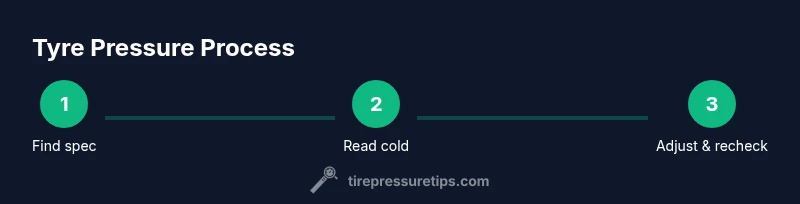
Regular checks should become a routine, just like checking oil or lights. A quick check can be done at home or at a gas station, but always start with a cold tyre reading for accuracy. Keeping tyre pressure in the correct range helps ensure even tread wear, better fuel economy, and safer braking. In this article, you’ll find a detailed step-by-step guide, but a quick overview is: locate the recommended pressure, use a quality gauge, compare against the spec, adjust in small increments, and recheck. Maintain a log to track readings over time and notice trends that might indicate slow leaks or valve stem issues. A consistent tyre pressure regimen supports overall vehicle safety and performance, especially on long trips or in harsh weather.
A practical tip is to check pressures before trips where you’ll carry extra luggage or passengers, as added load can alter the recommended range. You’ll also want to verify the spare tyre pressure in the same way, as a neglected spare can compromise readiness in an emergency.
Common mistakes and troubleshooting
Even careful drivers can make tyre pressure mistakes. Some of the most common include inflating to a one-size-fits-all pressure, ignoring different pressures for front and rear tyres, and relying solely on the TPMS without manual checks. Overinflation reduces contact patch and grip, increasing the risk of a blowout on rough roads. Underinflation causes excessive heat buildup and faster tread wear, and can impact braking and steering. Another mistake is not checking tyre pressure after air temperature changes or after long trips, when readings are not reflective of the tyre's cold state. If a TPMS warning appears, verify by hand with a gauge and inspect for leaks or damaged valves. Address any issues promptly—delayed maintenance can lead to uneven wear, reduced fuel efficiency, and compromised handling. For those transporting heavy loads or traveling into extreme weather, adjust pressures according to the vehicle’s guidance and the tire’s load index.
If you’re unsure about a reading or the steps to take, consult your vehicle manual or a professional tire technician. Regular maintenance and attention to tyre pressure reduce risk and prolong tyre life.
The impact on safety, wear, fuel economy, and performance
Maintaining proper tyre pressure is a fundamental safety measure. Properly inflated tyres improve traction, braking response, and cornering stability, particularly in wet conditions. Correct tyre pressure also distributes wear evenly across the tread, extending tyre life and reducing the likelihood of sudden failures. Fuel economy improves when tyres roll with less resistance, which can save money on fuel over time. Inadequate tyre pressure increases rolling resistance, leading to higher fuel consumption and more heat, which can accelerate wear. It also makes steering feel more sluggish and can cause handling quirks that are particularly noticeable in emergency maneuvers. By staying within the recommended range and performing regular checks—especially when changing seasons or loads—you maintain optimal performance and safety on the road.
Seasonal and maintenance plan: when and how to check
Create a simple tyre-pressure maintenance plan aligned with your driving calendar. Check tyres cold at least once a month and before long trips, after significant changes in load, or after a long period of highway driving. During seasonal transitions, adjust checks to account for ambient temperature shifts. If you notice recurring pressure drops, schedule a tire inspection for leaks, valve stems, or rim seals. Document readings to spot trends and identify slow leaks early. A steady routine reduces the risk of underinflation or overinflation and helps you avoid unexpected tyre failures. Remember that tyre pressure is not a fixed value; it adapts with temperature, load, and driving style—so regular checks are essential for ongoing safety and efficiency.
Real-world scenarios and quick checks
In real-world driving, a quick pressure check before a road trip or after a season change can catch small leaks early. If you anticipate carrying extra luggage, temporarily inflating within the higher end of the range helps maintain handling and tread wear. Conversely, reducing pressure slightly for unloaded city driving may improve comfort and rolling efficiency. Always recheck after adjustments to confirm you’re within the recommended band. Your tyres work best when pressure aligns with the vehicle’s specifications, load, and driving conditions.
Tools & Materials
- Digital tyre pressure gauge(Calibrated and easy-to-read, readable in psi or kPa; bring to cold state readings)
- Vehicle owner’s manual or door placard(Contains the official cold inflation pressure for each tyre)
- Air compressor or access to a gas station air pump(Optional but helpful for at-home adjustments)
- Clean cloth(Wipe valve stem and around the stem after measurement)
- Notebook or digital log(Record readings and dates to monitor trends)
Steps
Estimated time: 15-25 minutes
- 1
Find the recommended tyre pressure
Locate the vehicle’s recommended cold tyre pressure on the placard or in the owner’s manual. Note separate values for front, rear, and spare if provided. This is your target range and will guide all subsequent measurements.
Tip: Always start with cold tyres for the most accurate reading. - 2
Prepare your gauge and read cold
Remove the valve cap and place the gauge on the valve stem firmly to get a stable reading. Record the numbers for each tyre before driving to avoid heat-induced changes.
Tip: Use a gauge that’s easy to read; digital gauges reduce parallax errors. - 3
Compare readings to the spec
If the reading is below the recommended range, add air in small increments and recheck. If it’s above, release air gradually to bring it into range. Do not exceed the higher value of the range.
Tip: Make small adjustments (2-3 psi or 0.15-0.2 bar at a time) to avoid overshoot. - 4
Recheck after adjustment
Once you’ve adjusted, recheck all four tyres and confirm they sit within the specified band. Replace valve caps to protect the stems.
Tip: Recheck when tyres are cold to avoid misleading readings caused by heat. - 5
Check the spare tyre
Don’t forget the spare; many drivers neglect it until they need it. If your spare is a full-size tyre, ensure it’s inflated to the recommended level.
Tip: Spare tyres deserve the same attention as other tyres. - 6
Document and maintain
Log each reading and date to monitor trends and detect slow leaks. Schedule monthly checks or more frequent checks when changes in load or temperature occur.
Tip: A simple log helps you catch gradual pressure loss early.
Frequently Asked Questions
Why is tyre pressure important for safety?
Proper tyre pressure improves grip, steering response, and braking efficiency. It also reduces uneven tread wear and lowers the risk of tyre failure. Regular checks help maintain consistent performance across 다양한 road conditions.
Maintaining proper tyre pressure improves grip and braking, and helps prevent uneven wear. Check your tyres regularly to keep performance consistent.
How often should I check tyre pressure?
Check tyre pressure at least once a month and before long trips. Check again after seasonal temperature changes or when you notice handling changes or visible wear.
Check your tyre pressure monthly and before long trips, especially when the weather shifts.
Can TPMS readings replace manual checks?
TPMS provides timely alerts but does not give exact values. Always verify with a manual gauge to confirm tyre pressure and ensure accuracy.
TPMS warns you, but you should still measure with a gauge to know the exact pressure.
What happens if tyres are underinflated or overinflated?
Underinflated tyres wear faster and heat up, reducing safety and fuel efficiency. Overinflated tyres can reduce grip and ride comfort. Keep within the vehicle’s recommended range for best results.
Underinflated wears faster and is unsafe; overinflated reduces grip. Stay within the recommended range.
What should I do if I can't locate the recommended pressure?
Consult the owner’s manual or contact a dealer or tire professional. If you know the tyre size and vehicle model, you can search for model-specific guidance from reputable sources.
If you can’t find the spec, check the manual or ask a tire professional for help.
Watch Video
What to Remember
- Check tyre pressure when tyres are cold.
- Always follow the vehicle’s recommended range.
- Use TPMS as a guide; verify with manual readings.
- Adjust in small increments and recheck.
- Maintain a regular tyre pressure routine for safety and efficiency.