Tire Pressure Guide: Check, Maintain, and Troubleshoot
Learn to check tire pressure accurately, maintain proper levels, and troubleshoot TPMS issues with a clear, step-by-step approach from Tire Pressure Tips. Improve safety, efficiency, and tire life with practical guidance.


This how-to teaches you how to check tire pressure accurately, using a gauge, and adjust air to your vehicle’s recommended level. You’ll learn to interpret readings, account for temperature effects, and maintain proper pressure for safety, fuel efficiency, and tire longevity. Follow this step-by-step approach with minimal tools, and verify readings on all tires.
Tire Pressure Basics
Tire pressure is the amount of air inside each tire, typically measured in psi (pounds per square inch) or kilopascals in some regions. Maintaining the correct pressure matters for safety, tire wear, fuel efficiency, and ride quality. When tires run underinflated, they flex more at the sidewalls, heat up, and can fail prematurely; overinflated tires ride stiffly and wear unevenly. The Tire Pressure Tips team emphasizes that the starting point for any pressure check is the manufacturer’s specification, usually found on the door jamb placard or in the owner's manual. This specification applies to cold tires, meaning the vehicle has been stationary for several hours and the tires haven’t heated up from driving. Temperature changes can cause readings to shift, so measure when the tires are cold for an accurate baseline. In this section you’ll learn how to interpret readings, what instruments you need, and how to align your inflation with real-world conditions.
Tools and Preparation
Before you touch a valve stem, assemble your tools and confirm you know where to find the recommended pressure. You’ll typically need a reliable tire pressure gauge (digital or analog), an air source you can control (air compressor or manual pump with a gauge), and the vehicle’s placard or owner manual for the exact specification. Gather spare valve caps and a small marker if you want to note readings. If you’re checking a spare tire, ensure you mount the wheel safely and follow the same cold-tire rule. According to Tire Pressure Tips, a calm setup and a plan reduce the risk of overfilling or underinflating when you’re in a hurry.
Finding the Correct Pressure for Your Vehicle
Your vehicle’s recommended pressure is not the same for every tire. The correct value is listed on the door jamb placard near the driver's seat, the glove box, or in the owner’s manual. Front and rear tires may have different targets, and some vehicles use different pressures for cold vs hot tires. For SUVs, trucks, or vehicles with different axle configurations, check both front and rear specifications. Remember that the spare tire (if you have one) typically has its own spec, and you should only inflate it to the recommended level if you intend to use it. Always verify the spec in the official sources rather than relying on visual guesses.
Reading a Tire Pressure Gauge: How it Works
Tire pressure gauges come in several formats: digital readouts, analog dials, and simple pencil gauges. To read accurately, attach the gauge to the valve stem straight on and remove any dust caps. A steady, perpendicular press will give a stable reading. Digital gauges show a numeric value clearly, while analog gauges require you to interpret the pointer position. Ensure you’re reading when the tire is cold and the vehicle has not been driven recently, as driving heats air and alters the reading. Unit conventions vary by region, but the goal remains the same: a precise, repeatable measurement.
Measuring When Tires are Cold
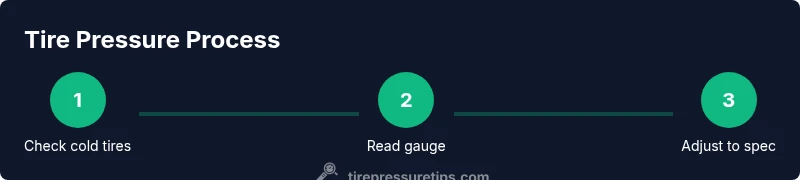
Cold-tire measurement is essential for accuracy. Wait at least a few hours after driving, or measure before you’ve driven for the day. Park on a level surface, engage the parking brake, and remove any mud or debris from the valve stem. Wipe the valve stem and throat of the gauge for a clean seal. Record the reading for each tire so you can compare against the manufacturer’s spec. If readings vary significantly between tires, you may have a leak, a damaged valve stem, or an unbalanced wheel that needs inspection.
Adjusting to the Right Range
If a tire reads low, add air in small increments and recheck after each addition. If it reads high, release air slowly and recheck. Do not rely on a single measurement; repeat the process for accuracy. After inflating, recheck all tires to ensure they’re within the specified range. When the reading stabilizes, reinstall valve caps and note any changes in performance. Tire pressures can change with temperature, so plan to monitor regularly, especially in extreme weather.
TPMS and Sensor Considerations
Tire Pressure Monitoring Systems (TPMS) provide a warning when pressure falls outside a safe range. A TPMS reading is a useful guide, but it shouldn’t replace a manual gauge check, especially after you’ve adjusted pressure. If TPMS alerts persist, verify each tire with a gauge and inspect for leaks, a faulty sensor, or a weak battery in the sensor transmitting unit. Regular calibration or sensor replacement may be required for consistent readings.
Seasonal and Driving Considerations
Temperature fluctuations affect tire pressure. In cold weather, pressures drop; in hot weather, they rise. Regularly check pressure during seasonal transitions, before long trips, and after mounting new tires. For any vehicle, consistent maintenance reduces uneven wear and improves fuel economy. The Tire Pressure Tips team recommends incorporating a monthly check into your routine and keeping a portable gauge in your glove box for convenience.
Maintenance Schedule and Safety Practices
Create a simple maintenance cadence: check cold pressure monthly, before road trips, and after any tire rotation or replacement. Always use the correct gauge, avoid overfilling, and reseal valve stems after readings. If you detect slow leaks, inspect for nails or cuts in the tread or sidewall and consider a professional inspection. Consistent checks help prevent flats and ensure safer handling on the road.
Common Pitfalls to Avoid
Don’t inflate on a hot tire or rely on a gauge that hasn’t been calibrated recently. Don’t assume a single tire represents all tires; tires wear differently and can require different targets. Don’t ignore the TPMS warning if you haven’t verified with a gauge. Finally, avoid using the wrong unit or readings from a damaged gauge. By sticking to a planned routine, you’ll keep tires in safe, efficient condition.
Tools & Materials
- Digital tire pressure gauge(Recommended for quick, precise readings; ensure battery is fresh)
- Analog/piston or dial gauge(Alternative if a digital gauge isn’t available)
- Air compressor with gauge or hand pump(Useful for adding air; confirm it has an accurate integrated gauge)
- Valve caps and a small marker(Keep caps clean; mark readings if tracking over time)
- Owner’s manual or door placard(Where you’ll find the official cold tire pressure specification)
- Soap water (optional for leaks)(Bubble test can help locate slow leaks)
Steps
Estimated time: 15-25 minutes
- 1
Prepare and park safely
Find a flat, level spot away from traffic. Apply the parking brake and turn off the engine. Gather your gauge, air source, and placard information. This ensures readings aren’t affected by heat or movement.
Tip: Place the gauge on your person or in an easily reachable pocket so you don’t rush the measurement. - 2
Locate the recommended pressure
Open the driver’s door jamb and locate the placard or consult the owner’s manual to identify the cold tire pressure target for each axle. Note any differences between front and rear tires.
Tip: If you drive a two-axle vehicle, record both front and rear values to compare during testing. - 3
Read the measurement with cold tires
Attach the gauge squarely to the valve stem and take a quick, stable reading. If using a gauge with a snap-on nozzle, ensure there is a snug seal.
Tip: Read the measurement within a few seconds to avoid air from escaping and temperature changes affecting the result. - 4
Adjust air in small increments
If the reading is low, add air in small increments and recheck after each adjustment. If it’s high, carefully release air until you approach the target value.
Tip: Make incremental adjustments of about 2-3 psi and check again before proceeding. - 5
Recheck and finish
After adjusting all tires, recheck each tire’s pressure and reinstall valve caps. If you track readings over time, note them for future reference.
Tip: Keep a small notebook or digital log for quick comparisons on future checks. - 6
Evaluate TPMS and seek help if needed
If TPMS warnings persist after inflation, inspect for leaks, damaged valves, or sensor issues. Seek professional help if readings still fluctuate.
Tip: A sensor battery replacement or calibration can fix persistent TPMS discrepancies.
Frequently Asked Questions
How often should I check tire pressure?
Check tire pressure at least once a month and before long trips. Inspect after significant temperature shifts or if you notice changes in handling or tire wear.
Check your tire pressure at least once a month and before long trips. It’s a good idea to verify after temperature shifts or changes in how the car feels.
Can TPMS readings be inaccurate?
Yes, TPMS warnings can occur due to sensor drift, battery depletion, or a slow leak. Always verify with a manual gauge for accuracy.
Yes. TPMS can be off because of sensors or leaks. Always double-check with a tire gauge.
Is it okay to measure tire pressure after driving?
Reading after driving can give inflated numbers due to heat. For accurate results, measure when tires are cold.
Measuring after driving isn’t ideal because heat affects readings; wait until the tires are cold.
Why does tire pressure change with temperature?
Temperature changes cause air to expand or contract inside the tire, shifting readings. Cold days lower the pressure; hot days raise it.
Cold makes pressure drop, heat raises it. That’s why consistent checks matter.
What should I do if a tire remains underinflated after adjusting?
If a tire stays underinflated, inspect for leaks, damaged valves, punctures, or a failing TPMS sensor. Seek professional help if needed.
If inflation keeps dropping, check for leaks or sensor issues and get a pro to inspect.
What to Remember
- Check cold tire pressure first.
- Use a reliable gauge and correct spec.
- Adjust in small increments and recheck.
- Account for TPMS, temperature, and axle differences.
- Maintain a monthly routine for safety and efficiency.