Tire Pressure: A Practical How-To Guide
Learn how to check, adjust, and maintain tire pressure for safety, fuel efficiency, and optimal handling. This step-by-step guide covers TPMS basics, tools, and common mistakes to avoid.


To keep your car safe and efficient, tire pressure should be set to the vehicle’s recommended PSI and checked regularly. Use the TPMS as a warning, but verify with a gauge, especially in temperature changes or loads. Check once a month and before long trips, adjusting to the correct range for the load.
Why tire pressure matters for safety and efficiency
Tire pressure is more than a number on a tire; it shapes how your vehicle grips the road, stops, and responds to steering inputs. When tires are underinflated, the contact patch becomes irregular, increasing heat buildup and accelerating tread wear. Overinflated tires reduce the contact area, leading to harsher rides and uneven wear across the tread. Keeping the pressure within the manufacturer’s recommended range helps maintain predictable handling in rain, snow, and dry surfaces.
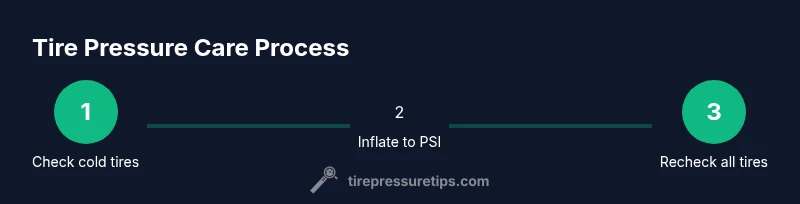
According to Tire Pressure Tips, the tires performance depends on proper inflation, and a consistent routine supports safer driving. The process is simple: check cold tires, use a reliable gauge, and adjust to the vehicle’s PSI target printed on the door jamb or in the owner manual. The habit pays off not only in safety but also in fuel economy and tire longevity. A small effort now can prevent larger costs later.
How to measure tire pressure accurately
Accurate measurement starts with a cold tire. If you have just driven, wait at least three hours or allow the tire to cool for a while before testing. Use a reliable gauge, whether it is a digital or an analog dial. Calibrate the gauge if possible and take readings from all four tires. When you test, compare the numbers to the vehicle specific target on the placard. For convenience, you can note readings in a notebook or use a mobile note, but always rely on a gauge reading for accuracy rather than the feel of the tires.
Vehicle-specific pressures and how to apply them
Your vehicle has a recommended PSI that may differ front versus rear. Always use the manufacturer target from the door jamb sticker or the owner's manual. Do not inflate to the maximum tire sidewall rating; that number is the maximum limit, not the target for daily driving. If you carry heavy loads or drive in hot climates, check if the target adjusts for load. In most cases, the PSI remains constant, but tires on heavier vehicles may have higher targets.
Checking tire pressure with TPMS
Tire pressure monitoring systems warn when a tire drops below or rises above the target range. The warning is useful, but it does not replace a manual check with a gauge. In some cases the TPMS reading may be off by a few PSI, or a sensor may be slow to update. When you receive a TPMS alert, pull over safely, verify each tire with a gauge, and adjust as needed. Regular TPMS checks are part of a proactive maintenance routine.
Temperature and seasonality effects on tire pressure
Temperature changes can cause tire pressure to fluctuate. In colder weather, air contracts and pressure drops; in hot weather, pressure can rise slightly. This is why many drivers notice a change in handling between seasons. To stay accurate, measure pressure when tires are cold and adjust to the correct range for the current load. If you park in a shaded area or garage, you may see readings that reflect ambient conditions more than road use.
Step-by-step quick reference checklist
This section summarizes the essential actions you should take during a tire pressure check.
- Find the recommended PSI on the door jamb sticker or owner manual.
- Measure cold tires with a gauge, and note all four readings.
- Inflate or deflate to the target PSI using a pump or air compressor in small increments.
- Recheck each tire after inflation and ensure even pressure on all wheels.
- Reinstall valve caps and store the gauge for next use.
- Log readings and monitor changes over time.
This quick reference is designed for in time checks before trips and for routine maintenance.
Common mistakes and how to avoid them
Avoid the following mistakes that undermine tire pressure accuracy.
- Measuring hot tires. Always measure cold for accurate results.
- Mixing gauge types. Use the same gauge for consistent readings.
- Overinflating to the maximum on the sidewall. This is not a recommended operating pressure.
- Ignoring the spare tire. It should be checked and maintained too.
- Skipping regular checks. A monthly habit yields better tire health.
Tools and routine maintenance you can adopt
Maintaining a simple toolkit helps you stay on top of tire pressure. A digital tire pressure gauge is precise and easy to read, and a good air compressor or access to a service station can make adjustments quick. Keep a tire pressure placard in your glove box or the manual catalog for quick reference. A small notebook or app can help you log readings and track changes over time. Regular maintenance includes rotating tires, checking for leaks around valves, and inspecting for wear patterns that may indicate misalignment or suspension issues.
Safety considerations and when to seek help
If you notice persistent underinflation or frequent pressure changes, there may be a leak, damaged valve stem, or a failing TPMS sensor. In such cases, avoid driving long distances and seek professional help. Do not ignore warning signs such as rapid changes in tire shape, audible hissing from the tire, or uneven tread wear. Safety comes first, and addressing pressure issues promptly helps prevent tire failure and enhance grip in bad weather.
Tools & Materials
- Digital tire pressure gauge(Calibrated to accurate range; measure cold tires.)
- Air compressor or access to service station(Ensure it can reach the vehicle PSI range.)
- Vehicle door jamb placard or owner's manual(Find the recommended PSI for each tire.)
- Soapy water or leak detector spray(Check for leaks around valve stems and beads.)
- Tire tread depth gauge(Use it to gauge wear along with pressure checks.)
Steps
Estimated time: 30-45 minutes
- 1
Find the recommended tire pressure
Locate the PSI values on the door jamb sticker or owner's manual. Note separate values for front and rear tires if shown. Do not rely on the tire sidewall for pressure targets.
Tip: Always start with a cold tire reading for accuracy. - 2
Check cold tires
Tires should be cold or have been parked for at least three hours before measurement to avoid heat-induced pressure increases.
Tip: If you just drove, wait at least 3 hours before measuring. - 3
Test with gauge
Remove the valve cap and press the gauge onto the valve stem to obtain a reading. Note the numbers on the gauge.
Tip: If using a digital gauge, document the reading for each tire. - 4
Inflate to target PSI
Use a compressor or pump to reach the recommended PSI. Do not exceed the max inflation on the tire sidewall; some manufacturers require a light tolerance.
Tip: Inflate in small increments and recheck after stabilization. - 5
Recheck all tires
After adjusting, recheck all four tires and the spare if you rotate seasonally. Ensure even pressure across axles.
Tip: Check the spare as well if you rarely use it. - 6
Record and monitor
Log your readings and the date. Install TPMS batteries if appropriate; monitor for sudden changes.
Tip: Set a monthly reminder to check pressures.
Frequently Asked Questions
Why is correct tire pressure important?
Proper tire pressure supports safe handling, even wear, and better fuel efficiency. It reduces the risk of blowouts and improves ride quality.
Proper tire pressure helps maintain safe handling and even tire wear, and can improve fuel efficiency.
Where do I find my recommended PSI?
Look for a sticker on the driver’s door jamb or consult the owner's manual. Some vehicles show different PSI for front and rear tires.
Check the door jamb sticker or the owner’s manual for the recommended PSI for your tires.
Can TPMS replace gauge checks?
TPMS warns when pressure is too low or high, but you should verify with a gauge for accuracy, especially after inflation changes.
TPMS warns, but you still need a tire pressure gauge for precise readings.
How does temperature affect tire pressure?
Cold temperatures lower pressure; hot temperatures can raise it. Measure when tires are cold for consistent comparisons.
Temperature changes affect pressure; measure when cold and adjust accordingly.
Is it safe to drive on underinflated tires?
Underinflated tires can overheat and wear unevenly, affecting safety. Address promptly and inflate to the correct PSI.
Driving on underinflated tires is unsafe and should be corrected soon.
Should I check the spare tire?
Yes, keep the spare at the recommended PSI in case you need it.
Don’t forget to check your spare tire too.
What to Remember
- Check tires when cold before trips.
- Always follow the vehicle’s PSI from the placard.
- Use a reliable gauge and verify with TPMS.
- Log readings to monitor changes over time.
- Keep the spare tire pressure maintained.