Testing Tire Pressure: A Step-by-Step Guide
Learn how to safely test tire pressure, interpret TPMS signals, and maintain correct PSI for fuel efficiency and tire life. Practical steps, tools, and common-sense tips to keep your tires in top shape.


According to Tire Pressure Tips, testing tire pressure correctly is quick, safe, and essential for safety and fuel efficiency. In this quick guide, you’ll learn how to use a gauge, locate the vehicle’s recommended PSI, and adjust inflation without overfilling. We’ll cover cold-tire testing, TPMS readings, and practical tips to avoid common mistakes that undermine tire life and performance.
Why testing tire pressure matters
According to Tire Pressure Tips, testing tire pressure is a quick, essential maintenance task that directly affects safety, handling, and efficiency. Underinflated tires can compromise steering response, increase stopping distances, and accelerate wear on the outer tread edges. Overinflation can make the tire ride harsh, crown the center of the tread, and reduce traction in rain or snow. Regular checks help ensure even wear, better fuel economy, and predictable performance across weather and road conditions.
The Tire Pressure Tips team notes that correct pressure isn’t a one-size-fits-all number. It depends on vehicle make, tire size, load, and temperature. A tire that is inflated for comfort on a warm day may be underinflated on a cold morning. That’s why testing tire pressure should be part of your routine before long trips or when you notice changes in handling. Even small pressure differences can alter ride quality and tire contact with the road, so it’s worth taking a few minutes to verify the numbers. By adopting the habit of checking cold tires and recording the readings, you can catch slow leaks and prevent unnecessary wear and safety risk. In this section, you’ll learn what to measure, how to measure, and how to interpret the results in practical terms.
Temperature and pressure: how readings change
Pressure in a tire is not constant. As tires heat up from driving, the air inside expands and the measured psi rises. Conversely, cold tires show lower readings. This means a reading taken after a short drive will not reflect the tire’s cold-inflation target. Tire Pressure Tips analysis shows that for accurate results you should measure when tires are cold and compare readings to the cold target specified by the vehicle maker. When measuring in hot weather or after a long drive, let tires cool for a while before checking, or adjust to the target psi and recheck after cooling to confirm results. Temperature changes, wheel loads, and even tire aging can influence readings, so treat psi as a dynamic value, not a fixed fixture. The practical upshot is simple: take one cold-reading as the baseline, then adjust as needed so the hot-reading matches the target when the tire has cooled. This practice helps prevent over- or under-inflation caused by temperature swings and keeps wear even across the tread.
Manual vs TPMS readings
Tire pressure can be monitored in two broad ways: manual gauge readings and Tire Pressure Monitoring System (TPMS) indicators. TPMS provides a warning when pressure falls below or rises above the recommended range, but it may not tell you the exact psi or reveal a slow leak. A manual gauge lets you measure precise psi so you can verify that the tire sits at the manufacturer’s target. Relying solely on TPMS can miss slow leaks or gradual changes; combining TPMS alerts with periodic manual checks yields the most accurate picture of tire health. When you read the numbers yourself, you’ll gain confidence to inflate or deflate to the precise target and confirm changes with a second reading after a short wait. For fleets and everyday drivers alike, the combination of manual measurement and TPMS monitoring supports consistent tire performance and safer driving.
Tools and environment for testing
To test tire pressure effectively you need a reliable gauge, access to an inflation source, and a plan for documenting readings. A digital tire pressure gauge is preferred for readability and stability; an analog dial gauge can also work if used carefully with a steady hand. Keep a small calculator or notebook to record readings and target psi for each tire. An air compressor or portable inflator with a regulator helps you adjust pressure quickly without overfilling. Always check the gauge against a known reference and test all four tires, including the spare, if you rotate tires frequently. Choose a quiet, well-lit area to work, and ensure the car is on a flat surface with the parking brake engaged. If you drive a vehicle with a heavy load or unusual tire sizes, consult the owner’s manual for any special instructions. The main goal is consistency: use the same gauge, measure on cold tires, and compare with the vehicle’s cited target PSI.
How to determine the correct PSI for your vehicle
Your vehicle’s recommended tire pressure is printed on the door jamb sticker or in the owner’s manual. That target applies to normal driving conditions and typical loads. If you routinely carry heavy cargo or drive in extreme climates, you may have a separate target for front and rear tires. When you test tire pressure, start with the target listed by the manufacturer, not the maximum pressure printed on the sidewall. The tire sidewall maximum is the limit for safety testing and should not be used as the operating pressure. If your tires are older or show uneven wear, you may observe minor deviations between corners. In these cases, follow the manufacturer guidance and consider rotating tires to balance wear. The goal is to maximize traction, steering response, and even wear while avoiding under- or over-inflation, which sends tires into risky operating ranges. This approach aligns with best practices from Tire Pressure Tips and other industry sources.
Reading, adjusting, and verifying pressures safely
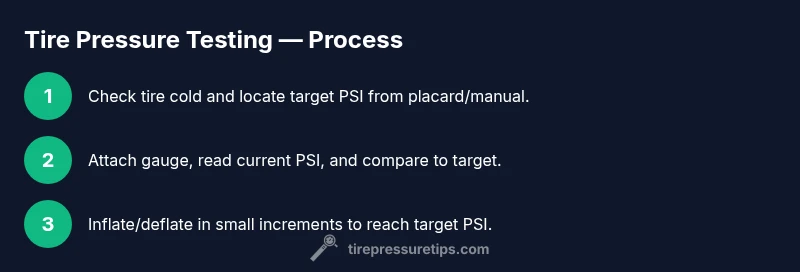
Begin with cold tires and the correct target number. Remove the valve cap, attach the gauge squarely to the valve stem, and read the pressure without wiggling the gauge. If you’re low, add air in small increments and recheck after a short wait. If you’re high, release air gradually and recheck. Never exceed the vehicle’s recommended number. Once you reach the target psi, reseal the valve stem with the cap and recheck after a minute to confirm stability. Record the final readings for each tire and store the results in your maintenance log. Regular verification helps you catch slow leaks and adjust for temperature or load changes over time. This habit also helps protect tire tread from irregular wear and supports safe handling in rain or snow.
Dealing with uneven wear and temperature effects
If one tire wears faster or if readings vary significantly between tires, inspect for issues such as misalignment, improper loading, or a flaky TPMS sensor. Inconsistent readings can stem from aging sensors, a faulty gauge, or a slow leak that’s hard to spot. Addressing these problems typically involves inspection and possibly professional service. When pressure is adjusted for weather and load, you should rotate tires according to the manufacturer’s schedule to equalize wear. Temperature effects add another layer of complexity: as ambient temperature drops, pressure falls; as it rises, pressure increases. In practice, you’ll want to verify pressures at seasonal transitions and keep a close eye on the front-to-back balance. By combining regular checks with proactive maintenance, you’ll extend tire life and preserve safe handling.
Common mistakes and maintenance routine
Common mistakes include guessing tire pressure by feel, inflating to the sidewall maximum, or neglecting to recheck after adjusting. Always use the manufacturer’s target, test when tires are cold, and recheck after any adjustment. Create a simple maintenance habit: set a monthly reminder to check all four tires and record the numbers. Inspect tire tread depth and sidewalls during each check, and watch for slow leaks around valve stems, stems, or punctures. Finally, keep the gauges calibrated by comparing readings with a known reference periodically. Routine checks save money, improve fuel economy, and keep you safer on the road.
Tools & Materials
- Digital tire pressure gauge(Accurate readings; check precision to 0.1 psi.)
- Owner's manual or tire placard(Contains manufacturer-recommended PSI per tire.)
- Air compressor or portable inflator(With regulator to prevent overinflation.)
- Valve-cap removal tool or small screwdriver(Helpful if valve caps are stubborn.)
- Notebook or mobile app to log readings(Record date, tire, and PSI for trend tracking.)
Steps
Estimated time: 15-25 minutes
- 1
Prepare and locate target PSI
Before you start, locate the vehicle’s recommended PSI on the door jamb sticker or in the owner’s manual, and note separate targets for front and rear if required. Understanding the target helps you inflate accurately.
Tip: Always verify the target for your exact tire size and load. - 2
Ensure tires are cold
Park on a flat surface and wait until the tires are cold before measuring. Driving heats the air and skews readings, making it hard to know where you truly stand.
Tip: If you must test after a drive, recheck after the tires have cooled to confirm accuracy. - 3
Attach gauge and read
Remove the valve cap, place the gauge squarely on the valve stem, and take a steady reading without twisting the gauge. Record the number for later comparison.
Tip: Use the same gauge consistently to avoid inter-device variation. - 4
Inflate or deflate to target PSI
If the reading is low, add small amounts of air and recheck. If high, release air gradually and recheck. Stop at the manufacturer’s target, not the maximum sidewall pressure.
Tip: Inflate in small increments to prevent overshoot. - 5
Recheck after adjustment
Once you reach the target psi, reseat the valve cap and recheck after a minute to ensure stability. Tire pressure can settle after a short period.
Tip: A final check confirms stability before you drive away. - 6
Record results
Log the final readings for each tire and note the date, tire position, and ambient conditions. This creates a baseline for future comparisons.
Tip: Keep a simple log in your glove box or on your phone.
Frequently Asked Questions
Why test tire pressure when tires are cold?
Cold tires reflect the vehicle’s normal operating pressure. Heating from driving raises psi, so a cold reading gives a reproducible baseline. This helps prevent over- or under-inflation and catches slow leaks earlier.
Test when cold to get an accurate baseline and catch slow leaks.
How often should I test tire pressure?
Check all tires at least monthly and before long trips. If you drive in extreme temperatures or carry heavy loads, test more often to maintain even wear and safe handling.
Monthly checks are recommended, plus before long trips.
What if TPMS shows low pressure but my gauge reads normal?
Use a second gauge to confirm readings and inspect tires for leaks. If readings stay steady but TPMS warns, a sensor issue or slow leak is possible; consider professional inspection.
Use a second gauge and inspect for leaks or sensor issues.
Can I test tire pressure when the tires are hot?
Testing on hot tires is not advised for accuracy, as heat raises readings. Wait for tires to cool before taking a measurement.
Avoid hot-tire testing; wait for cooling.
Do front and rear tires ever require different PSI targets?
Some vehicles specify different targets for front and rear tires. Always follow the placard or manual. If unsure, contact the manufacturer or a tire professional.
Check the placard for front and rear targets and follow it.
What if I can't find the recommended PSI?
Look for the door jamb sticker or the owner's manual. If not available, contact the dealer or manufacturer. Do not rely on guesswork.
Refer to the door sticker or manual; avoid guessing.
Watch Video
What to Remember
- Test tires when cold for accuracy.
- Use manufacturer targets, not max sidewall pressure.
- Document readings to detect leaks and trends.
- Combine TPMS with manual checks for reliability.
- Inflate in small increments and verify after settling.