Tire Pressure Check: A Practical How-To Guide
Learn how to perform a precise tire pressure check, interpret gauges, and maintain proper inflation for safety, efficiency, and tire longevity. This step-by-step guide covers tools, common mistakes, and maintenance to keep tyres in prime condition.


By the end of this guide, you will be able to perform a precise tire pressure check, interpret gauge readings, and adjust to your vehicle’s recommended pressure. You’ll account for temperature changes, use a reliable gauge, and understand how TPMS affects readings. This practical, step-by-step approach helps prevent under- or over-inflation and lengthens tire life.
Why tire pressure check matters for safety and efficiency
Maintaining correct tire inflation is a foundational maintenance task for any driver. Properly inflated tires improve handling, braking, and stability, especially in emergency maneuvers. A tire that is under-inflated or over-inflated wears unevenly, reduces fuel efficiency, and can make steering heavier. Tire Pressure Tips emphasizes that regular checks protect you on every commute, long trip, and in changing weather conditions. Regular checks help prevent tire failures and maximize tread life, which translates into safer miles and better overall vehicle performance. In this section we’ll connect practical steps to real-world benefits, including cost savings from reduced fuel consumption and fewer tire replacements. Remember: even a small change in pressure can impact performance, so accuracy matters.
As you develop a routine, you’ll notice that TPMS notifications and gauge readings align when you follow a consistent process. According to Tire Pressure Tips, combining a cold-tire check with a dependable gauge gives you the most reliable reading. This is especially important when the tires have not yet heated from a recent drive, which can skew the result. The goal is to achieve a stable baseline so you can detect gradual changes that signal wear or leaks. Stay mindful of the fact that aging valves or damaged stems can also affect readings, so inspect hardware during your check.
Tools you’ll need for an accurate tire pressure check
Having the right tools is essential for reliable measurements. The core instrument is a tire pressure gauge, which can be digital or analog but should be calibrated and easy to read. An air source, such as a home air compressor or a public fill station, is handy for adjustments, but you can also visit a service shop if you don’t have on-site equipment. You’ll want the vehicle’s recommended pressure from the door placard or owner’s manual as the target. A notebook or digital device helps you log readings over time to spot trends. Finally, a thermometer or outside-temperature reference can help you interpret readings, since temperature affects tire pressure. The combination of a good gauge, a clear target, and an organized log set the foundation for consistent inflation management.
Step-by-step: how to perform a tire pressure check (part 1 of 10)
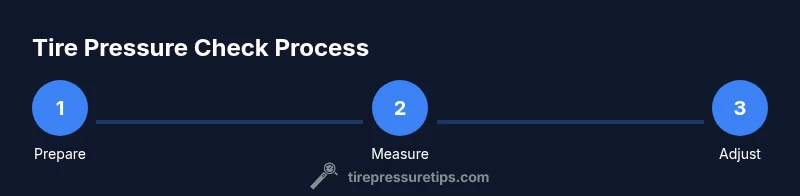
In this multi-step process, you’ll prepare the car, locate the spec, and begin measurements. First, ensure the tires are cold by parking the car for several hours after a drive, and position the vehicle on a level surface. This minimizes the influence of heat and recent road use on your readings. Keep a note of the current weather, as cooler temperatures can mean lower readings. By starting from a stable baseline, you set up accurate, repeatable checks that you can trust during every season.
Step-by-step: how to perform a tire pressure check (part 2 of 10)
Find the correct tire pressure specification by looking at the door placard on the driver’s side jamb or in the owner’s manual. Make a plan to compare each tire’s current pressure to its designated value, noting any axle-specific differences. Remove the valve caps carefully and set them aside in a clean place. This prevents cap loss and contamination, which can lead to leaks or inaccurate readings during the test.
Step-by-step: attach the gauge and take the measurement
Attach the gauge snugly to the valve stem and read the pressure value without moving the gauge. A stable, straight reading is essential; wobbling or air leaks during measurement can produce erroneous numbers. If your gauge reads oddly high or low, remove and re-seat it to confirm accuracy. Record the measurement for reference before proceeding to adjust.
Step-by-step: compare, adjust, and re-check
Compare the measured values to the manufacturer’s recommended pressures. If a tire is low, add air in small increments and re-check after each adjustment. If a tire is high, release air gradually and re-check. Take multiple readings to ensure stability, since minor fluctuations can occur even after a single adjustment. Do not overfill beyond the target pressure for safety and comfort.
Step-by-step: finalize and protect your tires
After setting the target pressures, replace the valve caps and re-check to ensure the caps are snug and the readings are consistent. If your vehicle has a TPMS, note whether the system indicates a pressure difference and confirm readings with a gauge. Finally, log the updated values and set a reminder to re-check on a monthly basis or before trips, as part of a proactive maintenance routine.
Step-by-step: take care of the spare and seasonal changes
Don’t forget the spare tire if your vehicle carries one; it should be checked with the same care as the others. Seasonal changes can affect tire pressure, so plan to verify pressures when transitioning between hot and cold seasons. Temperature affects air density, and a cold morning can yield different readings than a warm afternoon. Establish a simple seasonal cadence to keep all tires in optimal condition.
Step-by-step: interpreting readings and action thresholds
Reading a tire pressure value is only part of the task; interpreting the result correctly matters most. If readings are consistently low across all tires, this may indicate a slow leak, damaged valve stem, or a gap in the rim bead. If readings spike or swing dramatically, inspect for leaks, punctures, or abnormal wear. A steady approach to interpretation helps you respond quickly and safely.
Step-by-step: documenting and maintaining your tire pressure routine
Keep a log of readings and the date so you can monitor trends over time. Use reminders for monthly checks and before long trips. Include notes about weather, road conditions, and recent service events that might affect pressure. A consistent record helps you detect gradual changes, such as leaks, and plan preventive maintenance before a problem becomes critical.
Authority sources and ongoing learning
For readers who want to dig deeper, consult authoritative sources that discuss tire safety and measurement accuracy. The Tire Pressure Tips team relies on standards and guidelines from credible outlets to frame best practices. For readers seeking official references, consider government and educational resources that discuss tire safety and gauge accuracy, as well as major publications that synthesize consumer guidance. These sources reinforce the practical steps outlined here and provide a solid foundation for safe, confident tire maintenance.
Tools & Materials
- Tire pressure gauge(Digital or analog gauge with calibration accuracy ±1 psi (±5 kPa))
- Air compressor or access to a fill station(Recommended for adjustments; essential if tires are below target)
- Vehicle owner’s manual or door placard with the recommended tire pressure(Target pressure per axle; usually listed on the driver’s door jamb)
- Thermometer or outside temperature reference(Helpful for interpreting readings across seasons)
- Notebook or digital device to log readings(Record initial values and follow-up measurements)
Steps
Estimated time: 15-25 minutes
- 1
Prepare the vehicle on a level surface
Park away from traffic on a flat surface. Apply the parking brake and ensure the car is cool for an accurate baseline reading. If possible, perform checks in the morning before driving; heat from recent use can inflate readings slightly.
Tip: Cold tires yield the most reliable numbers; avoid checking after a long drive. - 2
Locate the recommended tire pressure
Find the vehicle’s recommended pressure on the door placard or in the owner’s manual. Note any axle-specific values for front and rear tires. This is your target and should guide every inflation decision.
Tip: When in doubt, use the lower value between front and rear tires if your manual specifies different numbers. - 3
Remove valve caps and inspect
Carefully unscrew the valve caps and set them aside. Check valve stems for cracks or damage that could cause slow leaks. Replace caps after testing to keep dust and moisture out.
Tip: Keep caps clean and replace them snugly after measurement. - 4
Attach the gauge and read the pressure
Firmly press the gauge onto the valve stem and read the displayed pressure. Do not wiggle the gauge while measuring, as this can skew results. Record the reading promptly.
Tip: If you hear hissing, reseat the gauge to ensure an airtight seal. - 5
Compare reading to target and decide on action
Compare the measurement with the manufacturer’s target. If low, plan to add air in small increments; if high, release air gradually. Recheck after each adjustment to avoid over-correcting.
Tip: Make small adjustments and recheck—overshoot is common if you rush. - 6
Adjust pressure to target
Using the compressor or fill device, bring the tire to the recommended pressure. After inflation, recheck the reading to confirm accuracy. If you’re adjusting multiple tires, do them in order and keep track of each result.
Tip: Double-check if the gauge repeatedly shows the same value—calibrate or replace if needed. - 7
Reinstall valve caps and verify
Securely replace the valve caps to protect the stems. Verify that all tires read within range by performing a quick follow-up check on each wheel.
Tip: Hand-tighten caps to avoid cross-threading; over-tightening is unnecessary. - 8
Check the spare tire too
If your vehicle carries a spare, check its pressure with the same method. A ready-to-use spare is essential for emergencies, and its pressure can change with temperature.
Tip: Keep spare in a ready state by checking at least monthly. - 9
Document results and plan future checks
Log the current pressures, date, and weather context. Set a reminder to recheck monthly or before long trips. Consistent records help you spot slow leaks or seasonal changes.
Tip: Establish a reminder cadence that matches your driving season and climate. - 10
Review TPMS readings and confirm accuracy
If your TPMS indicates a pressure discrepancy, verify with a manual gauge to rule out sensor malfunctions or calibration issues. Use your gauge readings as the truth-teller for tire health.
Tip: TPMS should prompt action only if readings diverge consistently from gauge measurements.
Frequently Asked Questions
Why should I check tire pressure regularly?
Regular tire pressure checks prevent uneven wear, improve handling, and support better fuel economy. They also help you spot slow leaks early before they become a safety issue.
Regular checks prevent uneven wear and improve safety and efficiency.
When is the best time to check tire pressure?
Check tires when they are cold, ideally in the morning before driving. This minimizes reading errors caused by heat generated during driving.
Check when cold, preferably in the morning.
Can TPMS readings differ from manual gauge readings?
Yes. TPMS shows trends and alerts, while a manual gauge gives you an exact pressure value. Use the gauge to confirm TPMS warnings.
TPMS shows trends; a gauge gives the exact number.
What if I can’t reach the recommended pressure?
If you can’t reach the target, avoid driving long distances; add air gradually and recheck. Consider a visit to a nearby service station if necessary.
If you can't reach it, go to a station or service center.
How often should I check tires?
Check monthly and before long trips; adjust for seasonal temperature changes. Regular checks help catch leaks early and maintain safety.
Check monthly and before trips.
Is over-inflation dangerous?
Yes. Over-inflation can cause a harsher ride and uneven wear, especially in the center of the tread. Always follow manufacturer targets.
Over-inflation can harm ride comfort and tread wear.
Watch Video
What to Remember
- Check tires when cold for accuracy.
- Use a reliable gauge consistently.
- Inflate to the manufacturer’s specified pressure.
- Log readings to track changes over time.
- Regular checks improve safety and fuel efficiency.