Check Tire Pressure: Quick, Safe Guide for Drivers in 2026
Learn to check tire pressure accurately with a gauge and TPMS cues. This Tire Pressure Tips guide covers cold-tire checks, temperature effects, and practical maintenance for safer driving.


Check tire pressure accurately using a dedicated tire gauge and TPMS cues. You’ll learn how to read the recommended pressures for your vehicle, account for temperature and load, and verify each tire quickly and safely. Gather a gauge, an air pump, and a clean, cool tire; then follow the step-by-step instructions in this guide.
Why checking tire pressure matters
Maintaining proper tire pressure is one of the simplest, most effective ways to keep your vehicle safe and efficient. When tires are under- or over-inflated, handling can feel vague, braking distances may increase, and fuel economy can suffer. According to Tire Pressure Tips, maintaining ideal pressure reduces rolling resistance, improves grip in wet and dry conditions, and extends tire life by encouraging even tread wear. Regular checks also help you detect slow leaks from nails, punctures, or damaged valves before a sudden loss of air becomes a safety risk. For the everyday driver, a quick pressure check once a month, plus before long trips, is a small habit with big payoffs. The goal is to keep the tires inflated to the car manufacturer’s recommended pressure, which depends on load, speed, and driving conditions. Keeping this target in mind gives you a reliable baseline even as seasons change and tires wear.
How tire pressure is defined and measured
Tire pressure is the force exerted by air inside the tire on its walls, measured in PSI (pounds per square inch) or kPa (kilopascals). Pressure readings depend on temperature, recent driving, and the gauge you use. There isn’t a single universal number; your vehicle’s manufacturer specifies a recommended range, which helps balance grip, wear, and fuel economy. Readings are most accurate when tires are cold, meaning they haven’t been driven recently. Digital gauges provide quick results, while dial or pencil gauges can be more affordable and rugged. Remember to note whether you’re reading cold or warm air, as heat expands air and can skew results if you measure immediately after driving.
Using TPMS vs. manual gauges
Tire Pressure Monitoring Systems (TPMS) alert you when a tire’s pressure falls outside the safe range, but TPMS is not a precise gauge reading. A sensor may warn you that pressure is low before you know how much it is off, and in some cases a slow leak won’t trigger the light right away. Always confirm TPMS warnings with a manual gauge to determine the exact pressure. If your TPMS light stays on after adjusting, there may be a sensor fault or a leak that needs professional attention. A gauge and a pump give you the most reliable way to maintain target pressures across all four tires.
Where to find the correct pressure for your vehicle
Most manufacturers publish the recommended tire pressure on a sticker located on the driver’s door jamb, in the owner's manual, or sometimes inside the fuel filler cap. The sticker usually shows a separate value for the front and rear tires and can indicate different pressures when the vehicle is loaded or driven at higher speeds. If the sticker is missing, check the manual or contact the manufacturer. It’s normal for pressure to differ slightly between front and rear tires due to weight distribution and tire size. Always aim to bring each tire to its labeled spec rather than guessing.
Temperature, load, and seasonal effects
Air pressure changes with temperature: cooler air compresses less and higher ambient temperatures increase pressure slightly. If you drive year-round in varying weather, you’ll notice fluctuations in PSI even when tires are in good condition. When a vehicle is heavily loaded or used for high-speed driving, recommended pressures might shift. This is why it’s wise to check tires when they’re cold and to recheck after adding or removing load. Regular checks help you detect slow leaks and quickly adjust before safety or efficiency suffer.
What affects gauge accuracy and how to improve it
Gauge accuracy depends on the device, how you apply it, and the reading environment. Calibrate or replace gauges showing inconsistent results. Always place the gauge on the valve stem squarely and read at eye level to avoid parallax errors. If you’re unsure, compare two different gauges to verify readings. Keep gauges clean and free of dirt that could affect the seal. Store gauges in a protective case to prevent damage.
Common mistakes and how to fix them
Common mistakes include reading a hot tire, not replacing the valve cap, overinflating, and neglecting the spare tire. To avoid these, measure after tires have cooled, re-check after adjustment, and always reinstall valve caps to protect against dirt and loss of air. If a tire shows persistent low pressure, look for slow leaks around the valve stem, bead, or tread area. Seek professional help for persistent issues or suspicious TPMS warnings.
Maintenance routine: monthly checks and record-keeping
Make tire pressure checks a monthly habit, plus before long trips. Keep a small notebook or digital log of readings and the dates. Tracking changes over time helps you spot slow leaks or unusual wear patterns and plan maintenance before a problem becomes serious. Pair pressure checks with tread depth assessments and visual inspections for nails, cracks, or bulges. A simple routine pays dividends in safety, fuel savings, and tire longevity.
Tools & Materials
- Tire pressure gauge(Choose digital, dial, or pen-type gauge. Ensure it reads in PSI or kPa and calibrate if possible.)
- Air compressor or air pump(Access to a reliable source of air and a gauge to verify pressure after adding air.)
- Vehicle owner’s manual or door jamb sticker(Location varies by vehicle; use it to confirm the correct pressure.)
- Clean cloth(Wipe valve stems for a clean reading and remove dust.)
- Notebook or digital log(Record readings and dates for trend tracking.)
- Valve caps(Keep caps on to protect valve stems and prevent leaks.)
Steps
Estimated time: Estimated total time: 12-20 minutes
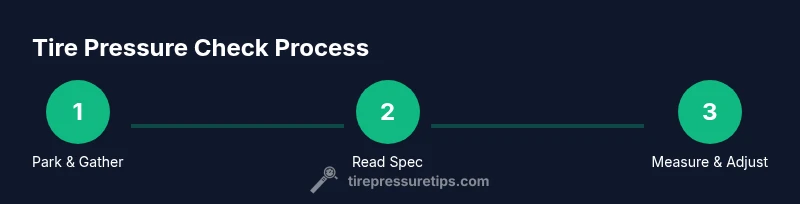
- 1
Park in a safe, level location
Find a flat area away from traffic, set the parking brake, and turn off the engine. Give yourself space to work and prevent accidental movement. If you must check near a curb, center the tires so readings are not influenced by an uneven surface.
Tip: Engage the parking brake fully and chock the wheels if available. - 2
Gather your tools
Collect a tire gauge, air pump, and a notebook or device to record readings. Have the car’s sticker or manual handy in case you need to confirm the exact spec. This minimizes interruptions once you start the measurement process.
Tip: Check gauge calibration before using it to ensure accuracy. - 3
Identify the correct pressure spec
Locate the recommended pressure on the driver’s door jamb sticker or in the owner’s manual. Note that front and rear tires can have different targets, and conditions like heavy loads may alter the spec.
Tip: If numbers differ between tires, follow the spec for each position. - 4
Check tires when cold
Ensure tires haven’t been driven for at least 3 hours or cooled off after a short drive. Cold readings are far more accurate and prevent hot air from skewing the result.
Tip: Avoid checking after a long drive, which artificially inflates readings. - 5
Measure current pressure
Remove the valve cap, place the gauge on the stem, and take a reading. Record the value and repeat for all tires, including the spare where applicable.
Tip: Seal the valve stem seal properly to avoid air leakage during measurement. - 6
Adjust pressure to spec
If pressure is low, add air until you reach the recommended level. If high, release air gradually and recheck until it matches the spec.
Tip: Recheck after adjusting to confirm accuracy. - 7
Replace valve caps and tidy up
Put valve caps back on each tire and store your gauge. Take a quick visual check for any obvious signs of damage or leaks.
Tip: Keep spare caps as part of routine maintenance. - 8
Record and monitor
Log the readings with date and location. Note seasonal changes or pattern shifts to anticipate future adjustments and tire wear.
Tip: Use the data to spot gradual leaks or TPMS inconsistencies.
Frequently Asked Questions
What is the best time to check tire pressure?
Check tire pressure when the tires are cold, ideally before driving or after they have been parked for a few hours. Heat from driving can raise the pressure reading and lead to over- or under-inflation errors.
Check tires when cold, not after a drive; readings are most accurate then.
Why might TPMS readings differ from a manual gauge?
TPMS provides an alert based on pressure ranges, not an exact measurement. Always confirm a TPMS warning with a manual gauge to determine the exact PSI and decide on a correction.
TPMS shows a warning range; verify with a gauge for exact pressure.
Can I check tire pressure without removing the valve cap?
It’s possible to measure with the cap on, but removing the cap provides a better seal and a more accurate reading. Reinstall the cap after measurement to keep dirt out.
Remove the cap for the best reading, then replace it.
Should I check tire pressure every month?
Yes, checking once a month helps catch slow leaks and maintain even wear. Also check before long trips or seasonal changes.
Check monthly and before long trips to stay safe.
What happens if I overinflate or underinflate my tires?
Underinflation can cause poor handling and increased wear on the edges; overinflation can reduce traction and lead to a harsher ride. Always aim for the manufacturer’s spec and recheck after adjustments.
Keep tires near the recommended pressure to maintain safety and performance.
Is it safe to drive with a TPMS warning?
A TPMS warning indicates one or more tires are below safe pressure. If you’re unable to correct it quickly, reduce speed and seek professional help if the warning persists.
If the TPMS warning is on, check the pressure and fix the issue soon.
Watch Video
What to Remember
- Check tires when cold before driving
- Use a precise gauge and verify against the vehicle spec
- Adjust all four tires to the recommended pressure
- Account for temperature and load changes
- Regularly inspect tires for leaks and wear