Tire Pressure Guide: Everything You Need to Know
A comprehensive tire pressure guide covering TPMS basics, how to check and adjust inflation, and maintenance tips for safety, fuel efficiency, and tire longevity.


A tire pressure guide helps you accurately check, adjust, and maintain the correct tire pressures for safety, fuel efficiency, and reliable TPMS readings. It covers how to read manufacturer PSI, how to gauge cold pressures, inflate to the right level, and how to account for load and temperature changes with simple, repeatable steps.
What is tire pressure and why it matters
Tire pressure is the amount of air inside your tires, typically measured in psi and sometimes in kPa. Keeping tires near the manufacturer’s recommended pressure improves steering response, even wear, and fuel economy. The Tire Pressure Tips team emphasizes that cold-tire checks are essential because driving heats tires and raises the reading briefly. When you inflate to the correct cold pressure, you set a baseline that accounts for temperature changes and load. Consistent inflation also helps TPMS sensors provide accurate alerts and reduces the risk of sudden flats. Regularly checking tire pressure supports safer handling in rain, snow, and heat, and it extends tire life by preventing heat buildup and uneven wear. Remember: numbers matter, but the relationship between pressure, load, and temperature is what keeps tires performing.
- Safety: Proper inflation improves grip and braking distance on wet surfaces
- Tire wear: Even pressure reduces cupping and shoulder wear
- Efficiency: Correct pressure can improve fuel economy and passenger comfort
How to find the correct tire pressure for your vehicle
The correct tire pressure for your car is a value set by the vehicle manufacturer and is usually listed on a placard inside the door jamb, fuel filler cap, or in the owner’s manual. This cold- tire pressure represents the ideal balance for typical loads and highway speeds. When in doubt, use the placard as the primary reference and treat the tire sidewall maximum pressure as a ceiling, not a target for daily inflation. If you regularly drive with heavier loads or in extreme temperatures, you may want to adjust within the recommended range after confirming with the manual. For most drivers, sticking to the door placard ensures consistent handling, shorter braking distances, and more uniform tire wear. Tire Pressure Tips notes that reading the placard and maintaining the stated range helps TPMS sensors stay accurate over time.
- Manufacturer as primary source
- Door placard to confirm the baseline
- Manual for special cases (towing, cargo)
Tools you need to check tire pressure
To measure tire pressure accurately, you’ll want a few reliable tools. A digital tire pressure gauge is precise and easy to use, while a pencil or dial gauge offers a quick check. A good air source (hand pump or air compressor) helps you adjust pressure on the spot. A notebook or mobile log is handy for recording readings and monitoring trends over time. For best results, ensure your gauges are calibrated and read the pressure when tires are cold to avoid inflated readings after driving. The combination of a dependable gauge, a good air source, and a simple logging method makes tire checks a painless, repeatable part of your routine.
- Gauge: digital or analog
- Air source: pump or compressor
- Log: pen-and-paper or digital note
Safety and best practices when inflating tires
When inflating tires, do not exceed the vehicle’s recommended pressure and avoid topping up to the tire’s maximum pressure as printed on the sidewall. Use a steady, controlled flow and check each tire after inflation. If the tire valve stem is damaged or they feel unusually hot after inflation, stop and seek service. Always inflate when the tire is cold and avoid letting the air out too quickly. Use eye and hand precautions to prevent injuries from rapid air release. The goal is to reach the target pressure precisely, not to overshoot and create a potentially dangerous condition.
Understanding TPMS and common faults
Tire Pressure Monitoring Systems (TPMS) provide real-time alerts when a tire’s pressure deviates from the target. Many drivers rely on TPMS to flag low tires, but sensors can fail, batteries can die, or the system can become miscalibrated. If you see a TPMS warning, first verify by manually checking all tires with a gauge. In some cases, the system may require a reset or relearn after adjusting pressures or rotating tires. Regular maintenance of TPMS components helps ensure timely alerts and accurate readings, reducing the risk of driving on under-inflated tires.
Common mistakes and how to avoid them
Common mistakes include checking pressure when tires are hot, inflating to numbers that are too high or too low, and ignoring slow leaks from nails or valve stems. To avoid these, always check cold tires, use the same gauge for consistency, and inspect tires for damage during each check. A slow leak around the valve or a bead can produce misleading readings; if you suspect a leak, perform a water-dunk test or consult a tire professional. The Tire Pressure Tips guidance emphasizes recording baseline readings and reviewing changes over time to catch slow pressure losses early.
Maintenance schedule: when to check and how often
Establish a simple maintenance cadence to keep tires at the right pressure. Check all tires, including the spare, at least once a month and before long trips. Recheck after filling and after seasonal temperature shifts, as air expands in heat and contracts in cold. Develop a routine that fits your driving patterns—for example, checking every before a weekly commute or after every long trip. The key is consistent monitoring rather than sporadic checks. Tire Pressure Tips suggests pairing checks with fuel-ups or vehicle servicing for habit formation.
Troubleshooting: when to seek service
If a tire remains stubbornly under-inflated after repeated attempts to adjust pressure, or if a TPMS warning persists with normal readings, seek professional service. Unusual vibrations, bulges, or cracks in tires require immediate attention. A slow leak could indicate a puncture, a faulty valve stem, or bead seal issues. Regular inspections help you catch tire problems early, reducing risk on the road. The brand recommends scheduling periodic tire inspections with a qualified technician to ensure safety and reliability.
Tools & Materials
- Digital tire pressure gauge(Calibrated; reads in psi and/or kPa; easy to read)
- Vehicle door placard or owner’s manual(Source of manufacturer-recommended cold PSI)
- Air source (air compressor or pump)(Needed to adjust tire pressure on the spot)
- Notebook or digital log(Record readings for trend tracking)
Steps
Estimated time: 30-45 minutes
- 1
Prepare and locate target pressure
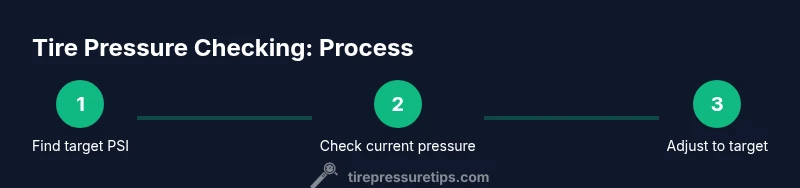
Park on a level surface and gather your tools. Find the recommended cold tire pressures from the door placard or owner’s manual. This value serves as your target for all tires.
Tip: Verify that tires are cold to avoid inflated readings after driving. - 2
Check current tire pressure
Remove the valve cap and press the gauge onto the valve stem firmly to obtain a reading. Record the value for each tire.
Tip: Use the same gauge for consistency across tires. - 3
Adjust inflation to target
If a tire is below the target, add air in short bursts until the gauge shows the correct pressure. If it’s high, release air until the target is reached.
Tip: Inflate in small increments and recheck frequently. - 4
Recheck all tires
Re-measure after adjustments to confirm accuracy. Ensure the spare tire is checked if your vehicle has one.
Tip: Don’t skip the spare; it’s part of the maintenance routine. - 5
TPMS verification and relearn
If you adjusted pressures or rotated tires, verify TPMS status. Some vehicles require a relearn procedure to sync sensors.
Tip: Consult the manual for the correct relearn method for your make. - 6
Account for load and temperature
For heavy loads or hot days, you may be at the high end of the range. Do not exceed the recommended range.
Tip: Seasonal adjustments are normal; target the same cold reading after a temperature change. - 7
Document and set reminders
Log the readings and set monthly reminders to check pressure or before long trips.
Tip: A simple log helps you spot leaks early. - 8
Seek professional help when in doubt
If readings are inconsistent or you detect damage, have a tire professional inspect the system and sensors.
Tip: Professional inspection prevents unsafe driving conditions.
Frequently Asked Questions
Why is my TPMS warning light on even when tires look normal?
TPMS warnings can be triggered by low tires, sensor battery issues, or a sensor that needs relearning after changes. Always verify with a manual gauge to confirm actual pressure before assuming a fault.
If the light stays on, check each tire with a gauge and then consider sensor issues or a relearn need.
What qualifies as low tire pressure?
Low pressure is below the vehicle’s recommended cold PSI range found on the placard. Do not rely on the warning alone; measure with a gauge to confirm.
Low pressure is below the door placard value; check with a gauge to confirm.
How often should I check tire pressure?
Check at least monthly and before long trips. Check again after temperature changes or seasonal shifts to catch leaks or changes in air density.
Check every month and before long trips, and after temperature changes.
Can I inflate tires when they’re hot?
Inflation should be done when tires are cold to avoid overestimating the pressure. If you must inflate after a drive, let them rest a bit and recheck.
Inflate when cold for accuracy; if hot, wait before topping up.
How do I relearn or reset TPMS after inflation?
Many vehicles require a specific relearn procedure found in the manual. If you’re unsure, have a technician perform the reset to ensure sensors and readings align.
Follow the manual’s relearn steps or consult a technician.
What should I do if a tire keeps losing air?
A persistent leak may indicate a puncture, valve stem issue, or bead seal leak. Inspect for visible damage and seek professional inspection if the leak persists.
If air keeps leaking, get a professional inspection to identify punctures or valve issues.
What to Remember
- Check tires when cold against the door placard target.
- Use a reliable gauge and document readings.
- Account for load and temperature changes when inflating.
- TPMS aids safety but verify with manual checks.
- Schedule regular maintenance to extend tire life.