Winter Tire Pressure vs All Season: A Practical Guide
Explore how winter tire pressure differs from all-season tires, how cold temperatures affect PSI, and practical steps to maintain safe, efficient tire performance year-round.


Winter tire pressure vs all season is primarily about how cold temperatures affect air volume. In cold weather, air contracts and pressure drops, which can reduce grip if you ignore it. Both tire types benefit from regular checks; maintain the vehicle manufacturer’s PSI, adjust for payload, and monitor changes as temperatures swing.
The core question: winter tire pressure vs all season
When you compare winter tire pressure vs all season, the question isn't only about grip—it's about how the tire pressure behaves as the weather changes. This is especially true in climates that swing from mild autumn days to freezing mornings. The Tire Pressure Tips team emphasizes that maintaining the correct PSI is part of safe winter driving, not an afterthought. As temperatures drop, air inside tires contracts, and the indicated pressure on your gauge can fall even if you haven't touched the valve. That means a tire that seemed properly inflated during a warm spell may be under-inflated once the thermometer falls. On the other hand, warming days can push pressure higher than desired, especially if you don't account for payload or driving style. Winter tires use a different tread pattern and compound optimized for cold conditions, while all-season tires aim for consistent performance across a broader temperature range. The practical takeaway is simple: plan for regular pressure checks when seasons shift, and tailor inflation to the tire type you’re running and the typical driving scenario you face. According to Tire Pressure Tips, even a few psi can change braking distance in cold weather.
How temperature affects tire pressure
Temperature has a direct effect on tire pressure because air expands when warm and contracts when cold. In winter, when the ambient air drops, the gas inside your tires loses volume and pressure, even if the tires haven’t leaked. This change is independent of whether you’re using winter tires or all-season tires; the physics applies to both. The result is a lower contact patch with the road, which can reduce grip, especially on wet or icy surfaces. Poor pressure can also increase rolling resistance and cause uneven wear patterns over the tread. The Tire Pressure Tips team offers a practical lens: assess tire pressure in the morning before heating cycles or traffic; if it’s notably different from the placard value on the door, plan a quick adjustment. Remember that tires are part of a broader system, including suspension, alignment, and load distribution. With winter driving in mind, it’s wise to check pressure whenever the forecast calls for sustained cold and to re-check after trips through large temperature swings.
How winter tires differ from all-season tires
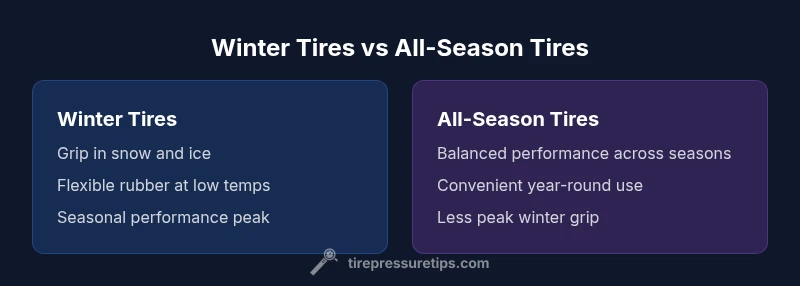
Winter tires differ in three core aspects: compound, tread pattern, and siping. The softer rubber compound remains flexible at low temperatures, helping the tire grip cold pavement. The tread blocks and deeper channels are designed to evacuate snow and slush, providing a bite that all-season tires often lose in severe winter conditions. Because of these design choices, winter tires respond differently to pressure: under-inflated winter tires can distort tread contact in cold weather and reduce their bite; over-inflation can make the tire ride too stiff, reducing grip on rough or slushy surfaces. All-season tires prioritize a mix of dry, wet, and some winter performance, so they may perform more predictably as temperatures vary but generally don’t match the peak winter performance of dedicated winter rubber. The trade-off is vehicle compatibility and convenience: you can switch to winter tires seasonally, but you’ll face storage and rotation logistics. In practice, many drivers find that a seasonal change improves safety and control when winter roads arrive.
Pressure recommendations by tire type and season
There is no single number to memorize; the baseline remains the vehicle manufacturer’s recommended cold PSI, typically found on the door jamb placard or in the owner's manual. When you mount winter tires, you generally keep the same baseline unless the tire is significantly taller or wider, or you carry heavy loads often. Some drivers advocate nudging up or down a small amount to compensate for winter cold, but the best practice is to rely on the tire-specific data from the manufacturer and to test under typical winter loads and speeds. If you live in areas with frequent temperature swings, you may benefit from periodic checks to maintain the balance between safe contact patch and wear. The Tire Pressure Tips team notes that consistent checks, combined with a routine like checking before long trips, help ensure that neither winter nor all-season tires operate with suboptimal pressure. Remember that TPMS readings should align with manual measurements; rely on gauge checks for accuracy when daylight temperatures vary widely.
Measuring and adjusting tire pressure correctly
To measure and adjust tire pressure correctly, start with a cold tire check. Park away from direct heat sources and wait at least three hours after driving, or check first thing in the morning. Use a reliable tire gauge and compare the reading to the vehicle's recommended cold PSI from the placard. If the number is low, add air in short bursts, then recheck until you approach the target value. Repeat the process for all four tires, including the spare if you rotate regularly. If you have a TPMS, use it as a sanity check, but avoid relying on a single tire's reading—temperatures and road conditions can skew sensor readings. After inflation, drive a short distance and recheck; the tire will settle as it cools, so you can adjust again if needed. Finally, document your seasonal change so you know your baseline for winter versus summer driving. This disciplined approach helps maintain the ideal contact patch and consistent handling across seasons.
Common winter-specific pressure myths
A common myth is that cold weather automatically increases tire pressure; in reality, cold weather reduces pressure. Another misconception is that you should lower tire pressure in winter to increase grip; under-inflation actually reduces contact with the road and can worsen traction. Some drivers assume TPMS is always accurate in extreme cold; while TPMS is helpful, it should be cross-checked with a manual gauge to confirm the true PSI. Finally, a frequent belief is that changing from winter to all-season tires eliminates the need to monitor pressure; seasonal swaps still require checks because temperature changes and load influence pressure and wear. By debunking these myths, you can adopt a more proactive, data-informed approach to tire maintenance that keeps you safe on winter roads.
Practical tips for drivers with TPMS
TPMS is a valuable safety feature that warns when a tire’s pressure falls below the threshold. In winter, sensor readings can lag or misreport due to temperature changes, so use a manual gauge for validation. If you rotate tires, remember to relearn the sensor IDs or reset the system as your tire positions change. When you switch from summer to winter tires, check that the TPMS configuration aligns with the new tires’ load and size. If you notice frequent alerts in cold weather, inspect valves for leaks, inspect wheel rims for damage, and verify that the air compressor on your inflator delivers consistent pressure. Regular manual checks should accompany TPMS readings to provide a redundant safety net and ensure you aren’t relying solely on electronic alerts.
Real-world scenarios and decision paths
Scenario A: Suburban winter commutes with light loads. In this case, maintaining manufacturer-recommended cold PSI and performing a winter-season check before first snow is a practical approach. Scenario B: Mountain passes with heavy loads. Consider slightly higher pressures within the tire’s recommended range to support payload, but verify after the trip and adjust back when you return to typical loads. Scenario C: Temperature swings between sunlit afternoons and freezing mornings. Check tires at moderate intervals and recheck after long drives to account for heat buildup and subsequent cooling. Across these scenarios, the decision path centers on adherence to the placard, mindful use of TPMS, and seasonal adjustments that reflect actual weather and road conditions. The bottom line is to treat tire pressure as a dynamic variable tied to temperature, load, and tire type, not a fixed setting.
Maintenance checklist for winter and off-season
- Check tire pressure weekly during sustained cold spells
- Confirm PSI with a reliable gauge before long trips
- Monitor TPMS readings and cross-check with a manual gauge
- Rotate tires and inspect for uneven wear monthly
- Inspect valve stems and rims for leaks or damage
- Replace or swap to winter tires when winter conditions are continuous
- Store off-season tires in a cool, dry place away from direct sunlight
- Schedule professional alignment checks after winter wear to ensure even wear patterns
How to maintain consistent tire pressure year-round
Adopting a year-round approach means building pressure checks into your routine. In mild seasons, check monthly or before long trips; in winter, increase frequency to bi-weekly during severe cold. Keep a small portable tire gauge in the glove box for quick checks and use an air compressor with a built-in gauge at home or at a gas station. When swapping between winter and all-season tires, record the new baseline pressures and adjust as needed for load changes. Finally, treat pressure as part of vehicle maintenance rather than a standalone task; consistent attention saves wear, improves fuel efficiency, and enhances safety on wet, snowy, or icy pavement.
Comparison
| Feature | Winter tires | All-season tires |
|---|---|---|
| Cold-weather performance | Excellent grip and bite on ice/snow | Solid all-round performance but limited in severe winter conditions |
| Snow traction | Optimized tread blocks and siping for snow | Adequate but not specialized for heavy snow |
| Dry-road handling | Can feel softer at low temps | Predictable on dry days across seasons |
| Seasonal suitability | Best in sustained winter conditions | Versatile across a wider temperature range |
| Maintenance/seasonal swap | Requires seasonal storage and swap logistics | Year-round use reduces swaps but may compromise peak winter safety |
Strengths
- Winter tires provide better grip in cold and snowy conditions
- All-season tires offer year-round usability with balanced performance
- Regular tire pressure checks help prevent uneven wear across both types
- TPMS supports timely detection of pressure loss
Drawbacks
- Winter tires require seasonal storage and swap logistics
- All-season tires may underperform in extreme winter conditions
- Seasonal changes add routine maintenance but improve safety
Winter tires excel in severe winter conditions; all-season tires offer convenience and year-round use
Choose winter tires for peak cold-weather performance and safety on ice and deep snow. If you live in milder climates or value year-round convenience, all-season tires are reasonable, but maintain vigilant tire-pressure management to preserve safety and wear.
Frequently Asked Questions
Do winter tires require different pressures than all-season tires?
Yes, pressure needs can differ slightly due to tire size and construction, especially in winter. Always start with the manufacturer’s cold PSI for your specific tire and adjust only after confirming with a gauge. Seasonal swaps should be accompanied by checks to ensure optimal contact with the road.
Yes. Start with the manufacturer’s cold PSI and adjust after checking with a gauge. Seasonal swaps require checks to maintain grip.
Should I adjust tire pressure when temperatures drop?
Temperature changes affect pressure, so winter conditions usually require checking and potentially inflating to the recommended value. Do so when tires are cold and before driving on cold mornings, then recheck after a drive as the tires cool again.
Yes—check and adjust when tires are cold, then recheck after driving a bit as they cool.
How often should I check tire pressure during winter?
Check at least weekly during severe cold spells and before long trips. If you have frequent temperature swings, increase checks to bi-weekly or after notable weather events to ensure the tires remain near the recommended PSI.
Check weekly in cold weather, and more often after big temperature swings or long trips.
Will TPMS readings change with temperature?
Yes, TPMS readings can fluctuate with temperature. Use manual gauges to validate readings, especially after a period of cold weather or following a tire swap. Do not rely solely on TPMS in winter conditions.
TPMS readings can drift in cold weather; verify with a gauge.
Is it okay to run winter tires all year round?
Running winter tires all year isn't ideal for warm months—they wear faster and may compromise performance on dry or hot roads. If you live in a consistently cold climate, you may extend the use, but monitor wear and reassess seasonally.
It's generally not ideal in warm months; reassess as seasons change.
What is the best practice for checking tire pressure in cold weather?
Check when tires are cold, use a reliable gauge, and compare against the placard. Recheck after a short drive and cool-down cycle to account for temperature-driven changes. Keep a routine so pressure stays within the safe range.
Check cold with a gauge, then recheck after driving and cooling.
What to Remember
- Check tire pressure with seasonal temperature changes
- Follow the OEM cold PSI baseline for each tire type
- Use TPMS as a guide, but verify with a gauge
- Swap tires seasonally if you face persistent winter conditions
- Develop a quick winter pressure-check routine before snow events