Should Tire Pressure Be Different in Winter: A Practical Guide
Discover how cold weather affects tire pressure, how to check and adjust safely, and a simple winter maintenance routine to maximize traction and fuel efficiency.


Winter tire pressure typically should be checked and maintained at the manufacturer’s cold-pressure specification. Colder ambient temperatures cause air to contract, lowering PSI even if you haven’t driven the car. So, check the tires when they are cold, use the recommended cold-psi values from the placard or owner's manual, and recheck after driving in winter conditions as temperatures shift.
Should winter tire pressures change?
According to Tire Pressure Tips, winter driving places new demands on tires beyond tread depth. When temperatures drop, the air inside your tires contracts, causing a natural decrease in PSI. The manufacturer’s cold-pressure specification on the door placard or in the owner’s manual remains the target. In winter, many drivers notice a larger gap between the observed pressure in summer and the chilly readings in the morning. This is not a sign that the tires are faulty, but a normal response to cold air.
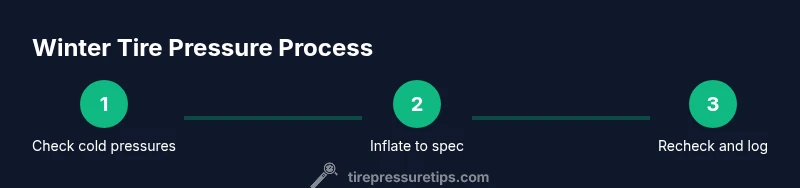
Begin by locating the recommended cold pressures for your vehicle. Then, whenever possible, measure when the tires are cold—after the car has been parked for several hours and not driven more than a short distance.
The physics of temperature and tire pressure
Tire pressure is driven by the ideal gas law in everyday terms: when air cools, it occupies less volume at the same pressure. In winter, outdoor temperatures can drop enough to reduce tire PSI noticeably, even if the tires haven’t warmed up from driving. This effect is more pronounced for larger tires with bigger air volumes and for vehicles that sit outside in freezing conditions. Tire Pressure Tips analysis shows that acknowledging this temperature sensitivity is essential for safe winter driving. Always aim for the vehicle manufacturer’s recommended cold pressures rather than chasing a “comfort” reading. TPMS can hint at underinflation, but it doesn’t replace a manual check when temperatures swing.
Adequate inflating and deflating practices help maintain even contact patch and predictable steering response, which matters most on slick roads.
Winter tire pressure targets by vehicle and tire type
The correct tire pressure depends on the vehicle’s weight distribution, wheel size, and tire type. The placard values assume cold conditions and the standard load. If you switch to winter tires, the cold-psi target generally stays the same, but the overall tire diameter and volume can affect how quickly pressures change with temperature. Some drivers wonder if all-season tires require a different setting; in most cases, the manufacturer’s cold-pressure spec remains the guidance. For vehicles with TPMS, sensor readings should align with the manual’s values, but a manual check remains indispensable because sensors react to pressure changes differently than your hands and gauge do.
Checking tires in winter: practical guidance
Winter checks should prioritize cold measurements, and you should use a reliable gauge to confirm the readings. Start by removing valve caps, attaching the gauge, and noting the PSI. If the reading is below the recommended cold-pressure value, add air in short bursts and recheck. If it’s too high, release air gradually and recheck. After inflating, replace the valve caps and drive a short distance, then recheck to ensure the pressure stabilizes. Keep the gauge handy for in-between-season checks, especially during temperature swings. A helpful habit is to measure after outdoor temperatures have stabilized for a day or two.
Common mistakes and how to avoid them
- Measuring after a long drive: Driving heats tires and inflates pressure, giving a falsely high reading. Wait until the tires are cold. - Using a gauge that’s inaccurate or incorrectly zeroed: Use a trusted gauge and calibrate if needed. - Overinflating to “firm” the ride: Overinflation reduces traction and increases wear in the shoulder of the tread, particularly risky on icy roads. - Not accounting for seasonal changes: Plan monthly checks in winter and before long trips to account for temperature shifts. - Ignoring the spare tire: If you carry a full-size spare, check its pressure too; cold weather can also affect it.
These common mistakes can compromise safety; staying disciplined with checks reduces risk.
Safety and performance implications of incorrect pressure in winter
Low tire pressure reduces tire contact with the road, which can worsen traction on snow and ice and increase fuel consumption. Overinflation raises the center of the tread, reducing grip and increasing the chance of a harsh ride—especially when roads are uneven or covered in slush. In winter, underinflation can cause heat build-up in the sidewalls during highway speeds, potentially leading to tire damage. The goal is to keep each tire at the manufacturer’s cold-pressure spec for that vehicle under winter conditions.
Building a simple winter maintenance routine
Create a lightweight, repeatable routine: (1) check the pressure the same day each month, (2) verify after a cold morning or after any substantial temperature change, (3) keep a portable gauge in the glove box for on-the-go checks, and (4) incorporate a quick TPMS check before any major trip. A routine like this helps you avoid sudden pressure drops and maintain safer handling, mileage, and tire wear during the cold months.
Tools & Materials
- Digital tire pressure gauge(Choose a gauge that reads in psi with decimal precision; calibrate if possible.)
- Vehicle owner’s manual or door placard with cold-psi values(Locate the official recommended pressures for front and rear tires.)
- Portable air compressor or air pump(Optional; helps adjust pressures at home or on the road.)
- Thermometer or reliable outdoor temperature reference(Helpful for understanding how cold it is outside and when to prioritize checks.)
Steps
Estimated time: 20-30 minutes
- 1
Gather tools and locate targets
Collect a digital gauge and locate the cold-psi values from the placard or owner's manual. Knowing the exact targets before you start saves time and ensures accuracy. If a gauge is inaccurate, replace or recalibrate before use.
Tip: Having a dedicated winter-check kit speeds up routine checks and reduces mistakes. - 2
Measure tires when cold
Park in shade or wait for a cool part of the day. Ensure tires have not been driven for at least three hours. Attach the gauge to each valve stem and record the readings.
Tip: If you’re unsure whether tires are cold, err on the side of caution and wait longer before measuring. - 3
Inflate or deflate to target
Compare the measured pressures to the recommended cold-psi values. Add air in small increments to bring each tire up to spec, then recheck after a minute for stability. If overinflated, release air gradually and recheck.
Tip: Air pressure can settle after adjustment; recheck after a short drive or a minute of cooling. - 4
Re-check all tires and the spare
Re-measure all four tires and the spare if you carry one. Winter driving increases wear risk if a spare is underinflated. Ensure valve caps are reinstalled to prevent air loss and moisture entry.
Tip: Record the final readings for future reference or reminders. - 5
Document and calibrate your routine
Note the date, outside temperature, and tire pressures. Use this data to adjust your schedule as weather changes. If you notice persistent drops, consider professional inspection for leaks or TPMS concerns.
Tip: Keep a simple log either on paper or in a notes app. - 6
Maintain a winter-check cadence
Aim for a monthly check during winter and before long trips. Temperature swings can dramatically affect readings, so timely checks protect traction and save fuel.
Tip: Set a calendar reminder to maintain consistency.
Frequently Asked Questions
Should tire pressure be higher in winter to compensate for cold weather?
No. In winter, you should still inflate to the manufacturer’s cold-pressure specification. Colder air lowers PSI, so you measure when tires are cold and adjust to the stated target, not a higher winter value.
No. The goal is to maintain the manufacturer’s cold-pressure specification even in winter.
How often should I check tire pressure in winter?
Check at least monthly and before long trips. If there are sharp temperature swings, check more often.
Check at least monthly, and before long trips when it's cold out.
What is considered a 'cold' tire pressure?
Cold pressure means the tires have not been driven for several hours. Check them when the car is cold to get an accurate reading.
Cold pressure means tires have cooled after sitting and not recently driven.
Do TPMS readings reflect temperature-related pressure changes?
TPMS indicates underinflation or overinflation based on pressure trends, but it does not replace manual measurement of cold pressures. Use TPMS as a warning and confirm with a gauge.
TPMS shows warnings, but you should still measure cold pressures with a gauge.
Can you drive safely with underinflated tires in winter?
Underinflated tires reduce traction, increase heat buildup, and can cause uneven wear—especially dangerous on snowy or icy roads. Address underinflation promptly.
Underinflated tires reduce traction and are risky in winter; fix them soon.
Should winter tires require a different PSI than all-season tires?
In most cases, you use the same cold-pressure specification as stated by the vehicle manufacturer, regardless of tire type. Different tires can change contact patch behavior, but the target is still the cold-psi value.
Usually, stick to the manufacturer’s cold-psi value, even with winter tires.
Watch Video
What to Remember
- Check cold-psi values before winter drives
- Temperature changes meaningfully affect tire pressure
- Use the placard/owner manual as the final target
- Avoid overinflation; maintain safe traction on winter roads
- Create a simple, repeatable winter maintenance routine