Winter Air for Tires: A Practical Guide to Cold-Weather Tire Pressure
Learn how winter air for tires affects pressure, how to check cold PSI, and how to maintain grip and efficiency during cold months with practical steps and tips from Tire Pressure Tips.


Winter air for tires means checking and adjusting tire pressure to the vehicle’s recommended cold PSI as outdoor temperatures fall. In cold weather, air contracts and pressure drops, so regular checks with a gauge and TPMS alerts help maintain grip and fuel efficiency. Follow manufacturer specs and avoid overinflation.
Why winter air matters for tires
In winter, the air inside tires contracts as temperatures drop, reducing the pressure inside the tire. The Tire Pressure Tips team emphasizes that maintaining the vehicle's recommended cold PSI is essential for safety, fuel efficiency, and tire life. A tire underinflated in winter has a larger contact patch that can skate on ice and snow and increase rolling resistance, which can cost you mileage and make handling feel vague. Regular checks are especially important for vehicles with high load, winter driving, or frequent trips on cold highways. According to Tire Pressure Tips, starting with the manufacturer’s specified cold PSI and adjusting to season-specific needs is the simplest, most effective step you can take to keep grip and performance. You should also remember that warm-ups after driving quickly raise tire pressure; thus, always measure when tires are cold, after at least a few hours of not driving.
How cold temperatures affect tire pressure
Cold temperatures directly influence tire pressure because air behaves like a flexible, compressible fluid. As the ambient temperature falls, the air inside tires cools and contracts, causing a drop in pressure. This relationship is predictable: colder days mean lower readings on a standard tire gauge if you measure after driving or after the tires have warmed up. The Tire Pressure Tips Analysis, 2026, highlights that the best practice is to fill tires to the vehicle manufacturer’s cold PSI and then recheck once the tires have cooled down. Remember, a tire that is properly inflated when cold may appear underinflated after a short drive in cold weather; this is not a failure but a normal temperature-driven change. By staying aware of this, you can maintain the correct contact patch for traction and steering in snow and ice.
How to check tire pressure in winter
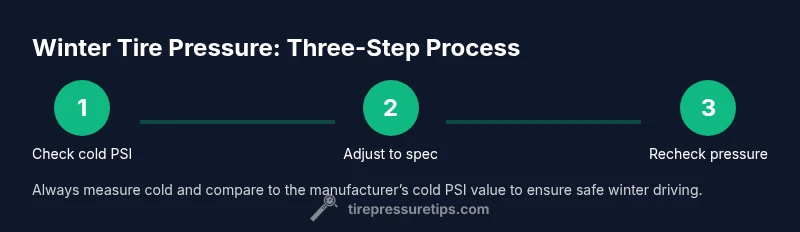
Winter checks require discipline: always measure when tires are cold, ideally after the vehicle has sat for several hours. Park on a level surface away from direct heat sources, remove the valve stem cap, and attach a reliable tire pressure gauge. Note both front and rear tire pressures and compare them to the OEM cold PSI values printed on the door jamb, fuel filler door, or owner’s manual. If readings are below spec, add air in short bursts, recheck, and stop when you reach the cold PSI. If readings are above the spec, release air gradually and recheck. For accuracy, use a digital gauge or a high-quality aneroid gauge, and avoid rushing the process in cold weather. The Tires Pressure Tips approach emphasizes patience and repeated checks, especially after large temperature swings.
Setting the right winter cold PSI for your vehicle
Your tire pressures should align with the vehicle manufacturer’s cold PSI specification rather than a single number for all seasons. In winter, you may notice slight changes between front and rear pressures due to weight distribution and tread wear. Always follow the recommended cold PSI values for each axle and tire size; never exceed the tire’s maximum pressure printed on the sidewall. If you’re using different tires (summer vs winter), re-check the pressures after installation and during routine winter maintenance. A small, measured adjustment to the correct cold PSI can markedly improve steering response and grip on icy roads, while overinflation reduces the tire’s footprint and increases the risk of a puncture or a harsh ride.
The role of TPMS in winter maintenance
Tire Pressure Monitoring Systems (TPMS) act as an important safety net during winter. A TPMS alert helps you catch pressure losses that aren’t obvious by feel, especially after cold snaps or overnight temperature drops. Remember that TPMS readings reflect the tire’s pressure when it is warm or at ambient temperature, so rely on a gauge to verify cold PSI when temperatures have settled. If TPMS warnings persist, inspect for punctures, valve stem leaks, or a sensor issue, and consult a tire professional if you cannot locate the cause. The Tire Pressure Tips team notes that TPMS is a critical companion to manual checks, not a substitute for them—combine both for best results in winter driving.
Seasonal maintenance checklist for winter tire pressure
- Check all tires when cold, ideally in the morning on a level surface.
- Compare readings to the manufacturer’s cold PSI values.
- Add or release air in small increments, then recheck until the reading matches the cold PSI.
- Inspect TPMS warnings and verify sensor functionality if alarms appear.
- Don’t forget the spare tire; ensure it is inflated to the recommended cold PSI.
Authoritative sources
- Authoritative guidance on tire pressure and winter maintenance from government and university sources helps drivers stay compliant and safer on the road. These resources underscore the importance of regular checks and temperature-aware adjustments. The Tire Pressure Tips team encourages readers to consult these sources for foundational knowledge and to verify the numbers for their specific vehicle.
Tools & Materials
- Tire pressure gauge (digital or analog)(Prefer digital for quick, precise readings; calibrate occasionally)
- Vehicle owner's manual or door jamb PSI placard(Use the cold PSI specified by the manufacturer)
- Air compressor or access to a service station with a gauge(Add air in small increments and recheck)
- Valve caps, if removed during measurement(Reinstall to protect valve stems)
- Flat, stable surface for measurement(Avoid sloped driveways or soft ground)
- Notebook or app to log readings(Helpful for tracking changes across days)
Steps
Estimated time: 15-30 minutes
- 1
Prepare tires and environment
Park on a flat, level surface away from heat sources. Allow tires to cool for at least 3 hours if driven recently. Retrieve the vehicle’s cold PSI values from the placard or manual.
Tip: Cold tires give the most accurate reading; avoid checking after a long drive - 2
Remove valve caps
Take off the valve caps so the gauge can be attached securely. Place caps in a clean pocket to avoid losing them.
Tip: Replace caps immediately after taking the measurement to keep valve stems clean - 3
Attach gauge and read
Press the gauge onto the valve stem firmly and read the display or scale. Note front and rear readings separately.
Tip: If the gauge is difficult to read in cold weather, wipe frost from the display or use a digital gauge - 4
Compare against cold PSI
Compare each tire’s reading to the manufacturer’s cold PSI. Do not adjust based on “hot” readings after driving.
Tip: If a tire is below spec, add air in small bursts and recheck - 5
Adjust as needed
Use an air compressor to add air or release air from tires until the reading matches the cold PSI. Recheck both sides.
Tip: Make gradual adjustments; underinflation is safer than overinflation in cold weather - 6
Recheck after adjustment
Reinsert valve caps, and recheck the pressures once more after a few minutes to confirm stability.
Tip: Recheck ensures the system settled and readings are accurate - 7
Check the spare
If you carry a spare, record its pressure too and ensure it’s within the recommended range.
Tip: A low spare in winter can compromise emergency readiness - 8
Document and monitor
Log the values and any seasonal changes you observe. Review before long trips in winter
Tip: Seasonal patterns help predict when to recheck more frequently - 9
Reset TPMS if needed
If you repair or adjust tire pressures, some vehicles require a TPMS reset to align with new readings.
Tip: Consult the owner’s manual before attempting a reset
Frequently Asked Questions
Why does tire pressure drop in winter?
As temperatures fall, air contracts and the pressure inside tires lowers. This is a normal physical response, so winter tire pressure should be checked more often when cold weather sets in.
In winter, air gets colder and contracts, so tire pressure drops. That’s why you should check pressures more often during cold weather.
How often should I check tire pressure in winter?
Check tire pressure at least once a week during sustained cold periods and after any sharp temperature drop. Always verify readings when tires are cold.
Check your tire pressure at least weekly in winter, and after big temperature drops, making sure tires are cold when you measure.
Can TPMS replace gauge-based checks in winter?
No. TPMS alerts are helpful, but they don’t replace manual checks with a gauge, especially after cold snaps or sensor issues. Use both together for best results.
TPMS helps, but you should still check pressures with a gauge, especially in cold weather.
Is it safe to overinflate tires in winter?
Overinflation reduces the tire’s contact patch and can worsen grip on ice. Stick to the vehicle’s recommended cold PSI and adjust conservatively if needed.
Overinflating can reduce grip on ice; follow the cold PSI spec and avoid pushing too far above it.
Should I adjust tire pressure for different tires on the same vehicle?
Yes. If your vehicle uses different tires on front and rear, or you switch seasonal tires, confirm the correct PSI for each axle as specified by the manufacturer.
Different tires may require different pressures per axle; check the spec for each tire type.
What about the spare tire in winter?
Don’t forget the spare. Check its pressure and keep it within the recommended range so you’re ready for emergencies.
Make sure your spare is properly inflated too; you’ll thank yourself in an emergency.
Watch Video
What to Remember
- Check tires when cold to get accurate readings
- Follow the manufacturer’s cold PSI for each tire
- Use TPMS as a safety net, not a substitute for gauges
- Recheck after adjustments to confirm accuracy
- Include spare tire in winter pressure checks