Tire Pressure and Cold Weather: A Practical Winter Guide
Learn how cold weather affects tire pressure and how to check, inflate, and maintain your tires safely. This step-by-step guide covers TPMS basics, winter inflation targets, and common mistakes to avoid.


Goal: Keep your tires properly inflated in winter to prevent underinflation, improve grip, and maximize fuel economy. In cold weather, pressure drops with temperature, so check tires when they're cold, compare to the recommended psi on the door placard, and adjust with a gauge. This quick guide covers checking, inflating, and verifying winter tire pressure safely.
Why tire pressure matters in cold weather
According to Tire Pressure Tips, winter driving places extra demands on tire pressure. Proper inflation helps maintain grip on icy roads, preserves tread wear, and keeps fuel economy from slipping as temperatures fall. When air gets colder, it condenses and tire air volume shrinks, causing psi to drop. This can lead to underinflation even before you notice a soft ride. In practice, most drivers see noticeable pressure changes after temperature swings of 10–20 degrees Fahrenheit. Establishing a winter baseline for all tires, including the spare, and reviewing it regularly is a simple, high-value habit. Regular checks help prevent unsafe conditions and can save money over the season.
How cold weather affects tire pressure and performance
Freezing temperatures pull air from inside tires, reducing internal pressure and making tires feel underinflated. Underinflated tires generate more heat, wear out quicker, and increase rolling resistance, which hurts traction in snow and ice. In addition, tire flexibility changes with temperature, affecting grip and steering response. The Tire Pressure Tips team notes that you should expect a gradual decline in PSI as outdoor temps drop, and you should compensate by adjusting to the manufacturer’s recommended cold-inflation pressure when tires are cold. Always measure with the tires cold for accuracy.
The science behind pressure changes: temperature and air
Air pressure inside a tire follows the general principle that cooler air occupies less volume. When outdoor temperatures fall, the air molecules contract, lowering psi. The door placard on your vehicle specifies the recommended cold-inflation pressure, which assumes the tires are cold. If you drive before measuring, heat from friction temporarily increases pressure, giving you a false reading. The practical takeaway is simple: check cold, target the spec, and avoid inflating while hot or after a drive.
How to check tire pressure in winter correctly
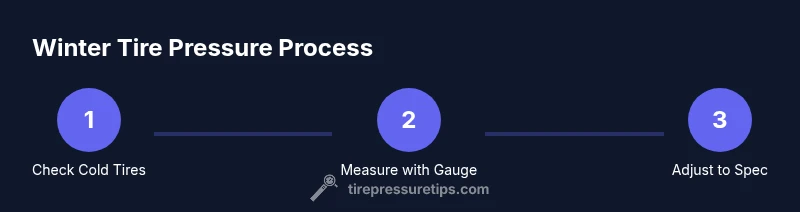
Always check tires when they are cold, ideally after the car has sat for 3 hours or more. Remove the valve cap, press the gauge onto the valve stem firmly, and note the PSI reading. Compare it to the door placard or owner's manual. If the reading is lower, add air in short bursts and recheck. If higher than spec, release air until you reach the recommended level. Keeping notes can help you spot gradual leaks or valve stem issues over time.
The role of TPMS in cold weather
Tire Pressure Monitoring System (TPMS) helps you catch underinflation quickly, but it has limits. TPMS alerts are based on rough thresholds and may not reflect slow leaks. In winter, sensors can become sluggish or temporarily inaccurate due to cold temperatures and battery performance. Use a hand gauge to verify readings when you suspect TPMS lag, and trust the gauge for the final inflation target.
When and how to adjust tire pressure for winter conditions
Adjust for seasonal conditions and cargo load. If you routinely drive with heavy loads or on rough, freezing roads, slightly higher psi can help even tread wear, but never exceed the vehicle’s recommended max. Always return to the door-placard spec when the tires are cold. For most cars, 1–2 psi above the cold spec may improve handling in snow, but check your manual before making changes.
Front vs rear tire pressure: winter considerations
Some vehicles require different pressures for front and rear tires; others share the same spec. In winter, maintaining the exact recommended pressures for each axle is crucial because unequal pressures can worsen handling on slick surfaces. Verify both front and rear readings against the placard and adjust if necessary. In any case, don’t inflate above the maximum printed on the tire sidewall.
Practical tips for pre-drive checks and daily routines
Create a simple winter routine: check pressures once a week and before trips, especially after cold nights. Carry a compact gauge, and fill at a reputable pump. If you notice frequent pressure changes, inspect for slow leaks, cracked stems, or punctures. Log readings in a notebook or app so you can spot patterns and plan service before a breakdown happens.
Safety tips and common mistakes to avoid
Never inflate tires while they are hot or immediately after a drive. Don’t rely on the maximum tire pressure printed on the sidewall; always target the cold-spec from the placard. Avoid over-inflation to compensate for cold weather; it can cause a harsh ride and increase wear in the center of the tread. Lastly, don’t ignore TPMS warnings; validate with a gauge if you doubt the reading.
Seasonal maintenance checklist for tire pressure
Winter season planning helps keep you safer. Create a monthly checklist: verify all tires, including the spare, against the placard; log readings; inspect valve stems and stems caps; examine tread depth; and check for cracks or bulges. Schedule professional inspection if you observe slow leaks or sidewall damage. Staying proactive reduces the risk of flats and unexpected stops during snowstorms.
Quick-check: a 10-minute routine for winter days
- Look outside and note the temperature; 2) Check that your tires are cold; 3) Read the current psi against the placard; 4) Adjust as needed; 5) Recheck after inflation; 6) Repeat for all tires; 7) Don’t forget the spare; 8) Log results. This fast routine helps keep your car safe without taking much time.
Understanding temperature effects and planning ahead
The rise and fall of temperatures can dramatically affect tire pressure week to week. Build a winter plan that includes a monthly pressure check, pre-trip checks for long drives, and a reminder system to re-check after big cold fronts. The Tire Pressure Tips team recommends turning winter checks into a habit, because small, consistent actions prevent larger issues later.
Tools & Materials
- Tire pressure gauge(Digital or analog; use when tires are cold)
- Air compressor or access to air pump(Gauge-equipped preferred; at home or station)
- Owner's manual or door placard(Where to find recommended PSI)
- Notebook or mobile log app(Track readings over time)
Steps
Estimated time: 15-25 minutes
- 1
Ensure tires are cold before checking
Let the car sit for at least 3 hours or until it has cooled after a drive; cold tires provide an accurate baseline for PSI.
Tip: Avoid checking after short trips or city driving to prevent heat-inflated readings - 2
Find the manufacturer’s recommended pressure
Locate the door placard or owner's manual to identify the cold-inflation PSI for front and rear tires.
Tip: Do not use the max sidewall pressure as your target - 3
Remove valve cap and check current pressure
Use your gauge to measure PSI at the valve stem and compare to spec.
Tip: Keep valve caps in a safe place to avoid loss - 4
Inflate or deflate to reach spec
If underinflated, add air in short bursts and recheck; if overinflated, release air until you meet the target.
Tip: Perform 2-3 small adjustments for accuracy - 5
Recheck all tires and the spare
Test each tire and the spare to confirm all are at or near spec.
Tip: Check after you’ve finished all inflations to maintain consistency - 6
Record readings and plan next check
Note the PSI for each tire and set a reminder for your next winter check.
Tip: If readings drift, have tires and TPMS inspected
Frequently Asked Questions
How often should I check tire pressure in winter?
In cold months, check at least once a month and before long trips; check again after significant temperature drops.
Check tires monthly in winter, and before long trips, especially after cold snaps.
Can TPMS be trusted in freezing weather?
TPMS helps, but it has limits; verify with a hand gauge when readings seem off or after temp swings.
TPMS helps, but verify with a gauge when readings seem off.
Is it safe to inflate tires beyond the suggested cold pressure in winter?
No, always follow the door placard; overinflation can cause uneven wear and a harsh ride.
No, follow the door placard and avoid overinflating.
Should I check the spare tire in winter?
Yes, check the spare's pressure and condition monthly; a flat spare helps avoid being stranded.
Yes, check the spare monthly.
What tools are best for winter tire pressure checks?
A reliable tire pressure gauge and access to an inflator or pump are essential.
A good gauge and access to a pump are essential.
What is a safe PSI range for winter driving?
Use the exact PSI from the placard; do not guess or rely on a general range.
Use the placard PSI; don't guess.
Watch Video
What to Remember
- Check tires when cold before driving
- Inflate to the door placard spec, not the max sidewall
- TPMS aids safety but verify with a gauge
- Winter checks should be routine, not a once-a-season task
- Keep a simple log of PSI readings for patterns