Winter Tire Air Pressure: Check & Maintain in Cold Weather
Learn how to check and maintain winter tire air pressure to optimize traction, stability, and fuel efficiency in cold weather. Practical steps, tools, and safety tips for drivers and car owners.


Winter tire air pressure should always be set to the vehicle manufacturer’s recommended cold value, checked when tires are cold (not after driving). In cold weather, ambient temperature lowers tire pressure, so verify the pressure regularly and adjust to the door placard specification for front and rear tires as needed. This helps maintain traction and handling on snow and ice.
Why winter tire air pressure matters
Winter driving introduces slipperier surfaces, longer stopping distances, and variable traction. Maintaining correct winter tire air pressure is essential because cold temperatures cause air to contract, reducing the internal pressure of the tires. This can lead to underinflation, increased tire flex, and reduced contact with the road. According to Tire Pressure Tips, drivers who stay within the manufacturer’s cold-pressure specification notice more stable steering and smoother handling on winter roads. Start with the exact values printed on the driver’s door placard or in the owner's manual. While many vehicles share the same target pressure for all-season and winter tires, some cars have different front/rear specs, so verify both. The core message is practical: pressure matters more when temperatures drop, and consistent checks prevent motorist surprises during storms.
How ambient temperature affects winter tire air pressure
Air pressure in a tire declines as ambient temperature falls. The physics are simple: cold air occupies less volume than warm air, so as you park outside in the winter, your tire pressure can drop even if you haven’t driven far. Tire Pressure Tips analysis highlights that this pattern is predictable and repeatable, making cold-pressure checks a reliable habit. If you drive a short distance before measuring, readings may appear higher than they actually are once tires cool. Relying on a gauge trained to read within a narrow tolerance helps avoid underinflation, which reduces grip on snowy or icy pavement. Conversely, overinflation can lead to a harsher ride and reduced tire contact on slick surfaces. Keeping to the recommended cold value balances ride, handling, and wear across winter.
How to check winter tire air pressure correctly
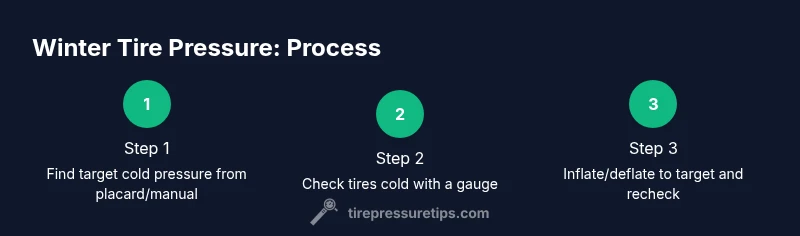
Begin by locating the recommended cold tire pressure from the door placard or owner’s manual. When tires are cold, remove valve caps and press a quality tire pressure gauge onto the valve stem to take an accurate reading. Record all four corners and the spare if you carry one. If any tire is below target, add air in small increments, rechecking after each adjustment. If a tire is above target, release air until you hit the correct setting. Don’t forget to reinstall valve caps to protect against dirt and moisture. Use a gauge with a ±1 psi accuracy for best results. After adjustments, recheck the readings once the tires have cooled to confirm they match the target.
Setting the right cold pressure for winter tires
Use the manufacturer’s cold-pressure value printed on the placard, not a “hot” reading after a drive. If your vehicle has separate front and rear targets, inflate each tire accordingly. Winter tires carry similar pressure requirements to all-season tires, but load and driving conditions can influence the target; adjust only to the placard values rather than a generic winter setting. Avoid inflating beyond the tire’s maximum pressure listed on the sidewall. If you drive with a heavy load or tow, consult the manual for load-adjusted pressures and consider a trial check after packing the luggage.
Common mistakes to avoid in winter tire pressure
A frequent mistake is relying on TPMS alone without confirming actual tire pressure with a gauge. Temperature swings cause fluctuations that TPMS may not fully capture, especially when sensors are slow to update or battery life is low. Measuring while tires are hot from a recent trip, or ignoring the door placard values, can lead to inaccurate conclusions. Another error is deflating too much to improve fuel economy without verifying the target. Finally, neglecting the spare tire or leaving valve caps off invites moisture and debris, potentially compromising readings.
Tools and methods for consistent checks
Consistency comes from using the same gauge type (dial or digital) and checking cold tires in a stable environment. Keep a small notebook or digital log to track PSI readings, dates, and ambient temperatures. If you rotate tires for winter, re-check the entire set after installation. A digital gauge typically provides quick, repeatable readings, while a dial gauge can be more forgiving in low-light situations. For best results, perform checks at least once per month during winter and before long trips.
Winter tires vs all-season tires: pressure considerations
Winter tires do not inherently require a different pressurization than all-season tires, but the colder climate amplifies any existing underinflation. Pay attention to differences between front and rear pressures as specified by the placard. If you notice uneven wear, including more wear on the edges of the tread, recheck pressures and inspect for alignment or suspension issues alongside inflation accuracy. Seasonal changes can also affect wheel diameter slightly due to tire construction and tread depth changes, reinforcing the need for periodic checks.
Safety and performance impact of incorrect pressure in winter
Underinflated tires risk overheating and increased wear, while overinflated tires reduce traction by creating a smaller contact patch with the road. Both situations degrade braking, cornering, and steering control on snow and ice. In severe cold, the impact of underinflation is magnified; even small deviations can influence stability. Regular checks with a reliable gauge, and strict adherence to the placard values, contribute to safer winter driving and improved reliability across all winter driving scenarios.
Maintenance plan for winter tire air pressure
Create a simple winter maintenance plan that includes a monthly pressure check, verification after long trips or heavy loading, and a quarterly reassessment of tire condition and tread depth. Include spare tire checks as part of the routine, and keep your travel bag with a portable compressor or emergency air adapter for unexpected trips. By embedding these checks into your routine, you’ll maintain proper traction and extend tire life, even under harsh winter conditions.
Tools & Materials
- Tire pressure gauge(Choose a gauge with ±1 psi accuracy; digital or dial is fine.)
- Access to a compressor or reliable gas-station air pump(Ensure it can accurately adjust within 1 psi increments.)
- Vehicle door placard or owner's manual(Used to confirm the cold tire pressure targets for each tire.)
- Valve caps and a flashlight(Valve caps protect stems; a flashlight helps in low-light conditions.)
- Notebook or digital log(Record dates, PSI readings, and ambient temperature for trend tracking.)
Steps
Estimated time: 25-40 minutes
- 1
Find target cold pressure
Locate the pressure targets on the door placard or in the owner's manual for both front and rear tires. Note any differences and record them before you start.
Tip: If you share your car with another driver, confirm both recommendations are consistent with your tires. - 2
Check tires when cold
Take readings with the tires cold, ideally after the car has been parked for several hours. Remove valve caps and press the gauge firmly onto the valve stem without wiggle to avoid bogus readings.
Tip: Measure all four tires and the spare if you carry one; consistency matters. - 3
Adjust pressure to target
Inflate or deflate each tire to the exact cold-pressure target. Add or release air in small 1 psi increments, rechecking after each adjustment.
Tip: Never exceed the tire’s maximum rating printed on the sidewall. - 4
Recheck after cooling
Allow tires to cool for several hours if you adjusted them; recheck to confirm they still match the target when cold.
Tip: If readings drift, re-evaluate using the same gauge to avoid discrepancies. - 5
Document and monitor
Record readings and dates in your log. Monitor trends across days with changing temperatures to catch gradual underinflation early.
Tip: Add a reminder to recheck after the first cold snap of the season. - 6
Check the spare
Inspect the spare tire’s pressure using the same procedure; ensure it’s within the recommended range for winter use.
Tip: A well-inflated spare is ready for immediate use if needed.
Frequently Asked Questions
Why does winter tire air pressure drop in cold weather?
Cold temperatures cause air to contract, reducing tire pressure. Check pressures when tires are cold and adjust to the placard value for reliable traction on snow and ice.
Cold temperatures cause air to contract, lowering tire pressure. Check when tires are cold and adjust to the placard value for safe winter traction.
Should I inflate winter tires to a higher psi than the placard?
No. Follow the vehicle’s cold-pressure value on the placard or manual. Only adjust if the manual specifies a load-based change or you have a specific tire/wheel setup.
No, don’t inflate beyond the placard value unless the manual instructs otherwise. Use the specified cold pressure.
How often should I check tire pressure in winter?
Check at least monthly, and before long trips or heavy loads. Temperature swings can cause fast changes; regular checks prevent underinflation.
Check at least once a month and before long trips; winter air can change readings fast.
Can TPMS replace manual pressure checks?
TPMS alerts you to under- or over-inflation, but it’s still essential to verify pressures with a gauge, especially in cold weather where readings drift.
TPMS helps, but you should still confirm with a gauge when it’s cold.
What about the spare tire in winter?
Check the spare tire pressure as part of your winter routine. Ensure it’s within the recommended range so it’s ready if you need it.
Check the spare too; keep it in the proper range for winter safety.
What should I do if I notice uneven wear after inflation?
Recheck all pressures, inspect for leaks, and consider wheel alignment or suspension issues. Maintaining correct pressures is a key step to even wear.
If wear appears uneven, recheck pressure and inspect alignment and suspension too.
Watch Video
What to Remember
- Check cold tire pressure monthly in winter.
- Always follow the placard values for each tire.
- Use a reliable gauge and check all four tires plus the spare.
- Avoid overinflation; respect the tire’s max rating.
- Record readings to monitor trends over time.