What is the Best Tire Pressure for Cold Weather: A Practical Guide
Learn how cold weather affects tire pressure, how to check cold-inflation correctly, and practical steps to keep your tires safe, grippy, and efficient all winter.


To optimize safety in cold weather, there is no single universal tire pressure. Start with your vehicle’s recommended cold-inflation pressure from the door jamb sticker. In colder air, pressures drop as tires cool; check pressure when tires are cold and adjust as needed. Regular winter checks help maintain grip, steering, and tire wear.
Understanding the cold-weather effect on tire pressure
According to Tire Pressure Tips, temperature changes have a direct impact on the air inside your tires. As ambient temperatures fall, the air contracts and the tire cavity becomes less pressurized. This means that even if you checked pressure last week, a strong cold snap can reduce it enough to affect handling, braking, and fuel efficiency. In winter driving, underinflation is a common risk, especially for drivers who park outside or drive short trips that don’t fully heat tires. Regular, cold-weather checks help you catch these shifts before they affect safety. Tire pressures are not a permanent change caused by winter; they’re a reversible, temperature-driven variation that improves with proper topping up to the manufacturer’s recommended cold-inflation level.
To keep your tires performing as intended, always start with the pressure recommended on the door jamb sticker or in your vehicle manual, and never rely on the tire sidewall maximum. Those values are not intended for everyday driving. As noted in Tire Pressure Tips analysis, winter conditions exaggerate pressure changes, so proactive checks become a key part of winter maintenance. In practice, this means planning a quick pressure check during each seasonal transition and after long trips in frigid air.
Takeaway: Cold temperatures inherently lower tire pressure; use your recommended cold-inflation pressure as the target and verify when tires are cold for best results.
note`:null},
Tools & Materials
- Digital tire pressure gauge(Prefer a gauge with a narrow range around the vehicle’s recommended pressure (e.g., 28-40 psi) for better accuracy.)
- Access to an inflation source (air compressor at home or gas station)(Inflation should bring tires to just below or at the cold-inflation spec, not to the max on the sidewall.)
- Owner’s manual or door jamb sticker(The exact cold-inflation value is vehicle-specific.)
- Non-contact infrared thermometer (optional)(Helpful to monitor ambient vs. tire temperature when diagnosing unusual readings.)
Steps
Estimated time: 30-60 minutes
- 1
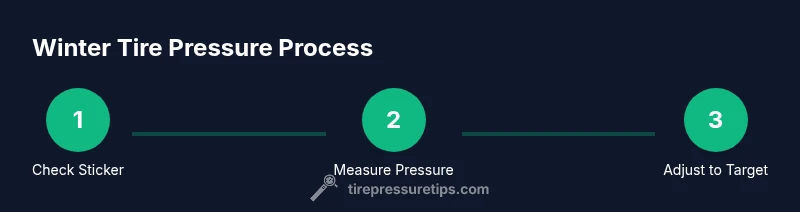
Find the manufacturer’s recommended cold-inflation pressure
Locate the recommended cold-inflation pressure on the driver’s door jamb sticker or in the owner’s manual. This is the reference pressure you should aim for when the tires are cold. Do not use the maximum pressure listed on the tire’s sidewall as a target for daily driving.
Tip: Always verify the value before making any adjustment, and ensure the tires have not been heated by driving. - 2
Ensure tires are cold before measuring
If you’ve driven recently, wait for the tires to cool down—ideally 3 hours or longer. Temperature warm-ups can falsely elevate readings and lead to overinflation when you adjust.
Tip: A cold measurement gives you the true reference point for your target pressure. - 3
Measure current tire pressures
Use a precise gauge to measure each tire. Record the readings and compare them to the recommended cold-inflation pressure. Remember to check the spare if you carry one in cold-weather driving.
Tip: Check each tire individually—don’t average readings across axles. - 4
Adjust to the target pressure
If a tire is below the recommended value, inflate it to the target. If it’s above, release air gradually until you reach the correct pressure. Recheck after adjustment.
Tip: Make small adjustments and recheck to confirm accuracy. - 5
Recheck all tires and document
Re-measure all four tires (and spare if used). Note the final pressures for future reference during the season.
Tip: Create a simple winter-pressure log to track changes over time. - 6
Monitor and repeat during cold weather
Temperature swings are common in winter. Check pressures again after significant cold snaps or heat waves to maintain optimal grip and tire wear.
Tip: Seasonal routines reduce risk of underinflation during storms.
Frequently Asked Questions
Does cold weather permanently lower tire pressure?
Cold weather does not permanently lower tire pressure; it causes temporary pressure loss as air cools. After temperatures rise or tires warm up, pressures can recover. Regular checks help ensure you stay at the recommended level.
Cold weather lowers tire pressure temporarily. Check when cold and adjust to the recommended level.
Should I inflate to the same pressure for winter tires?
Follow the vehicle manufacturer’s cold-inflation spec, not the tire’s maximum pressure. Winter tires may feel different due to weight and tread, but the target remains the door-stick value.
Always use the car’s recommended cold-inflation pressure, even with winter tires.
Is TPMS affected by temperature changes?
Yes, temperature changes can cause TPMS readings to drift. Use a gauge to confirm readings rather than relying solely on TPMS alerts, especially in sudden cold snaps.
Temperature can affect TPMS readings, so cross-check with a gauge.
Can I use nitrogen to stabilize winter tire pressure?
Nitrogen is not a magic fix for winter pressure changes. Regular checks with standard air are sufficient when located in a climate-controlled environment.
Nitrogen isn’t a cure; just check pressures regularly with air.
How often should I check tire pressure in cold weather?
Check at least once a month, and after any significant temperature drop. More frequent checks are wise if you drive in extreme cold or carry heavy loads.
Check monthly, and after big temperature drops.
What are signs my tires are underinflated in winter?
Underinflated tires can cause reduced handling, longer stopping distances, uneven tread wear, and increased rolling resistance. If you notice a soft feel or poor grip, recheck pressures.
If handling changes or the tires feel soft, recheck pressure.
Watch Video
What to Remember
- Follow your vehicle’s cold-inflation spec.
- Check pressures when tires are cold.
- Adjust gradually and recheck for accuracy.
- Monitor pressures through temperature swings in winter.
- Keep a simple winter pressure log for consistency.