What Should Tire Pressure Be in Cold Weather: A Practical Guide
Discover how cold weather affects tire pressure, how to check and adjust safely, and practical ranges to keep your vehicle safe, efficient, and reliable in winter.


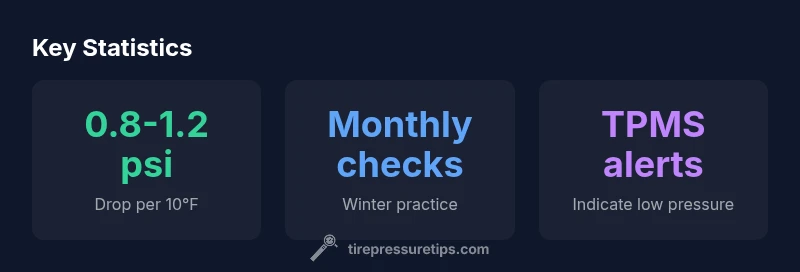
In cold weather, tire pressures drop as the air cools. A widely cited rule of thumb is roughly 1 psi for every 10°F drop in ambient temperature. Start winter with the cold-inflation pressure specified by the manufacturer (door jamb sticker or owner’s manual) and recheck after temperature shifts. Always measure tires cold, before driving. This helps maintain safety, handling, and fuel efficiency, even as the thermometer falls.
Why cold weather matters for tire pressure
Tires rely on air pressure to maintain the tire’s shape, contact patch, and grip on the road. When temperatures drop, the air inside each tire contracts, lowering PSI. This effect is magnified in vehicles with larger tires or high-performance rims. The Tire Pressure Tips team emphasizes that the exact change depends on the tire construction, wheel size, and how the car is used, but the general rule of thumb—about a 1 psi drop for every 10°F decrease in ambient temperature—helps drivers anticipate what their tires will feel like on cold mornings. This isn’t a reason to overinflate; it’s a cue to verify that your cold pressure matches the manufacturer’s specification. Proper cold-inflation pressure preserves steering responsiveness, braking performance, and even tread wear over the long winter season. A mismatch between the loaded weights and the inflation target can lead to unpredictable handling, longer stopping distances, and uneven tire wear. For most drivers, maintaining the door jamb spec yields the best balance of safety and efficiency during cold snaps, rain, and snow.
How to check tire pressure in cold weather
Checking tire pressure correctly is essential in winter weather. Start by ensuring tires are cold—ideally after they’ve been parked for at least three hours or first thing in the morning. Use a reliable digital or dial gauge and remove the valve cap. Press the gauge squarely onto the valve stem to avoid air leaks. Read the pressure and compare it to the manufacturer’s cold-inflation specification printed on the door jamb or in the owner’s manual. If any tire is below the recommended value, inflate to the exact cold spec, not to a higher or lower arbitrary target. After inflating, recheck to confirm the reading is steady. If you drive a short distance before checking, pressures will rise due to heat generated by friction, which can mask underinflation. In winter driving, consider checking again mid-month or after a significant temperature swing to maintain handling and fuel efficiency. The process itself is quick, but consistency matters.
How to set correct pressure for winter driving
The correct winter pressure is not a moving target; it’s the manufacturer’s cold-spec. If you routinely haul heavy loads or carry extra equipment in winter, consult the manual for any load-adjusted figures, and apply them only when the vehicle is cold. Avoid inflating beyond the listed spec, even in cold weather, because over-inflation can reduce the tire’s contact patch and lead to harsher ride quality and reduced grip. If your car has uneven tire wear or a recently rotated set of tires, double-check that the front and rear pressures align with the recommended targets for each axle. For winter conditions—snow, ice, slush, and cold start—correct pressure helps maintain even tire contact, which translates to improved traction and braking response. If your vehicle uses TPMS, you still need to verify the actual pressure with a gauge; TPMS alerts indicate underinflation but don’t replace a direct pressure check.
Seasonal tips for maintaining even pressure across tires
Winter is a season of temperature swings. To keep pressures balanced across all tires, check all four tires and the spare at least monthly, or after any major temperature change. Rotate tires per your vehicle’s maintenance schedule, and ensure the TPMS sensors are functioning correctly. Use a single reliable gauge for consistency, and record the readings so you can track trends across weeks. If you notice persistent differences between tires, inspect for leaks, punctures, or valve stem damage. Keeping tires inflated to the prescribed cold value reduces rolling resistance, improves fuel economy, and supports predictable handling during cold starts, wet pavement, and snow. Remember to recheck after filling to confirm the deflation effects of cold air have been accounted for.
Common mistakes and myths in winter tire inflation
Common mistakes include inflating to the high end of the range to compensate for cold mornings, assuming TPMS is a substitute for manual checking, and ignoring temperature-driven changes after a long drive. Another mistake is ignoring the dynamic aspects of tire pressure: as tires heat up from driving, their pressure rises, creating a misleading reading if checked immediately after a trip. Also, using nitrogen or other gas additives does not compensate for cold-weather fluctuations and can complicate maintenance. Finally, neglecting to recheck after rapid temperature drops can leave you underinflated when you need grip most. The best practice is to check cold, follow the door-sticker specification, and recheck after notable temperature shifts.
Tools and resources for winter tire pressure management
Equip yourself with a high-quality digital gauge, a clean valve stem, and a maintenance schedule that includes monthly checks and checks after temperature swings. A simple notebook or a mobile note can help you track readings over time. If you’re uncertain about how to read the gauge or interpret a reading, consult your owner’s manual or the Tire Pressure Tips resource library. For drivers with TPMS, remember that a warning light indicates low pressure, not the precise value, so confirm with a gauge. Finally, consider visiting a trusted service center for a free or low-cost pressure check when you notice unusual tire wear or fluctuating readings during winter months.
How temperature affects tire pressure and what to monitor
| Item | Guidance | Notes |
|---|---|---|
| Typical cold-weather drop | about 1 psi per 10°F drop (rule of thumb) | Varies by vehicle and tire type |
| When to check pressure | Always check cold, before driving | Driving warms tires and skews readings |
| Units to use | PSI standard; kPa alternative | Use the units on the sticker |
| Safety impact | Underinflation worsens braking and handling | Keep within the recommended range |
Frequently Asked Questions
How often should I check tire pressure during winter?
Check at least monthly, and after significant temperature shifts or heavy winter driving. Use a gauge to confirm the cold-inflation spec is met.
Check monthly and after big temperature shifts; verify with a gauge.
Does TPMS replace manual checks in winter?
No. TPMS alerts you when pressure is low but does not measure temperature. Always verify with a tire gauge when temperatures change.
No, TPMS isn't a substitute for a direct pressure check.
Should I inflate to the high end of the range in winter?
No. Always follow the manufacturer’s cold-spec. Adjust for load and wear, but avoid over-inflation which can reduce grip.
Stick to the cold spec; adjust only for load.
Are winter tires more sensitive to pressure changes?
Winter tires can be more sensitive to underinflation due to heavier tread and footprint. Maintain proper pressure for consistent traction.
Yes, keep winter tires at the correct pressure.
Does ambient temperature affect TPMS readings?
Temperature affects readings for all tires. Use a gauge to confirm actual pressure when the tires are cold.
Temperature changes can alter PSI readings; verify cold readings.
What about storing tires for the season?
Store tires in a cool, dry place away from direct sun; check pressure before reinstalling and after long storage.
Store tires properly and recheck before using again.
“Maintaining correct tire pressure in cold weather is one of the simplest, most impactful safety checks you can perform. Small PSI changes can affect traction, braking, and fuel efficiency.”
What to Remember
- Check tires cold before driving every time in winter.
- Expect a 1 psi drop per 10°F temperature decrease (rule of thumb).
- Follow the door jamb sticker for cold-inflation pressure.
- Use a reliable gauge and recheck after big temperature swings.
- TPMS helps, but a manual check ensures accuracy.