Winter Tire Pressure psi: Practical Cold-Weather Guide
Learn how winter temperatures affect inflation, how to set winter tire pressure psi, and how to maintain safe, efficient tires with TPMS and a digital gauge.


Winter tire pressure psi is the cold-inflation target you set when temperatures drop. In practice, start with the vehicle’s cold-inflation spec on the door placard, then fine-tune within the manufacturer’s recommended range. Temperature shifts cause pressure to fall, so check when tires are cold and adjust to maintain even contact with the road.
Why Temperature Matters for Winter Tire Pressure psi
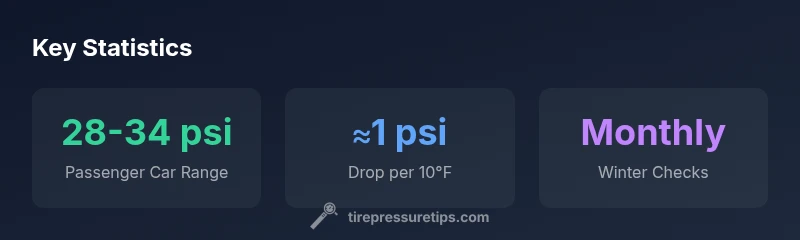
Cold weather has a direct effect on tire inflation. Air contracts as temperatures fall, causing the same tires to lose air pressure even if you haven’t driven. As a result, many drivers notice a lower PSI after several weeks of cold mornings. The Tire Pressure Tips team consistently recommends checking cold tires first thing in winter and adjusting toward the vehicle’s official cold-psi specification. This ensures the tire maintains the intended contact patch and handling, minimizing underinflation risks on snow, slush, and ice. It’s not just about safety—correct pressure also supports fuel efficiency and even tire wear over the season. In our experience analyzing winter tire pressure psi trends, temperature is the primary driver of PSI drift, so seasonal checks should become part of a monthly maintenance routine. According to Tire Pressure Tips, embracing a proactive approach reduces unreliable TPMS alerts and unexpected tire issues during temperature swings.
For drivers in regions with sharp winter temp drops, it’s common to see pressure readings drift by a noticeable margin overnight. While the placard and owner’s manual provide the target, small adjustments within that range can improve traction on cold surfaces. Remember that pressure targets assume a cold tire; driving warms air inside the tire, temporarily raising PSI, which is why measurement should occur after the vehicle has cooled for several hours. This practice preserves the integrity of the tire’s profile and helps you avoid misinterpretation of TPMS alerts.
How to Measure Cold Inflation Correctly
Measuring tire pressure correctly is essential for accurate readings. The following steps reflect best practices that are widely recommended in winter tire pressure psi guidance:
- Use a reliable gauge: Digital gauges are easy to read, but a high-quality analog gauge can be just as accurate with a steady hand.
- Check cold: Park in the shade and wait at least three hours after driving. Do not check after a drive or after parking in direct sun, as heat temporarily inflates the air inside the tire.
- Read all tires: Start with the two front tires, then check the rear. Don’t forget the spare—it also benefits from correct inflation.
- Compare to the placard: The door jamb sticker lists the cold-psi target for your vehicle. If a tire is consistently low, inspect for leaks or damage.
- Adjust with care: If one tire differs significantly from others, inflate or deflate to the target range, and recheck after a few minutes to ensure stability.
Following these steps helps you maintain consistent tire contact with winter roads. The Tire Pressure Tips Team emphasizes that tire pressure is a dynamic parameter influenced by temperature, load, and tire wear, so routine checks are a crucial habit this season.
Setting the Right Winter Tire Pressure psi for Different Vehicles
There is no single universal number for winter tire pressure psi; it varies by vehicle and tire type. In general, passenger cars often settle in the 30-34 psi range when cold, while many SUVs and light trucks sit around 34-38 psi. Always start with the vehicle placard, then consider the tire’s design and load. Heavier loads or high-speed driving can justify a modest increase within the manufacturer’s recommended band. If you use winter-specific tires, the target may shift slightly, but the official spec remains the anchor. For mixed weather or frequent passenger loads, err on the conservative side and aim for the mid-point of the recommended range rather than the extreme end. This practice maintains traction on slippery surfaces without sacrificing comfort or tread wear. Our analysis at Tire Pressure Tips shows that following the placard remains the most reliable baseline, even when you experiment within the allowable range.
The Role of TPMS in Winter Checks
Tire Pressure Monitoring Systems (TPMS) provide a live alert when a tire’s pressure falls below a critical threshold. In winter, the temperature-driven pressure loss can occur without immediate TPMS signaling if the change is gradual or close to the threshold. That’s why TPMS should complement, not replace, a manual check with a gauge. The TPMS may also read higher or lower than the actual cold PSI due to temperature and sensor placement. Use TPMS as a guide, then confirm with a cold, independent measurement to ensure you are within the vehicle’s recommended range. Tire Pressure Tips emphasizes that understanding the interaction between TPMS and ambient temperature reduces the risk of misinterpreting a warning sign during cold snaps.
Practical Testing and Maintenance Routine
Create a simple winter-safety routine that minimizes decision fatigue. Schedule a monthly check with a record-keeping habit, noting the outdoor temperature at the time of measurement. When you notice a persistent drift in one tire, inspect for leaks, punctures, or valve stem issues. Always recheck after adjusting to the target range to confirm stability. If you’re carrying a heavy load or traveling long distances, consider verifying pressure again before departure to ensure the most favorable contact patch is achieved. A small, consistent check habit can prevent larger issues later in the season.
Common Mistakes and Misconceptions
Common winter tire pressure psi mistakes include overinflating to compensate for uneven wear, ignoring TPMS warnings, and inflating all tires to the maximum recommended pressure. Never exceed the placard’s limit, as overinflation reduces the tire’s contact patch on slick surfaces and can worsen ride quality. Conversely, underinflation reduces traction and increases heat buildup. Another pitfall is relying solely on TPMS without a gauge check, particularly in very cold mornings. Finally, neglecting the spare tire can leave you unprepared for a roadside emergency. By avoiding these mistakes and maintaining a regular check schedule, you improve safety and fuel efficiency throughout the winter season.
Real-World Scenarios: Driving in Snow, Ice, and Wet Roads
Winter driving presents a spectrum of road conditions, from snow-packed surfaces to ice and slush. Proper winter tire pressure psi helps preserve traction, steering response, and braking performance. On snow, an underinflated tire can dig into the snowbank less efficiently due to a reduced contact patch, while overinflation can cause the tire to ride on top of the snow with less grip. On ice, consistent pressures help maintain predictable handling and braking distances. In wet winter conditions, correct PSI supports stable hydroplaning resistance and steering feel. The key is to keep pressure within the manufacturer’s recommended band and to adjust for changes in load and temperature.
Tools and Tech: Gauges, Sensors, and Apps
Advances in tools make winter tire pressure psi management easier. A reliable digital gauge is fast and easy to read, while a high-quality analog gauge can be very accurate with practice. Keep a small tire-pressure log in your vehicle or phone to track changes across weeks. Some vehicle systems and apps can remind you to check pressure, especially after long trips or temperature swings. For the most accurate results, always check tires when cold and compare to the placard. Nitro-filled tires or nitrogen-only systems are not necessary for typical winter conditions and do not substitute for proper cold-psi checks when tires are cold.
Representative cold-inflation ranges by vehicle type
| Scenario | Recommended Cold PSI | Notes |
|---|---|---|
| Passenger car | 30-34 psi | Check placard |
| SUV / Light truck | 34-38 psi | Adjust for load |
| Winter-specific tires | 30-34 psi | Follow manufacturer |
Frequently Asked Questions
What is winter tire pressure psi?
Winter tire pressure psi refers to the cold-inflation target specified by the vehicle manufacturer, adjusted for seasonal temperature changes. Use the placard on the door jamb as the authoritative value, and verify with a gauge when tires are cold.
Winter psi is the cold-inflation target from your placard; check with a gauge when cold.
How often should I check tire pressure in winter?
Check at least once a month and every time temperatures swing dramatically. In extreme cold, more frequent checks during the day can prevent underinflation.
Check at least monthly, and more often in cold snaps.
Will TPMS warn about cold-weather underinflation?
TPMS signals pressure changes when the loss reaches a threshold, but temperature shifts can mask optimal pressure. Always verify with a gauge.
TPMS warns on large changes, but temperature can fool it; verify with a gauge.
Should I inflate tires to the maximum sidewall in winter for safety?
No. Do not exceed the recommended pressure on the placard. Winter may warrant slight adjustments, but max sidewall can reduce traction and ride comfort.
No—stick to the placard; max sidewall can hurt traction.
Do winter tires require different pressure than all-season tires?
Generally the same method applies: use the vehicle’s cold-psi specification. Some tire brands recommend different targets for winter tires; always follow the tire and vehicle maker’s guidance.
Follow the car’s spec unless the tire maker says otherwise.
“Consistent winter tire pressure is essential for safe handling and predictable braking in winter conditions.”
What to Remember
- Check cold tires before every winter drive.
- Follow the placard for your vehicle’s exact psi.
- Expect a temperature-driven psi drop and recheck accordingly.
- Use a gauge to confirm TPMS readings.
- Inflate all tires to the same target within the recommended range.