Recommended Tire Pressure in Winter: Practical Guide
Learn how to determine and maintain the recommended tire pressure in winter, how cold temperatures affect PSI, when to adjust, and practical checks to preserve safety and grip.


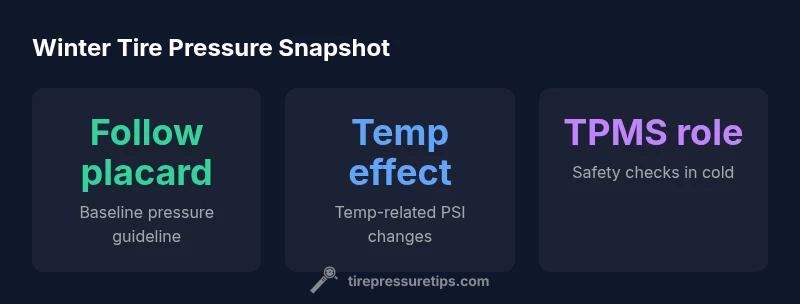
Definition: There is no universal 'recommended tire pressure winter' for every vehicle. Always follow the door placard on the driver's side; it specifies cold tire pressures by axle. In winter, temps cause pressure changes, so check tires when cold and adjust only when the vehicle or TPMS guidance indicates a change is needed. Avoid inflating beyond manufacturer specs.
Why winter tire pressure matters
Winter changes everything about how tires behave on the road. When temperatures drop, the air inside each tire contracts, which can cause the pressure to fall even if there is no slow leak. Underinflated tires reduce grip, increase rolling resistance, and wear unevenly, all of which can degrade braking efficiency on icy or slushy surfaces. Conversely, overinflated tires can reduce the contact patch and make steering feel jumpy on winter pavement. The Tire Pressure Tips team emphasizes that following the manufacturer’s cold tire pressure specification is essential, especially when you’re driving in snow or slush. In practice, that means using the door placard as your primary guide and avoiding ad hoc adjustments that contradict OEM guidance. Relying on the TPMS alone is not a substitute for a real pressure check, particularly in cold weather.
How the recommended tire pressure is determined
Automakers publish treadwear, load, and handling data that translate into a vehicle-specific cold tire pressure specification. These numbers typically differ by axle (front vs rear) and may vary with load, seating configuration, and tire size. The recommended targets are chosen to balance fuel efficiency, wear, and handling in typical operating conditions. In winter, some drivers wonder whether to adjust these figures; the official guidance remains grounded in the placard, owner’s manual, and TPMS readings. If you switch to a different tire type (e.g., winter tires with different sidewall stiffness), recheck the spec with the manufacturer or dealer to confirm that the original values still apply.
Where to find the official spec for your vehicle
The safest starting point is the door jamb placard located on the driver's side door frame or the inside edge of the fuel door. The placard lists the recommended cold pressures for the front and rear tires and often includes notes about load and speed. The owner's manual provides deeper context and any model-specific exceptions (such as for AWD vs FWD configurations). If you recently replaced tires or rims, verify that the new size matches the original equipment, as a mismatch can alter the appropriate pressure. For some vehicles, TPMS calibration after tire changes is essential to ensure accurate readings.
Temperature effects on tire pressure
Temperature is a major driver of tire pressure. As ambient temperatures fall, the air inside tires contracts, and the gauge pressure drops accordingly. In practical terms, winter mornings can start with visibly lower readings than mid-day or summer measurements. Because pressure readings reflect the current temperature, you should always measure tires when they are cold for an accurate comparison to the placard. If a cold spell persists, you may need to adjust nominal pressure to maintain the intended contact patch and performance. Remember that these changes are vehicle- and tire-specific; there is no universal correction factor that applies in every situation.
Winter-specific considerations by tire type
Different tire types behave differently in cold weather. All-season tires may show more gradual pressure changes than dedicated winter tires due to compound and tread design. SUVs, light trucks, and high-load configurations can require slightly different targets to maintain safe handling and braking response. If you install winter tires or swap to a different size, consult the OEM guidance and confirm with your tire professional that the pressure targets align with your vehicle’s weight distribution and driving style. In any case, avoid inflating to the maximum sidewall rating in pursuit of grip; stick to the recommended cold pressure and adjust only as necessary.
Checking pressure: cold vs hot and measurement accuracy
The most reliable way to check pressure is to measure when the tires are cold—ideally after they have been parked for several hours or before a drive. Use a high-quality tire pressure gauge and compare readings to the placard values. If the numbers are below the recommended level, inflate slowly in small increments, then recheck until you meet the target. After driving several miles, the readings will rise as the tires warm up; do not rely on hot readings to decide whether to adjust. For vehicles with TPMS, a warning light should not be your sole guide; treat TPMS as an indicator that warrants a direct pressure check.
Adjusting pressure safely during the season
Winter conditions may prompt more frequent pressure checks due to thermal swings andロード variability. When adjusting, release air first if you are over the target, then add air in small steps while rechecking. Always aim for the exact cold-pressure specification for your vehicle, not a personal preference for a stiffer ride. If you routinely drive with heavy loads or long highway stints into cold weather, consult a service professional to review whether a slight per-axle adjustment is advisable for your specific setup.
Common mistakes to avoid in winter
A common pitfall is inflating tires to improve grip without validating the manufacturer’s minimal and maximal pressures. Another mistake is ignoring the rear vs front pressures or assuming the same target applies to all tires. People often forget to check both front and rear tires or rely solely on gauges that aren’t calibrated. In winter, small misreads can lead to larger handling issues on slick roads. Keep a reliable gauge in your glovebox and set up a routine to check pressure monthly or after any significant temperature shift.
The role of TPMS and maintenance routines
TPMS is a valuable safety feature, but it does not replace periodic, hands-on pressure checks. In cold weather, TPMS readings can lag or misreport if the system is not calibrated or if sensor batteries decline. Regular maintenance includes inspecting tires for wear, checking tread depth, and ensuring valve stems are in good condition. If you replace tires or sensors, recalibrate the TPMS according to the vehicle’s service guidelines. Informed maintenance reduces the risk of tire-related incidents during winter driving.
Winter tire pressure guidance matrix
| Aspect | Winter Guidance | Notes |
|---|---|---|
| Baseline pressure | Follow the vehicle placard; varies by vehicle | Numbers vary; check cold tires |
| Winter adjustment | No universal winter adjustment; follow OEM guidance | Only adjust if TPMS or manual indicates |
| TPMS behavior | Expect readings to shift with cold; use gauge | TPMS is advisory, not definitive |
| Check frequency | Check cold monthly; more often in extreme cold | Align with driving patterns and loads |
Frequently Asked Questions
Should I adjust tire pressure in winter?
There is no universal winter adjustment. Always follow the door placard and vehicle manual. Adjust only if TPMS or OEM guidance indicates a change is needed, especially when winter weather alters load or road conditions.
There’s no universal winter adjustment; follow the placard and manual. Adjust only if needed per TPMS or OEM guidance.
How often should I check tire pressure in winter?
Check pressure when tires are cold at regular intervals, ideally monthly. In extreme cold, increase checks to biweekly or after significant temperature swings.
Check when tires are cold, about monthly; in very cold weather, check more often.
Does cold weather permanently lower tire pressure?
Cold weather lowers pressure as air contracts. It’s a temporary change; recheck after warming periods and adjust to the placard spec if readings fall outside the target range.
Cold weather lowers pressure temporarily; recheck after warming and adjust to spec.
Can TPMS replace manual pressure checks?
TPMS is a helpful alert system, but it should not replace direct pressure checks. Some readings can lag in cold weather, so verify with an actual gauge.
TPMS alerts are helpful, but always verify with a real pressure check.
Is it safe to overinflate tires in winter for grip?
Overinflating beyond the OEM spec reduces the contact patch and can worsen grip on slick surfaces. Stick to the manufacturer’s cold-pressure target even in winter.
Don’t overinflate; stay within the manufacturer’s cold-pressure target.
What should I do if TPMS warning stays on after inflating?
If the TPMS stays on after inflating, recheck all tires for proper seating, valve integrity, and even inflation. If unresolved, consult a tire professional to verify sensor calibration and tire condition.
If TPMS stays on after inflating, recheck tires and consider a professional check.
“Accurate tire pressure is the simplest, most impactful maintenance step you can take for winter safety.”
What to Remember
- Follow the door placard for cold tire pressures.
- Check tires when cold, not after driving.
- Expect pressure to change with temperature; adjust if advised.
- Use TPMS as a safety check, not a primary guide in winter.
- Regular winter checks help maintain grip and fuel efficiency.