How to Adjust Tire Pressure in Winter: A Practical Guide
Learn how to adjust tire pressure in winter for safer handling, grip, and efficiency. This step-by-step guide covers cold readings, using a gauge and pump, and aligning with your vehicle's winter PSI recommendations.


Learn how to correctly adjust tire pressure in winter to maintain grip, fuel efficiency, and safe braking. This guide walks you through checking cold tires, locating the recommended PSI from the door placard, and inflating or deflating to winter specs using a gauge and pump. According to Tire Pressure Tips, verify all tires and the spare, then recheck after a short drive.
Why winter tire pressure changes matter
Winter air is thinner; in cold weather, air contracts causing a drop in tire pressure and reducing the contact patch with the road. This isn't just about numbers on a gauge; underinflated tires at lower temperatures can lead to reduced grip, longer braking distances, and uneven tire wear. The Tire Pressure Tips team notes that keeping the correct tire pressure in winter helps maintain steering response, rolling resistance, and overall safety on icy or slushy surfaces. Additionally, variations between front and rear axles can become more noticeable in cold months, particularly on front-wheel-drive vs rear-wheel-drive cars. Checking pressure when tires are cold gives a stable baseline for winter adjustments and reduces the risk of over-inflating after a drive. By following the guidance here, you’ll be better prepared for snow, slush, and cold mornings.
Quick check: what you need before adjusting
Before you touch the air, assemble tools and confirm the basics:
- Gauge (digital or analog) that reads accurate to tenths of a PSI;
- Air pump or a reliable compressor (or a hand pump);
- Vehicle door placard with the recommended PSI;
- Valve caps to protect stems;
- A clean rag to wipe the valve and gauge nozzle;
- Optional: a tire pressure log to track winter changes.
Then locate the recommended PSI for your vehicle from the placard, usually on the driver door jamb, in the owner’s manual, or on the fuel door. If you carry a heavy load or drive with passengers, you may need to adjust within the placard’s acceptable range. In winter, you should check all four tires and the spare if you regularly drive in snow.
How to check tire pressure accurately in cold weather
Begin with cold tires, ideally after the car has been stationary for several hours or after a drive. Remove the valve cap from the tire, press the gauge evenly onto the valve stem, and note the reading. Compare your reading to the placard value; if it's lower, add air in small increments and recheck. If it's higher, release air until you reach the target. Do not rely on pressure readings from a recently driven tire, and avoid inflating beyond the maximum rating printed on the tire sidewall. For winter conditions, aim for the lower end of the recommended range if you frequently carry heavy loads.
Step-by-step: adjust tire pressure in winter
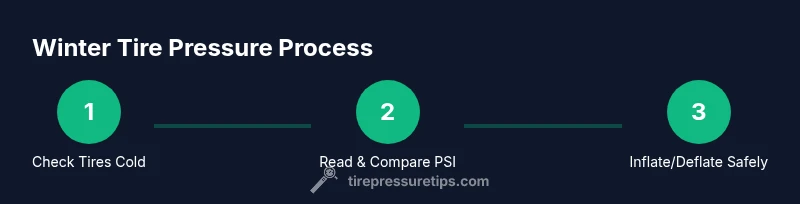
- Prepare your tools and vehicle, ensuring tires are cold and the environment is safe. 2) Locate the owner’s recommended PSI from the placard. 3) Check each tire (and the spare) with your gauge. 4) Read and compare to the target; note any discrepancies. 5) Add air in small increments until you meet the target on all tires. 6) Recheck every tire after inflation. 7) Replace valve caps and wipe away moisture. 8) Log readings and monitor over the next few days as temperatures shift.
Tip: Use a gauge that reads to at least 0.5 PSI for winter precision, and calibrate your gauge at least once a season.
Safety and maintenance considerations in winter
Winter conditions demand extra caution. Temperature swings can cause rapid pressure changes, so check more frequently during cold snaps. Never inflate a hot tire—readings on a cold tire are the most accurate. If you notice slow leaks, cracks, or a persistently low reading, stop driving and seek professional service. Overinflation under cold conditions can also reduce grip, especially on icy surfaces; keep within the placard range and avoid max PSI unless specified for load.
How temperature affects tire pressure: a quick science refresher
Temperature directly influences air density inside tires. Cold ambient temperatures cause air to contract, lowering PSI readings even if there’s no obvious leak. As temperatures rise, pressure increases. This is why winter checks should be performed when tires are cold and readings adjusted to the vehicle’s winter recommendations. Understanding this helps explain why winter checks require routine verification rather than relying on one seasonal reading.
TPMS vs manual gauge in winter
TPMS provides a warning when pressure is low but does not always reflect the exact PSI value. In winter, rely on a manual gauge to confirm the actual pressure and adjust accordingly. After tire rotations or replacements, ensure TPMS calibration or relearning as required by your vehicle. If TPMS warns of a low tire, verify with a gauge and adjust to the specified level.
Authority sources
- NHTSA Tire Safety: https://www.nhtsa.gov/road-safety/tires
- AAA Tire Safety Tips: https://www.aaa.com/auto/tire-safety
- Consumer Reports: https://www.consumerreports.org/cars/how-to-check-tire-pressure/
Tools & Materials
- Tire pressure gauge (digital or analog)(Read to at least 0.5 PSI; ensure battery is fresh if digital.)
- Air compressor or hand pump(Prefer a dedicated inflator with gauge; avoid over-length hoses that affect readings.)
- Vehicle door placard with recommended PSI(Where to find it: driver door jamb or owner's manual.)
- Valve caps(Keep caps on to protect stems from moisture and debris.)
- Clean rag(Wipe valve stem and gauge nozzle for accurate readings.)
Steps
Estimated time: 30-45 minutes
- 1
Prepare tools and tires
Park on a level surface, engine off, and tires cold. Gather your gauge, inflator, placard, and valve caps. This setup avoids skewed readings from heat and ensures safe inflation.
Tip: Keep the gauge and inflator in a pocket-friendly bag for quick access. - 2
Find the target PSI
Look at the placard on the driver door jamb or in the manual to locate the winter PSI target. Note different values for front and rear tires if provided.
Tip: If you carry a heavy load, plan to stay within the higher end of the range. - 3
Check all tires
Remove valve caps and read each tire with the gauge. Do not rely on the pressure from a recently driven tire, especially in cold weather.
Tip: Write down readings to compare after inflation. - 4
Inflate or deflate as needed
Add air in small increments, rechecking after each adjustment. Stop at the exact target PSI for each tire.
Tip: If your compressor lacks a gauge, use a separate gauge to verify after inflating. - 5
Recheck and seal
Recheck all four tires and the spare. Replace valve caps firmly to prevent moisture entry.
Tip: Check for puncture signs if readings drift unexpectedly. - 6
Document and monitor
Record the final PSI values and note any recurring changes with temperature shifts. Recheck readings after a few days of temperature change.
Tip: Keep a simple log in your glove compartment. - 7
Practice safe storage
Store equipment in a dry, cool area to preserve gauge accuracy and pump performance.
Tip: Calibrate your gauge at the start of winter season. - 8
Close out and tidy
Return all tools to their place and ensure the vehicle is ready for winter driving conditions.
Tip: Consider checking tire tread depth simultaneously for overall safety.
Frequently Asked Questions
Why does winter tire pressure change with the weather?
Cold temperatures reduce air density inside tires, lowering PSI readings. As temperatures drop, a tire may read low even if there’s no leak. Regular winter checks help maintain proper pressure for grip and fuel efficiency.
Cold weather lowers tire pressure, so you should check and adjust more often in winter for safe grip.
Should I check tire pressure when tires are cold or after driving?
Check tire pressure when the tires are cold. A hot tire can show artificially high readings, leading to underinflation after cooling.
Always read the pressure when the tires are cold to get an accurate measurement.
How often should I check tire pressure in winter?
Check at least once a month and after any significant temperature drop or highway travel when the tires have cooled.
Check monthly and after cold snaps to stay within the recommended range.
Can TPMS replace manual tire pressure checks in winter?
TPMS alerts you to low pressure but does not provide the exact PSI. Use a manual gauge to confirm the exact reading and adjust accordingly.
TPMS is a warning system; you still need a gauge for precise pressure.
What risks come from driving with underinflated tires in winter?
Underinflated tires can reduce steering response, increase wear, and raise the chance of a blowout on icy roads. Address low pressure promptly.
Underinflation in winter can compromise grip and safety; check and fix it soon.
Should I adjust PSI for heavy winter loads?
Yes. If your placard allows higher PSI values, adjust toward the higher end when carrying heavy loads to maintain proper contact patch.
If you’re carrying heavy loads, check if the placard indicates a higher PSI and adjust accordingly.
Watch Video
What to Remember
- Check tires when cold for accuracy
- Follow the door placard’s winter PSI targets
- Use a reliable gauge and inflator
- Recheck after adjustments and temperature shifts
- Regularly log winter tire pressures