How to Set Tire Pressure in Cold Weather
Learn how to set tire pressure in cold weather with a practical, step-by-step approach. Understand why temperature matters, how to measure cold PSI, and how to maintain optimal inflation for safety and efficiency.


In cold weather, you’ll learn how to set tire pressure accurately by checking cold tires, using an accurate gauge, and inflating to the vehicle’s recommended cold PSI. You’ll account for temperature, TPMS indicators, and seasonal changes. This steps-based guide shows you how to measure, adjust, and verify pressure safely to maintain performance and fuel efficiency.
Why cold weather affects tire pressure
Cold weather doesn't just chill your bones; it chills the air inside your tires. As ambient temperature drops, the air inside tires contracts, reducing the psi reading on your gauge. This natural physics means that a tire that seems correctly inflated on a warm day can become underinflated when the thermometer falls. Underinflation can reduce grip, increase rolling resistance, and accelerate wear, especially in winter driving conditions. The Tire Pressure Tips team notes that consistent underinflation in cold weather is a common cause of decreased fuel economy and uneven tread wear. Because tires operate best at the pressure recommended by the vehicle manufacturer, it’s important to check and adjust when the tires are cold.
Before you start any measurement, know that tire pressure is not a fixed value; it is a value relative to temperature. The manufacturer’s suggested cold PSI (often found on the door jamb sticker) is the standard for when the tire is cold, not when the tires have warmed from a long highway drive. In winter, you may see a bigger drop if you’re parked in an unheated garage or outdoors. This means a 2- or 3-psi deviation over the course of a winter day is not unusual, but the fix is simple: measure when cold and adjust to the recommended cold PSI. Keep in mind that different tires (summer, all-season, winter) and different loads can shift the target slightly, so always use your vehicle’s documented spec as the baseline.
According to Tire Pressure Tips, cold weather can exaggerate normal pressure fluctuations, making regular checks even more important for safety and efficiency.
Before you start: know your cold PSI
Cold PSI is the tire pressure value you should aim for when the tires are cold. The best source is your vehicle’s door jamb sticker or the owner’s manual, which lists the recommended cold PSI for front and rear tires (they can be the same or different). In winter, use a reliable gauge and measure after the tires have cooled for at least three hours or before you’ve driven more than a mile. Remember that winter weather can subtly shift the target; if you’re carrying heavy loads or using winter tires, verify whether your manufacturer provides a separate winter spec. Always record the exact cold PSI recommended by your vehicle rather than relying on what felt comfortable on a warm day. For vehicles with multiple tire sizes, confirm the correct spec for each axle.
Step-by-step overview
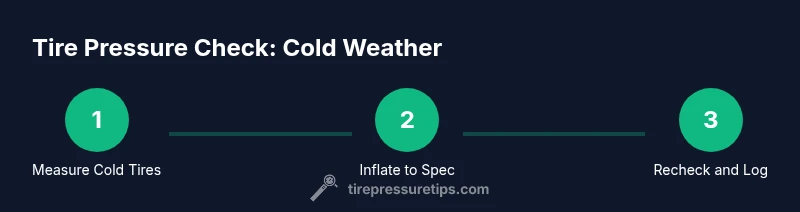
This section provides a concise overview of the inflating process. For detailed, step-by-step instructions with precise actions, refer to the dedicated STEP-BY-STEP block. The goal is to ensure all four main tires (and the spare if applicable) are inflated to the vehicle’s cold PSI, avoiding overinflation and leaks. The steps below are designed to minimize guesswork in winter conditions and help you stay within the manufacturer’s safe range. A visual diagram in the companion infographic can help you grasp the sequence at a glance. As you progress, keep thermal conditions in mind; a tire in a shaded, cold spot may read differently than one in a sunny, exposed location.
Special considerations: TPMS, seasonal tires, and safety
Tire Pressure Monitoring Systems (TPMS) are a crucial safety feature that alerts you when a tire’s pressure falls too far. Cold weather can trigger TPMS readings to blink if pressures drop rapidly or unevenly between wheels. Winter tires and heavier loads may require adjustments within the manufacturer’s recommended range, but the baseline cold PSI remains your reference. If you notice a TPMS warning, verify all four tires with a gauge, inspect for punctures or slow leaks, and check that valve stems aren’t damaged. Safety is paramount: underinflated tires heat up more quickly in cold climates, increasing the risk of rapid wear, reduced grip, and poor handling. Always ensure tires are within the recommended range before long trips, especially in hazardous winter conditions.
Common mistakes and troubleshooting
Common winter pitfalls include inflating while the tires are warm, using a low-quality gauge, and failing to recheck after a few minutes when temperature stabilizes. Digital gauges offer higher accuracy, but any gauge should be calibrated periodically. A frequent error is relying on the TPMS alone without verifying actual air pressure with a gauge. Slow leaks from damaged valves, punctures, or bead seats can fool you into thinking a tire is properly inflated when it’s not. If readings remain inconsistent across tires, inspect for leaks, damaged rims, or valve stems, and consider professional inspection if the problem persists.
In winter conditions, ambient temperature has a practical impact on your readings. A quick recheck after a few miles can confirm that the tires remain within the target range as they warm up and cool down with driving. If a tire will not reach the recommended PSI despite adding air, stop and seek assistance to rule out a leakage or structural issue.
How to measure pressure accurately in cold weather
The accuracy of your measurement depends on the tool, the tire condition, and timing. Use a properly calibrated gauge, ideally digital for fast readings, and measure when tires are cold. Remove the valve cap, press the gauge firmly onto the valve stem, and pause for a moment to capture the reading. If you’re close to the target but slightly under, add air in small increments (2-3 psi increments) and recheck. If you overfill, release air gradually until you reach the cold PSI. For best results, take readings at roughly the same time of day and in similar temperatures to track consistent changes over time. Consider logging readings in a notebook or app to notice trends and potential leaks over weeks.
Winter maintenance routine and year-round monitoring
Develop a simple, repeatable routine to keep tire pressure in check throughout the year. Check pressure monthly and before long trips, with extra checks during cold snaps or temperature swings. Always measure when tires are cold, and adjust to the manufacturer’s recommended cold PSI. If you’ve added heavy cargo or winter tires, revisit the spec and make small, calculated adjustments. A consistent routine reduces the risk of underinflation-related issues and helps you optimize fuel efficiency, tire wear, and overall safety. The Tire Pressure Tips team emphasizes consistency and documentation as key drivers of reliable, year-round tire care.
Tools & Materials
- Digital tire pressure gauge(Calibrated within the last 6 months for accuracy)
- Portable air compressor or access to an air pump(Prefer a device with a built-in pressure gauge)
- Vehicle owner’s manual or door jamb sticker(Contains the recommended cold PSI for each axle)
- Notebook or app for logging readings(Helpful but not essential)
- Clean rag or tissue(Wipe valve stems for accurate readings)
Steps
Estimated time: 25-35 minutes
- 1
Gather your tools
Collect your gauge, inflator, the vehicle’s PSI spec, and a notebook for logging readings. Confirm the gauge reads accurately by testing on a known reference if available. This ensures your measurements won’t be thrown off by a faulty tool.
Tip: Check gauge accuracy by testing against a second gauge or reference weight before you begin. - 2
Check tires when cold
Park in a shaded, cool spot and let tires sit undisturbed for at least 3 hours after driving, or check before you drive. Remove the valve caps and wipe the stems to remove dirt that could affect readings. This step ensures you're reading the true cold PSI.
Tip: Avoid checking after a highway trip; the heat will skew PSI readings. - 3
Inflate to the recommended cold PSI
Attach the gauge to the valve stem and inflate in small increments until you reach the cold PSI listed on the door jamb sticker or manual. Do not exceed the max pressure printed on the sidewall. Recheck each tire after a moment to confirm stability.
Tip: Inflate gradually, pausing to recheck after each small addition. - 4
Recheck all tires
If your vehicle uses different front and rear specs, verify each tire’s target independently and adjust accordingly. Don’t forget the spare if you carry one or may need to use it in winter conditions. Temperature differences across the day can shift readings, so a second check helps ensure accuracy.
Tip: Double-check the passenger side front and driver side rear are both at their correct targets. - 5
Inspect for leaks or damaged valves
Look for slow leaks around valve stems, bead seats, and rims. A damaged valve stem or rim bead can cause gradual pressure loss that won’t be corrected by just adding air. If you notice frequent pressure loss, seek professional inspection.
Tip: Tighten valve caps snugly but avoid overtightening; damaged caps can allow air leakage. - 6
Record readings and plan next checks
Log the psi for each tire and the date. Set reminders for monthly checks during winter and before trips. Keeping a record helps you detect leaks and track tire performance over time.
Tip: Use the same gauge and procedure each time to maintain consistency.
Frequently Asked Questions
How often should I check tire pressure in winter?
In winter, check tire pressure at least once a month and before long trips. If temperatures swing, check more often to catch rapid changes.
Check monthly and before trips, especially during cold weather, and adjust as temperatures change.
What happens if I drive on underinflated tires in cold weather?
Underinflated tires wear faster, reduce grip, and can overheat, increasing the risk of failure in cold conditions.
Underinflation risks include faster wear and poorer grip, especially in cold weather.
Can I adjust for winter tires differently?
Winter tires use the same cold PSI as recommended for the vehicle; however, load and performance may affect the ideal range. Always follow the sticker.
Winter tires follow the vehicle's cold PSI; adjust based on load and manufacturer guidance.
Why does my TPMS light come on when it's cold?
Cold weather can cause pressure to drop enough to trigger TPMS. Recheck all tires with a gauge and address leaks or sensor issues as needed.
Cold temps can drop pressure enough to trigger TPMS; recheck and fix leaks if needed.
Is it safe to fill tires using a home air compressor?
Yes, but monitor PSI closely and avoid overinflation. Use a gauge to confirm readings and follow the cold PSI target.
Yes, just watch the readings and stay within the recommended cold PSI.
What should I do if a tire cannot reach the recommended PSI?
Check for leaks, damaged valves, or structural issues. If PSI cannot be reached after repairs, seek professional inspection.
If you can’t reach the recommended PSI after checking, have the tire inspected by a professional.
Watch Video
What to Remember
- Check cold tires before driving.
- Inflate to the recommended cold PSI.
- Use a reliable gauge and recheck after inflation.
- Account for TPMS indicators in winter.
- Log readings to track changes over time.