Tire Pressure Warning in Cold Weather: Troubleshooting Guide
Diagnose and fix tire pressure warnings in cold weather with a practical, step-by-step guide from Tire Pressure Tips. Learn causes, checks, and prevention to stay properly inflated.


When a tire pressure warning shows in cold weather, the most common cause is the pressure drop from lower temperatures. Start by checking all tires when cold, then inspect for leaks, faulty valves, or a faulty TPMS sensor. Inflate to the vehicle manufacturer’s recommended PSI and monitor for changes. If the warning remains after inflating, schedule a professional check to rule out sensor or bead leaks.
Why Cold Weather Triggers Tire Pressure Warnings
Cold weather doesn't just bite your skin; it also bites your tires. When the air around the tire cools, the gas inside contracts and tire pressure tends to drop. Modern vehicles rely on a TPMS to alert you when a tire falls below the recommended range, and winter’s big temperature swings make these warnings more common. According to Tire Pressure Tips, the most frequent cause of a TPMS warning in cold months is ordinary temperature-driven pressure loss rather than a sudden tire fault. This means that the warning is often an invitation to recheck the basics: confirm the vehicle’s cold-inflation spec, verify all tires are fully chilled before inflating, and use a reliable gauge to compare readings with the spec in the owner’s manual. A false sense of security is easy if you only look at one tire; always inspect all four corners, including the spare if your vehicle uses a capless system.
How Cold Weather Affects Tire Pressure and TPMS Readings
Tires operate in a temperature-sensitive environment. When air cools, its pressure drops; when tires warm during driving, the pressure rises. In cold weather, the difference between the tire's actual pressure in the morning and after a cold-night ride can be noticeable, prompting the TPMS to light up even if there’s no real leak. In addition, TPMS sensors themselves may be more sensitive to voltage fluctuations as the battery chemistry slows in cold temperatures, causing occasional warnings or slower reset after inflations. The key takeaway is that winter readings should be taken when tires are cold and the vehicle is parked, ideally before driving more than a few miles. This ensures you're evaluating the tire’s true cold-inflation pressure and not a warmed-up reading from a drive.
Common Warning Signals You Might See in Cold Weather
The unmistakable TPMS warning light is the most common signal, but you may also notice fluctuating PSI readings on a gauge, or tires that feel softer after a chilly morning. Some drivers report a gradual decrease in pressure across days as temperatures dip, then a burst of warning when a cold front arrives. Inconsistent readings can happen if you use a faulty gauge or inflate from a heat source, such as a sunlit garage or engine bay. If you notice the warning persist after inflating to the recommended cold-inflation PSI, there may be an underlying issue that requires further inspection, such as a slow leak, a valve stem problem, or a faulty TPMS sensor.
Diagnostic Flow: Symptom -> Diagnosis -> Solutions
Symptom: TPMS warning or fluctuating tire pressure during cold weather.
Causes:
- Ambient temperature drop causing natural pressure loss (likelihood: high)
- Slow leaks at valve stems or bead seating (likelihood: medium)
- Tire puncture or object causing leak (likelihood: low)
- TPMS sensor or battery fault (likelihood: low)
- Liquid moisture or condensation interfering with readings (likelihood: low)
Fixes:
- Inflate tires to the manufacturer’s cold-inflation spec when tires are cold (difficulty: easy)
- Inspect valve stems, tires, and rims for obvious damage; use soapy water to locate slow leaks (easy)
- Repair leaks or replace punctured tires or bead leaks (difficulty: medium)
- Test/replace TPMS sensors or batteries if readings remain off (hard)
- If you can't locate a leak or the warning persists, seek professional help (easy)
Steps
Estimated time: 20-40 minutes
- 1
Safety first and prep your vehicle
Park on a level surface away from traffic. Apply the parking brake and turn off the engine. Gather a reliable tire gauge, a flashlight, soapy water, and a notebook to record readings.
Tip: Wear gloves and avoid hot rotors; ensure your area is well-lit. - 2
Check all tires when cold
Measure each tire's pressure when the tires are cold, before driving. Use the same gauge for consistency and note the readings.
Tip: If you recently drove, wait hours for tires to cool to room temp. - 3
Compare to the manufacturer's spec
Look up the cold-inflation PSI in your vehicle’s manual or door jamb sticker and compare to your readings.
Tip: Don’t rely on “feel”—use the gauge for accuracy. - 4
Inspect for visible issues
Carefully inspect valve stems, rims, and tires for cracks, bulges, or embedded objects. Look for signs of slow leaks.
Tip: A small nail can cause a slow leak over days. - 5
Test for leaks with soapy water
Spray soapy water on suspected areas and look for bubbles indicating a leak. Mark the spot.
Tip: Bubbles mean the leak is active and needs repair. - 6
Inflate to spec and recheck
Inflate each tire to the cold-inflation spec, then recheck after 5–10 minutes to confirm stability.
Tip: Record the final numbers for future reference.
Diagnosis: TPMS warning or fluctuating tire pressure during cold weather
Possible Causes
- highAmbient temperature drop causing natural pressure loss
- mediumSlow leaks at valve stems or bead seating
- lowTire puncture or object causing leak
- lowTPMS sensor or battery fault
- lowMoisture or condensation interfering with readings
Fixes
- easyInflate tires to the manufacturer’s cold-inflation spec when tires are cold
- easyInspect valve stems, tires, and rims for obvious damage; use soapy water to locate slow leaks
- mediumRepair leaks or replace punctured tires or bead leaks
- hardTest/replace TPMS sensors or batteries if readings remain off
- easyIf you can't locate a leak or the warning persists, seek professional help
Frequently Asked Questions
Why does the TPMS warn more in winter?
Colder air lowers tire pressure, which can trigger the TPMS. Winter temperature swings make readings fluctuate, especially on aging sensors. Always compare cold readings to the manual spec and inspect tires for leaks if warnings persist.
Colder air lowers tire pressure, which can trigger the TPMS. Check cold readings and inspect for leaks if warnings stay on.
Should I always inflate to the cold-inflation PSI in winter?
Yes. Inflate tires to the manufacturer’s cold-inflation specification when tires are cold. Recheck after a slow drive to see if readings stabilize, and avoid inflating beyond the recommended range.
Yes. Use the cold PSI from the manual and recheck after driving a bit to see if it stabilizes.
Can TPMS sensors fail in winter?
Sensor electronics can be affected by cold and battery performance may drop. If readings remain off after inflating, the sensor or battery may need testing or replacement.
Sensors can be affected by cold; if readings stay off, they may need testing or replacement.
What if I can’t locate a leak?
If a leak isn’t visible, seek professional help. A slow leak could be through the bead or inside the tire, requiring equipment to locate.
If you can’t find a leak, get a professional check.
Is it safe to drive with a low tire?
Driving on underinflated tires is dangerous and can damage the tire. Inflate to spec before driving long distances, especially in winter conditions.
Avoid driving on low tires; inflate to the recommended pressure before driving.
Watch Video
What to Remember
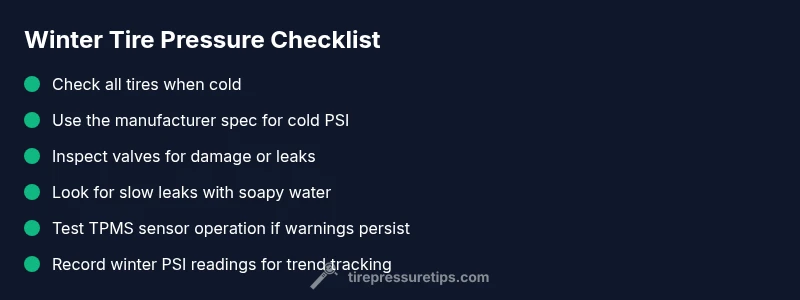
- Check tires when cold before driving.
- Inspect valves and TPMS if warnings persist.
- Use a reliable gauge to verify readings.
- Seek professional help for persistent or unclear warnings.