Cold Weather Tire Pressure Troubleshooting
Learn how to diagnose and fix tire pressure drops caused by cold weather. Practical steps, safety tips, and winter maintenance guidance for reliable driving.


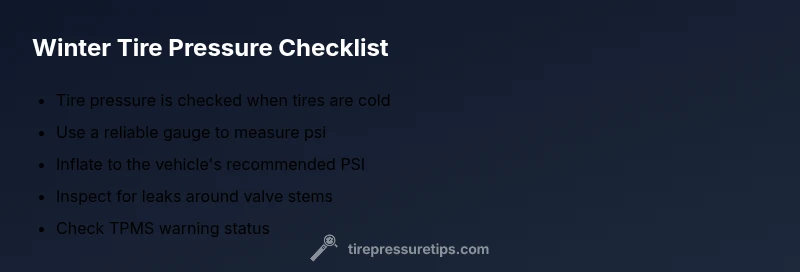
According to Tire Pressure Tips, cold weather naturally makes tire pressure fall. Readings can drop as outdoor temps cool, so check tires when they’re cold and inflate to the vehicle’s recommended psi. If a tire remains low after a top-up, recheck after a short drive. Persistent loss may indicate a leak or TPMS issue, which requires closer inspection.
Why cold weather affects tire pressure
Cold temperatures cause air to contract, which lowers the pressure inside tires. When the air inside shrinks, the tire’s volume stays the same, but the air pressure falls. For drivers, this means you may wake up to visibly flatter tires after a frosty night or a chilly morning. The Tire Pressure Tips team emphasizes that the impact is most noticeable when temperatures drop quickly, and it can affect handling, braking, and fuel efficiency. Because tires naturally lose pressure as the ambient temperature falls, winter drivers should adopt a regular cold-weather check routine and rely on the vehicle manufacturer’s recommended psi rather than guessing based on last summer pressures. This proactive approach reduces risk and keeps tires performing at their best.
How to measure tire pressure accurately in cold weather
First, measure tire pressure when the tires are cold—ideally after the car has been parked for several hours or overnight. Driving even a short distance heats the tires and can give a falsely high reading. Use a high-quality digital or dial gauge and compare the reading to the manufacturer’s recommended psi found on the door placard or in the owner’s manual. If a tire reads low, inflate to the recommended value and recheck after a few minutes of driving to confirm stability. Remember, tire pressure can vary by tire type, wheel size, and load — so don’t rely on a single reading. If you notice repeated drops, there may be a leak or TPMS issue that needs attention.
Interpreting tire pressure readings: cold vs warmed tires
A reading taken while tires are cold is the baseline. After driving and tires warm up, the pressure rises. This means you should inflate when cold and verify again after the car returns to a cool state. If the reading remains low after cooling, there could be a slow leak, a faulty valve stem, or a puncture. In winter, slight fluctuations are normal, but consistent underinflation is a risk. Using TPMS alerts in your vehicle can help you monitor changes between cold and warm states, guiding you to inflate correctly.
Common symptoms of underinflated tires in winter
Underinflated tires can make steering feel heavy, reduce traction on ice, and increase stopping distances. You may notice uneven wear on the tread shoulders, more road noise, and reduced fuel economy. In cold weather, these symptoms can worsen quickly, especially on older tires or those with visible tread wear. If you notice a persistent tire pressure warning or you feel the vehicle pulling to one side, check all tires promptly. Addressing underinflation promptly improves safety and performance.
Quick, safe fixes you can perform at home
Begin with a cold-tire check and inflate to the recommended psi on all four tires, including the spare if you routinely carry it. Use a reliable gauge and verify the reading after cooling. If a tire won’t hold air, inspect the valve stem, rim bead seal, and tire sidewalls for damage. A soapy-water test can reveal slow leaks around the valve stem or bead. Do not overinflate to compensate for future temperature swings; instead, schedule a repair if you detect a leak, damage, or the TPMS warning stays on after inflation.
Tools for winter tire pressure checks
Keep a dedicated tire pressure gauge in your glove box and a small air compressor or access to a gas station with a working gauge. A digital gauge is often easier to read in cold conditions. Also carry a tire repair kit for minor punctures and a spare valve core tool. Regularly checking and maintaining correct pressure helps extend tire life, improve fuel efficiency, and preserve safe handling in winter driving.
TPMS and cold weather: what to know
TPMS sensors help monitor tire pressure, but they won’t fix underinflation. In very cold weather, the sensor readings may lag behind actual pressure changes as tires warm up and cool down. If TPMS shows a warning, verify readings with a gauge and adjust as needed. If warnings persist after inflation, the sensor battery or reset procedure may require professional attention. Always address TPMS alerts promptly to avoid driving on underinflated tires.
Prevention and maintenance routine for winter
Create a simple winter routine: check tire pressure weekly or after significant temperature changes, and adjust to the vehicle’s recommended psi. Inspect tires for cracks, bulges, or visible damage during each check. Rotate tires as recommended to promote even wear, and replace tires that show excessive wear. Keep the spare tire pressure in check as part of a complete winter readiness plan. Consistency is the best defense against winter tire issues.
Safety considerations when inflating tires in cold weather
Inflate tires only after they are cold and in a safe, stable environment. Stand clear of traffic, use protective gloves, and never over-tighten valve caps. If a tire has a slow leak or you suspect rim damage, move away from the area and seek professional help. Avoid extreme pressure changes by inflating gradually and rechecking readings. In winter, always take extra care around icy roads and cold metal surfaces.
When to seek professional help
If you repeatedly find one tire reading low after cold starts, you suspect a persistent leak, a cracked rim bead, or a TPMS fault that can’t be resolved with a simple top-up, schedule a professional inspection. A tire shop can perform leak testing, valve stem replacement, rim inspection, and TPMS calibration or battery replacement. Regular professional checks can catch issues early and prevent unsafe driving conditions.
Steps
Estimated time: 60-90 minutes
- 1
Check tires when cold
Park the car in a shaded area and wait for the tires to cool, at least a few hours if possible. This gives you an accurate baseline for PSI. Prepare your gauge and the vehicle’s PSI specification before you begin.
Tip: A digital gauge with large, easy-to-read numbers reduces mistakes in cold weather. - 2
Take baseline readings
Record the PSI on all four tires and the spare. Compare readings to the manufacturer’s recommended PSI indicated on the door placard or in the owner's manual. Note any tire reading significantly lower than others.
Tip: If you’re unsure about the spec, use a conversion chart from the vehicle manufacturer site. - 3
Inflate to spec
Using a portable air compressor or at a gas station, inflate each tire to the recommended PSI. Do not exceed the maximum tire pressure listed on the tire sidewall. Recheck after a brief drive to ensure readings remain stable.
Tip: Inflate in small increments and recheck; rapid inflation can lead to overinflation if the tire warms quickly. - 4
Inspect for leaks
If a tire remains stubbornly low after inflation, inspect the valve stem, bead, and sidewalls for signs of damage. Apply a soap solution to joints to look for escaping air; any bubbles indicate a leak.
Tip: Check the valve core and cap; loose caps can cause slow leaks or false readings. - 5
Test TPMS and reset if needed
If the TPMS warning does not align with gauge readings, consult the vehicle’s manual for reset procedures or have a technician verify sensor function and battery health.
Tip: Don’t ignore TPMS warnings; sensors can fail and leave you unaware of actual pressure levels. - 6
Plan a pro inspection if issues persist
If you detect a leak, damaged rim bead, or repeated underinflation despite inflation attempts, schedule a professional inspection promptly. Timely checks prevent tire failure.
Tip: Keep notes of readings and dates to help the tech diagnose persistent issues.
Diagnosis: Tire pressure reading low after cold weather
Possible Causes
- highAmbient temperature drop causing air contraction in the tire
- mediumSlow leak from valve stem or bead
- lowPuncture or nail in tire or wheel damage
- lowTPMS sensor fault or calibration drift
Fixes
- easyMeasure tires when they’re cold and inflate to the recommended PSI, then recheck after a few minutes of driving to confirm stability
- easyInspect around the valve stem and bead for signs of leaks; use soapy water to identify leaks
- mediumIf a leak is detected or if loss continues, consult a tire shop for repair or replacement
- mediumIf TPMS warning persists after inflation and leak check, have a technician inspect TPMS sensors and battery
Frequently Asked Questions
Why does tire pressure drop when it's cold?
Tire pressure drops as ambient temperature falls because air contracts. This is amplified in winter. Always measure when tires are cold and inflate to the recommended PSI. If pressure remains low after inflation, there may be a leak or TPMS issue.
In cold weather, air tightens and pressure drops. Check cold tires and inflate to the recommended PSI; if the pressure stays low, have the tire inspected for leaks or TPMS faults.
How should I measure tire pressure correctly in winter?
Measure when the tires are cold, use a reliable gauge, and inflate to the vehicle's recommended PSI. Recheck after a short drive to confirm stability, especially if temperatures are fluctuating.
Measure cold tires with a good gauge and inflate to spec, then recheck after a brief drive to confirm the reading.
Is it safe to inflate tires at a gas station in winter?
Yes, it's generally safe if you follow standard safety practices: park away from traffic, keep hands dry, and avoid overheating the tire. Use a gauge to verify accuracy and avoid overinflation.
Gas stations are fine—check the pressure with a gauge and inflate gradually, avoiding overinflation.
What if the TPMS light stays on after I inflate?
If the TPMS warning persists after inflation and leak checks, there may be a sensor issue or calibration drift. Have the TPMS system inspected by a technician.
If the light stays on after inflating, get the TPMS system checked by a professional.
Can cold weather cause permanent tire damage if driven underinflated?
Prolonged underinflation increases heat buildup and can damage sidewalls or lead to tire failure. Always address low pressure promptly and avoid driving long distances on underinflated tires.
Yes, prolonged underinflation can cause tire damage; fix pressure promptly and avoid long trips on low pressure.
How often should I check tire pressure in winter?
Check tire pressure at least once a week and after temperature shifts. Keeping readings within the recommended range improves safety and fuel efficiency.
Check weekly and after temperature swings to stay safe.
What basic tools should I keep for winter tire care?
A reliable gauge, a portable inflator, and a soap solution for leak detection are essential. Regularly inspect tires for signs of damage.
Keep a gauge, inflator, and soapy water for quick leaks.
When should I seek professional help for tire pressure issues?
If you see persistent low readings, repeated leaks, or TPMS warnings that you cannot resolve with at-home checks, schedule a professional inspection.
If issues persist after home checks, see a tire professional.
Watch Video
What to Remember
- Check tires when cold and inflate to spec
- Use a quality gauge for accurate readings
- Address slow leaks and TPMS warnings promptly
- Maintain a winter tire pressure routine to prevent issues