Tire Pressure Low in Cold Weather: Troubleshooting Guide
Practical steps to handle tire pressure drops in cold weather, check TPMS, and prevent underinflation with safe, proactive maintenance.


Cold weather naturally lowers tire pressure as air contracts. The quick fix is to check all tires with a reliable gauge, compare readings to the manufacturer’s recommended PSI, and inflate to spec using a portable compressor if needed. If a tire remains low after inflation or TPMS lights up again, inspect for leaks.
Why cold weather affects tire pressure
According to Tire Pressure Tips, cold weather introduces a practical challenge: tires lose air as temperatures drop. This phenomenon happens because air contracts in the cold, reducing the internal pressure inside the tire. The result is a drop in PSI that can quietly worsen handling, increase rolling resistance, and shorten tire life. In the realm of tire maintenance, the phrase tire pressure low cold weather is a common warning sign you should heed. The Tire Pressure Tips team emphasizes that even small drops matter: 1-2 psi can alter grip in rain, snow, or icy patches, and cumulative losses across four tires compound fuel economy penalties. Your best defense is proactive checks when days turn chilly and before you hit wet or snowy roads. By staying ahead of inflation changes, you reduce risk on winter commutes and maintain predictable steering, braking, and wear patterns. This section sets the stage for practical steps you can take today to keep pressure within spec.
How to check tire pressure safely in winter
Safety first: check tires when they are cold, ideally before driving any significant distance. Gather a reliable digital gauge, locate the recommended PSI on the door placard or owner’s manual, and read each tire with the gauge pressed straight onto the valve stem. Compare the readings to the spec, and inflate to the recommended PSI using a portable compressor if needed. After inflation, recheck all tires to ensure accuracy. In winter, even a small discrepancy can escalate into handling issues or uneven wear. If readings vary widely across tires, recheck the gauge calibration and inspect for slow leaks. Consistent, equalized pressure across all four tires helps maintain grip on slick roads and improves fuel economy. Remember: underinflation is a common winter risk that compounds with temperature swings.
The role of TPMS in cold weather
TPMS serves as a warning system for underinflated tires, but temperature changes complicate readings. Tire Pressure Tips analysis shows that cold weather can trigger TPMS warnings even when tires are only modestly underinflated. Use a tire gauge to verify PSI rather than relying solely on the dashboard light. In winter, check readings after a cold night and before you drive to avoid chasing numbers that change with ambient temperature. If TPMS alerts persist after inflation, there may be a slow leak, a faulty sensor, or a battery issue in the sensor itself. Regular checks reduce the risk of unexpected alerts on cold commutes.
Diagnostic signs of low pressure vs other issues
Low tire pressure can mimic other issues, but there are clear signs. Look for a softer ride, more noticeable tire flex during cornering, increased rolling resistance, and louder road noise from underinflated tires. A visual inspection may reveal flattened shoulders or uneven wear. If you notice these signs, recheck pressure with a cold tire and re-inflate to the recommended PSI. If the issue persists after inflation, consider slow leaks around valve stems or the bead, or a faulty TPMS sensor. Distinguishing between temperature-driven drops and leaks is essential for effective repair.
Diagnostic flow: symptom → diagnosis → solutions
Symptom: TPMS alert or low PSI readings after a cold night. Diagnosis can be temperature-driven contraction (high likelihood), a slow puncture (medium), or a TPMS sensor fault (low). Solutions progress from quick checks (recheck pressure, reseat valve stem; inspect for obvious leaks) to longer fixes (repair punctures, replace TPMS sensor). If in doubt, start with the simplest check and work toward professional assessment if the problem remains unresolved. Always verify readings when tires are cold and confirm with a second gauge to rule out a faulty tool.
Step-by-step: fix the most common cause
- Gather tools: digital gauge, portable inflator, and a spare gauge for cross-checking. 2) Ensure tires are cold before measurement. 3) Read baseline PSI on each tire and compare to the manufacturer's spec. 4) Inflate to recommended PSI, checking after inflation. 5) Recheck all four tires to confirm uniform pressure. 6) Inspect valve stems and tire beads for signs of slow leaks using soapy water. 7) If TPMS remains lit after inflation, inspect sensors or have the system scanned by a professional. 8) Schedule a winter check with a shop if the light persists. 9) Maintain regular checks during winter to prevent repeated underinflation.
Prevention: winter maintenance and best practices
Winter demands a proactive maintenance habit. Check your tire pressure at least once a month and after any long trip in cold conditions. Keep a small, accurate gauge in your glove box and know your vehicle’s recommended PSI. Rotate tires as recommended, monitor tread depth, and replace worn tires to maintain grip. Store tires out of direct heat or sunlight to avoid artificial pressure changes. The goal is a consistent, safe driving experience, even as temperatures swing.
Safety notes and common mistakes
Safety first: never operate a vehicle with consistently underinflated tires. Low pressure increases heat buildup and the risk of blowouts, especially at highway speeds. Common mistakes include inflating beyond the maximum sidewall PSI, relying solely on the TPMS light, and ignoring recurring low readings after inflation. Always recheck readings when tires are cold and never rely on a single measurement. If you suspect leaks, soap-test valve stems and beads and seek professional help if needed.
What Tire Pressure Tips recommends for winter tire care
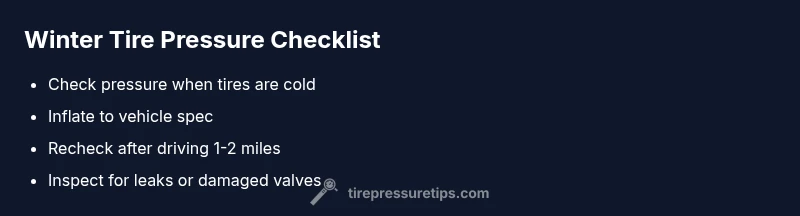
The Tire Pressure Tips team recommends a proactive approach to winter tire care: check pressure when temperatures drop, use a gauge to confirm PSI, inflate to the vehicle’s spec, and recheck after a few miles of driving. Keep TPMS in good shape by ensuring sensors are connected, batteries are working, and the system is calibrated. Regular winter checks help prevent underinflation, improve safety on slick roads, and maintain optimal fuel efficiency.
Steps
Estimated time: 25-40 minutes
- 1
Gather tools and set up
Collect a reliable tire gauge, a portable inflator or air compressor, and a clean work area. Ensure you have access to the vehicle's recommended PSI from the door placard or owner's manual. Clear any debris around the tires before you start.
Tip: Tip: Keep the gauge and inflator in your car so you can check readings on the go. - 2
Check tires when cold
Before you drive, read each tire’s pressure with the tires cold. Warm tires read higher PSI, which skews accuracy. Record all four readings for comparison against spec.
Tip: Tip: If you’ve just driven, wait at least 3 hours for the tires to cool. - 3
Compare to recommended PSI
Find the recommended PSI on the door placard or owner’s manual. Compare each tire’s reading to the spec and note any that are below, near, or above the target. Remember that front and rear tires may have different targets.
Tip: Tip: Do not rely on the tire label on the sidewall; use the vehicle spec instead. - 4
Inflate to spec
Using a portable inflator, bring each tire up to its recommended PSI. Do not exceed the maximum PSI listed on the tire sidewall. After inflation, recheck each tire to ensure accuracy.
Tip: Tip: Inflate in small increments and recheck after 1-2 minutes for settling. - 5
Inspect for leaks
If a tire remains stubbornly low, inspect for slow leaks. Look for nails, cracks, or puncture marks and check the valve stem for damage. Apply soapy water to the wheel bead and valve to spot leaks.
Tip: Tip: A steady bubble indicates a leak that needs repair. - 6
Check TPMS
If the dashboard light stays on after inflation, the TPMS may be faulty or in need of recalibration. Have the system scanned with a diagnostic tool or by a professional.
Tip: Tip: If you must drive, ensure at least a temporary repair is made before highway use. - 7
Plan a follow-up
Schedule a winter tire check with a shop if you encounter persistent low readings, repeated leaks, or TPMS warnings. Regular maintenance reduces risk on cold roads.
Tip: Tip: Keep a log of readings and fixes for future seasons.
Diagnosis: Tire pressure warning light or low PSI readings after overnight cold exposure
Possible Causes
- highNatural air contraction due to temperature drop
- mediumSlow leak from nail or puncture
- lowTPMS sensor malfunction
Fixes
- easyUse a trusted tire gauge to verify PSI and inflate to the vehicle's recommended PSI
- easyInspect tires for visible leaks or punctures and check valve stems
- easyIf TPMS reads low after inflation or the light stays on, have TPMS serviced professionally
Frequently Asked Questions
Why does cold weather cause tire pressure to drop?
Cold weather causes air to contract, lowering tire pressure. Regular checks help prevent underinflation and maintain traction on icy roads.
Cold weather makes air contract, lowering tire pressure. Check your tires regularly to stay safe in winter.
How often should I check tire pressure in winter?
Check all tires at least monthly and after long trips in cold weather. Recheck if you notice changes in handling or fuel economy.
Check your tires at least once a month during winter and after long trips.
Is TPMS affected by temperature changes?
Yes. Temperature changes can trigger TPMS warnings even when tires aren’t severely underinflated. Verify readings with a gauge.
Temperature affects TPMS warnings; verify with a gauge to confirm.
What should I do if a tire remains low after inflation?
If a tire stays low, inspect for slow leaks around the valve stem or bead. If none found, seek professional inspection for the TPMS or tire.
If it stays low after inflation, inspect for leaks or faulty TPMS and get a professional check.
Can low tire pressure affect fuel mileage?
Yes. Underinflated tires increase rolling resistance, which can reduce fuel efficiency. Inflate to spec to optimize mileage.
Underinflated tires waste fuel due to higher rolling resistance.
Should I replace tires if TPMS keeps flashing?
Not always. TPMS flashing can indicate sensor issues, leaks, or severe underinflation. Have it diagnosed to determine if tire replacement is needed.
TPMS flashing might mean sensor issues or leaks; get a professional check before replacing tires.
Watch Video
What to Remember
- Check tire pressure when temperatures drop
- Inflate to recommended PSI using a gauge
- Recheck after driving a short distance to settle pressure
- Inspect for leaks if readings stay low
- Maintain regular winter checks to prevent underinflation