Why Tire Pressure Drops When Cold: A Troubleshooting Guide
Discover why tire pressure falls in cold weather, how to diagnose readings, and practical steps to keep tires properly inflated all winter. Practical guidance from Tire Pressure Tips.


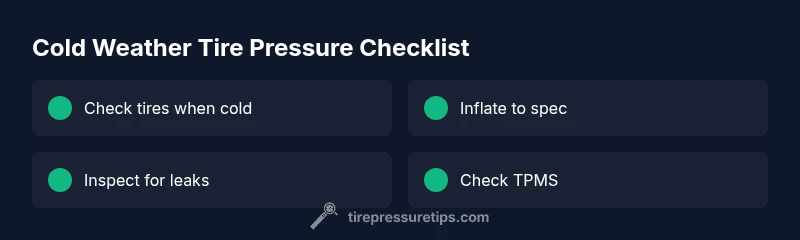
Step 1: Measure tire pressure when tires are cold using a reliable gauge. Step 2: Inflate each tire to the vehicle's recommended psi. Step 3: After driving and heating, recheck; if readings remain low, inspect for leaks or TPMS faults and consider professional help if needed. This quick process helps distinguish cold-weather changes from actual leaks.
Understanding why tire pressure low when cold
Cold weather doesn’t just make you reach for a heavier coat — it also makes tire pressure readings sag. When the temperature drops, the air inside the tire contracts, reducing the internal pressure even if there’s no puncture. This is a normal physical effect, and it can create the impression that your tires are underinflated. The Tire Pressure Tips team explains that tire pressure measurements are a combination of ambient temperature, wheel heat, and the tire’s own materials, so a seasonal dip is expected. Remember: always verify readings with a reliable gauge when the tires are cold, and refer to your vehicle’s recommended psi on the door placard for the target range. This is why tire pressure low when cold is a common concern in winter driving. By understanding the temperature effect on tire pressure and TPMS behavior, you can distinguish a true leak from a normal seasonal change. Use this knowledge to guide safe inflation practices and tire maintenance.
Tire Pressure, TPMS, and Gauges: What Reading Really Means
A tire’s pressure reading is not just a number; it’s a snapshot of the tire’s health given current conditions. TPMS alerts are useful, but they react to pressure changes rather than volumes of air. In cold weather, the system may show a warning even when the tire is only slightly below the recommended range. Conversely, a tire that warmed rapidly during a short highway trip might show an apparently "normal" reading that drops again once the tire cools. To interpret readings accurately, you should compare the gauge measurement to the vehicle manufacturer’s recommended psi and consider environmental factors like outdoor temperature. Also ensure you’re using a correct gauge: dial, digital, or stick gauges all require proper alignment with the valve stem. This helps prevent misreads and confusion about why tire pressure low when cold occurs. The takeaway: measurement technique matters just as much as the temperature itself, and consistent methodology reduces false alarms.
Quick Home Checks: What to Do Right Now
Start with the simplest checks before calling for service. First, ensure the tires are cold, and use a trusted tire pressure gauge to read each tire. Compare the numbers to the vehicle placard; adjust if needed. Inspect the valve stems for cracks or damage, and look for any obvious signs of puncture, cracking on the sidewall, or bead leaks. A quick soap-and-water test around the valve stem and bead can reveal slow leaks. Also check the tire sidewalls for bulges, which can indicate structural issues. If you notice any cracking, punctures, or persistent low readings, proceed to the diagnostic flow or contact a professional.
Common Mistakes That Skew Readings
Many drivers rely on instinct or the wrong gauge, leading to misreadings that trigger unnecessary inflation. Using a gauge that isn’t calibrated, inflating when tires are still warm, or ignoring seasonal changes between morning and evening can produce inconsistent results. Another mistake is inflating to the maximum sidewall number instead of the vehicle-recommended psi, which can worsen wear and handling. If you’re concerned about why tire pressure low when cold, remember that temperature is a major factor alongside leaks and TPMS faults. Always inflate to the door placard value, check after a proper cool-down, and avoid over- or under-inflating to keep tires safe and efficient.
When to Seek Professional Help
Persistent low readings after cooling and re-inflation may indicate a slow leak, a damaged valve stem, or a compromised TPMS sensor battery. If you notice hissing sounds, cracks, or the tire visibly losing air over days, schedule a professional inspection. A tire technician can perform leak testing, inspect the rim for corrosion, and recalibrate or replace TPMS components. In winter conditions, a pro can also check wheel alignment and tread wear that could influence how the tires respond to cold temperatures. Don’t delay if you suspect damage—driving on low pressure’s risks include poor braking, reduced traction, and increased heat buildup.
Year-Round Maintenance for Consistent Pressure
To minimize the impact of seasonal changes, adopt a routine: check tire pressure at least monthly, and before long trips, especially when temperatures swing. Keep a reliable gauge in your glovebox and the correct PSI on your vehicle placard. Consider switching to a digital tire gauge for quick, repeatable readings. In cold weather, drive gradually to warm the tires evenly before performing final pressure checks, then re-check when cold again. Over time, a consistent inspection cadence reduces the likelihood of sudden pressure drops and promotes even tire wear.
Steps
Estimated time: 30-45 minutes
- 1
Check tires when cold
Park in shade or wait until the vehicle cools, then read each tire with a dependable gauge.
Tip: Ensure tires are not warm from recent driving. - 2
Compare to the placard
Match readings to the OEM recommended psi on the door placard and note any deviations.
Tip: Use the same gauge for all tires. - 3
Inflate to spec
Fill each tire to the vehicle’s recommended psi range, not to the maximum sidewall number.
Tip: Don’t exceed the upper limit in the placard. - 4
Inspect for leaks
Look for slow leaks via soapy water on valve stems and bead; check for nails or cuts.
Tip: Pay attention to the bead seating area. - 5
Recheck after warming
Drive for a few miles and recheck once the tires cool again to confirm stability.
Tip: Record readings to track changes. - 6
Call a pro if necessary
If low pressure returns consistently, seek professional help for TPMS or tire damage.
Tip: Safety first—drive cautiously if you’re unsure.
Diagnosis: Tire pressure reading is low after a night of cold weather
Possible Causes
- highAmbient temperature drop causing air in the tire to contract
- mediumSlow leak from valve stem, bead, or puncture
- lowTPMS sensor issue or calibration error
Fixes
- easyCheck tire pressure with a reliable gauge when tires are cold and inflate to the manufacturer’s recommended psi
- easyInspect valve stems, bead area, and tires for visible damage; perform a soap-water leak check
- mediumIf readings stay low after re-inflation, have TPMS sensors/calibration inspected by a professional
Frequently Asked Questions
Why does cold weather lower tire pressure?
Cold weather causes air to contract, lowering tire pressure. The effect is normal, but readings should be verified with a gauge when the tire is cold.
Cold air makes the air inside tires shrink, so pressure reads lower. Check with a gauge when cold and inflate to the proper level.
How often should I check tire pressure?
Check tires at least monthly and before long trips, especially in winter when temperatures swing rapidly.
Check your tires at least monthly and before long trips, especially in winter.
Is it safe to drive on slightly underinflated tires?
Mild underinflation can reduce efficiency and handling. If the tire is noticeably below the recommended psi, inflate before driving.
If the tire is clearly low, inflate to the recommended pressure before driving.
What if the TPMS warning stays on after inflating?
A persistent TPMS warning could indicate a slow leak or faulty sensor. Recheck with a gauge, inspect the tire, and have the TPMS diagnosed if readings persist.
If the light stays on after inflation, get the TPMS checked for sensor or leak issues.
Can cold tires reveal leaks I didn’t notice before?
Yes, cold weather can worsen or reveal slow leaks from stems or punctures. Use soapy water to locate leaks and consult a professional if unsure.
Cold can reveal leaks; check with soap and water and call a professional if you’re unsure.
Should I rely on TPMS for accurate pressure readings?
TPMS is a helpful alert but is not a precise gauge. Always verify with a manual gauge when tires are cold.
TPMS helps, but use a real gauge for accuracy when tires are cold.
Watch Video
What to Remember
- Check tires when cold for accuracy
- Inflate to manufacturer psi, not max sidewall pressure
- TPMS helps but isn’t a substitute for a gauge
- Inspect for leaks if readings stay low
- Establish a monthly winter check cadence