When the Tire Pressure Warning Appears: A Troubleshooting Guide
Learn to diagnose and fix the tire pressure warning quickly, distinguishing TPMS from low-pressure causes, and safely restoring proper tire pressure with practical checks and maintenance tips.


According to Tire Pressure Tips, when you see the tire pressure warning, the most likely causes are low tire pressure, a faulty TPMS sensor, or temperature-related changes. First, visually inspect all tires and check the cold tire pressures with a gauge. Inflate to the vehicle's recommended psi, then drive 1–2 miles to see if the warning persists. If it stays on, seek professional help.
What the Tire Pressure Warning Light Tells You
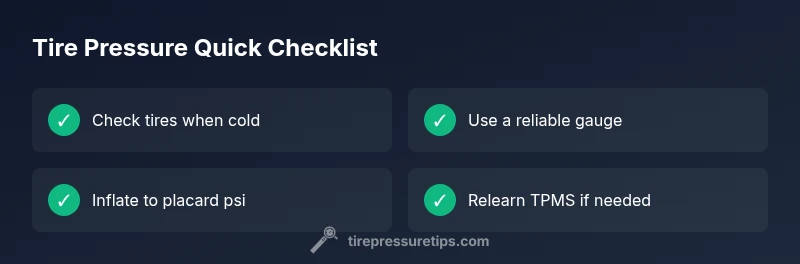
When you see the tire pressure warning illuminate on your dashboard, it signals that the vehicle's system has detected an issue related to tire pressure or the TPMS itself. The most common cause is that one or more tires are underinflated, which can affect safety, fuel economy, and tire wear. Temperature changes—especially in colder weather—can also trigger the light by reducing air pressure in the tires. According to Tire Pressure Tips, this warning should prompt a quick, methodical check rather than a panic response. Start by confirming the tires are cold, then use a reliable gauge to compare each wheel's pressure to the cold-psi spec on the door jamb placard. If readings are low, inflate to spec and recheck. If the light remains after inflation, you may have a faulty sensor or a slow leak that requires professional attention.
altTextStrippedForJSONAndMarkdownConstraints21-1
0
Steps
Estimated time: 25-40 minutes
- 1
Check tire pressures when cold
Park on a level surface. Ensure the tires are cold (not driven for more than 2 miles recently). Use a reliable gauge to measure each tire’s pressure and compare with the vehicle’s door placard specifications. Note any significant deviation.
Tip: Record readings to track changes over time. - 2
Inflate to the recommended pressure
If any tire is below spec, inflate to the exact cold-psi value shown on the placard. Do not overinflate beyond the tire’s maximum pressure printed on the sidewall. Recheck all tires after inflation.
Tip: Use a gauge with good accuracy (digital or dial) for consistency. - 3
Reset or relearn the TPMS
Some vehicles require a TPMS reset or relearn procedure after inflation or tire changes. Follow your owner’s manual steps or use the vehicle’s multimedia settings to initiate relearn. Drive 10–15 minutes at highway speeds to complete the relearn in many models.
Tip: If you’re unsure, a quick trip to a service center is safer. - 4
Inspect tires for damage
Look for nails, cuts, bulges, or slow leaks. Check the rim for damage and examine the valve stems for cracks or leaks. If you find damage, replace or repair the affected tire.
Tip: Even a small puncture can cause intermittent warnings. - 5
Decide if professional help is needed
If the warning returns after inflating and relearning, or if you can’t locate a leak or sensor fault, schedule a professional inspection. Persistent warnings can indicate a faulty sensor, a damaged wheel, or a more complex TPMS issue.
Tip: Safety first—don’t delay if you notice handling changes or rapid air loss.
Diagnosis: Tire pressure warning light is on or flashing
Possible Causes
- highLow tire pressure in one or more tires
- mediumFaulty or failing TPMS sensor
- lowExtreme temperature changes causing pressure fluctuations
- lowSlow leak or puncture in a tire
Fixes
- easyCheck all tires when cold with a calibrated gauge and inflate to the recommended psi from the door placard
- easyInspect each tire for punctures, cuts, or valve stem damage and address leaks or replace damaged tires
- easyTest and recalibrate or relearn the TPMS as per the owner’s manual; drive to allow the system to relearn
- easyIf the warning persists after inflation and TPMS reset, seek professional inspection for possible sensor fault or wheel issue
Frequently Asked Questions
What does a tire pressure warning light mean?
The warning signals that the TPMS detected low pressure, a faulty sensor, or another related issue. Start by verifying all tires are inflated to the recommended levels when cold, then address any detected leaks or sensor faults.
The warning means the TPMS or tires may be low or faulty; start by checking pressures when cold and inspect for leaks.
Can I drive with the tire pressure warning on?
If the warning is on due to low pressure, you can drive briefly to reach a safe location, but you should not drive long distances. Inflate to spec and monitor the light.
You can drive briefly to a safe place, but don’t drive far until you’ve inflated to spec and checked the system.
How do I reset TPMS on most vehicles?
TPMS reset steps vary by make. Check your owner’s manual for the relearn procedure; some require a sequence of button presses, while others need a drive cycle. If unsure, a technician can perform the relearn.
Reset steps vary by model; follow your manual or get a quick professional relearn if you’re unsure.
What causes the TPMS to give a false warning?
False warnings can come from sensor wear, battery issues, corroded connections, or rapid temperature changes. A learning cycle may be needed after tire rotation or sensor replacement.
Sensor wear or temperature changes can trigger false warnings; a relearn may fix it.
When should I replace TPMS sensors?
Sensors typically last 5–10 years depending on usage and environment. Replacement is needed if a sensor is dead, battery weak, or permanently malfunctioning.
Sensors last several years but wear out; replace when they stop working reliably.
Watch Video
What to Remember
- Check tires when cold and inflate to spec.
- Reset TPMS after any inflation or tire change.
- Look for leaks or damage if warnings persist.
- Temperature affects tire pressure—plan checks in varying weather.
- Seek professional help if the warning won’t reset or sensor fault is suspected.