Tire Pressure Warning Sign Troubleshooting Guide
Urgent guide to troubleshoot the tire pressure warning sign, diagnose TPMS issues, check tire inflation, and prevent flats with practical, driver-focused steps from Tire Pressure Tips.


The tire pressure warning sign on your dash usually signals underinflation or a TPMS sensor issue. Start by checking all tires with a reliable gauge, inflate to the vehicle’s recommended pressure when cold, and recheck. If the light persists, inspect tires for leaks, recalibrate TPMS if needed, and seek professional help if you’re unsure.
Understanding the Tire Pressure Warning Sign
The tire pressure warning sign is a safety alert tied to the vehicle’s TPMS, or tire pressure monitoring system. According to Tire Pressure Tips, the warning commonly appears when one or more tires fall below the manufacturer’s recommended pressure. However, it can also indicate a faulty TPMS sensor, a dead sensor battery, or the need for a recalibration after tire service. The warning is a prompt to check inflation, wear, and potential leaks. Driving on properly inflated tires improves handling, fuel economy, and tire longevity, while ignoring the sign can lead to overheating or a blowout in extreme cases. Remember that ambient temperature changes and rapid speed can influence readings, so always verify with a physical gauge and a cold tire measurement for accuracy.
Common Causes of a Tire Pressure Warning Sign
The most frequent culprits behind a TPMS warning include underinflation, a malfunctioning sensor, or a drained sensor battery. Temperature shifts can temporarily lower tire pressure, triggering a warning even if tires are technically within range after warming up. A puncture or slow leak, especially in a curb strike or nail, is another common cause. Finally, after tire rotation or replacement, an incorrect relearn or miscalibrated system can illuminate the warning light. In all cases, begin with a physical pressure check before pursuing more advanced diagnostics.
Quick Checks You Can Do Now
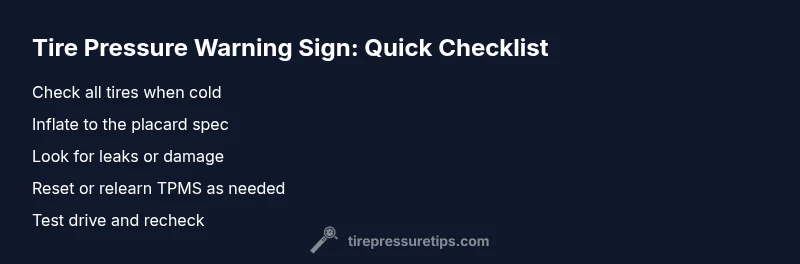
- Gather a reliable tire pressure gauge and the vehicle placard or owner manual specifying the recommended cold pressure. Check all tires including the spare if applicable. - Inflate each tire to the recommended cold pressure and recheck after a few minutes. Do not rely on the dashboard readout alone. - Visually inspect tires for obvious signs of damage, punctures, or bead leaks at valve stems. If you notice a nail, cut, or sidewall damage, avoid driving long distances and seek service. - If all tires read correctly but the warning remains, perform a TPMS reset or relearn procedure per your vehicle’s manual; some vehicles require driving a short distance to reset.
Diagnostic Mindset: From Symptom to Solution
Treat the warning as a two-track issue: check tire pressure accuracy first, then assess TPMS health. If a tire is low, inflate and recheck the system. If pressures are correct but the warning persists, suspect a faulty TPMS sensor, battery, or control module. In this case, a professional diagnostic tool can test sensor status and calibration, and a sensor replacement may be necessary. Always document readings and the vehicle’s response to any reset attempts for future reference.
Safety First: When to Seek Professional Help
If you notice a rapid loss of air, a visible tire defect, or the warning remains after inflation and reset attempts, pull over in a safe area and call for roadside assistance or a tire service. Do not continue driving with a suspected puncture or faulty TPMS in unknown condition. In high-speed or heavy-load situations, professional inspection is strongly advised to prevent tire failure and protect you and others on the road.
Steps
Estimated time: 45-60 minutes
- 1
Check tires when cold
Park in a cool, shaded area and measure each tire with a calibrated gauge. Compare readings to the placard on the driver door jamb or owner manual. Record any significant deviations and keep the readings for reference.
Tip: Always measure cold for accurate results; driving warms tires and increases pressure. - 2
Inflate to recommended pressure
Inflate each tire to the recommended value. Use a quality gauge and avoid overinflation. Recheck all tires after inflation to ensure consistent readings.
Tip: Do not rely solely on visual estimates; use a gauge every time. - 3
Check for leaks or damage
Inspect tires for nails, cuts, sidewall damage, or bead leaks around valve stems. If you find damage beyond a simple puncture, you should not continue driving without professional inspection.
Tip: Take photos of any damage for the shop and keep the spare ready. - 4
Reset or relearn TPMS
Many vehicles require a TPMS relearn after inflating or replacing sensors. Follow the owner's manual steps or use factory diagnostic tools to retrain the system.
Tip: Some cars require a drive cycle to complete the relearn; check the manual if the warning persists. - 5
Test drive and recheck
Drive for a short distance at a moderate speed, then recheck tire pressures and warning status. If the light stays on, proceed with professional diagnostics.
Tip: If the warning returns after driving, do not ignore it; underlying issues may be present. - 6
Seek professional help when needed
If you’re unsure or if there’s any tire damage or TPMS faults, contact a certified tire technician or your vehicle dealer for a thorough check.
Tip: Professional diagnostics reduce risk of misdiagnosis and ensure safe operation.
Diagnosis: Tire pressure warning sign lights up on dash or TPMS alert persists after inflating tires
Possible Causes
- highOne or more tires are underinflated compared to the vehicle's recommended pressure
- mediumTPMS sensor is damaged or battery is depleted
- lowTemperature changes causing temporary pressure drop
- lowPartial tire leak or puncture
- lowRecent tire rotation or tire replacement without TPMS relearn
Fixes
- easyCheck all tires with a gauge and inflate to the recommended cold pressure; recheck after a few minutes
- easyIf pressures are correct but the light remains, perform a TPMS relearn/reset per vehicle manual or consult a professional
Frequently Asked Questions
What does a tire pressure warning sign mean?
A tire pressure warning sign indicates the TPMS detects one or more tires below the recommended pressure or a sensor issue. Always verify with a physical tire pressure check before assuming the system fault is the sole cause.
A TPMS warning means tires may be underinflated or the system has a fault; check pressures with a gauge to be sure.
How do I reset TPMS after inflating tires?
Reset procedures vary by vehicle. After inflating to spec, follow the owner's manual relearn steps or drive as instructed to allow the system to refresh. If in doubt, consult a professional.
Resetting TPMS depends on your car model; check the manual or ask a tech if the warning stays.
Can weather affect tire pressure warning signs?
Yes. Temperature fluctuations cause tire pressure to rise and fall, which can trigger warnings. Readings should be taken when tires are cold for accuracy.
Weather does affect tire pressure; measure when cold to confirm if readings are accurate.
Is it safe to drive with a TPMS warning?
If the tires are inflated to spec and the light remains, proceed with caution and have the system checked. If any tire is visibly damaged or very low, pull over and seek assistance.
Drive cautiously if the tire looks fine and pressures are correct; otherwise, stop and get it checked.
What if the warning stays after inflation and reset?
Persistent warnings after correct inflation suggest a leak, sensor fault, or control module issue. A professional diagnostic is advised.
If it stays after inflating, you likely have a sensor or leak issue; a pro should check it.
Do TPMS sensors require battery replacement?
Yes, TPMS sensors contain batteries that eventually fail. A diagnostic can determine if replacement is needed.
TPMS sensors have batteries that wear out; replacement may be required if tests show faults.
What to Remember
- Check all tires when cold and inflate to spec.
- Perform a TPMS relearn if required by your vehicle.
- Inspect for leaks or damage before driving further.
- Seek professional help for sensor or system faults.