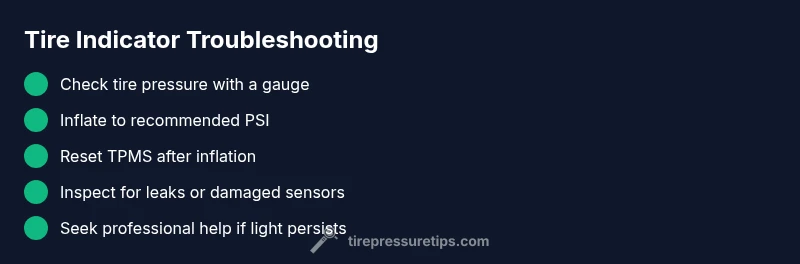
Tire Indicator Troubleshooting: Quick TPMS Guide
Urgent, practical guide to diagnose and fix tire indicator lights, TPMS faults, and tire pressure problems. Learn step-by-step checks, safe inflation, and when to seek professional help.


Facing a tire indicator on your dashboard? Start with the simplest fix: check tire pressures with a gauge and inflate to the vehicle’s recommended level. If the light stays on, reset the TPMS, inspect for slow leaks, and consider a professional diagnostic. This guide walks you through a safe, step-by-step troubleshooting flow to resolve most tire indicator issues.
Understanding the tire indicator lights and what they cover\n\nWhen you see a tire indicator on your dashboard, you're hearing a safety warning that spans tire pressure and TPMS health. The tire indicator is a generic label that covers multiple warning scenarios: low tire pressure, a malfunctioning TPMS sensor, or a calibration issue after tire service. The tire indicator may illuminate as a steady light or blink in some systems, and the exact meaning depends on your vehicle's make and year. According to Tire Pressure Tips, understanding the distinction between a direct tire pressure warning and a TPMS fault is crucial because each path results in different remedies. A tire indicator alerts you to pressure changes that affect handling, fuel efficiency, and tire wear. Treat any illumination as urgent, especially before long trips or in extreme weather. Start with safe, simple checks: confirm all tires are inflated to spec, examine for obvious leaks, and verify that tire valves are intact. If your vehicle has a tire pressure label in the door jamb, use that value as your inflation target.
Why it matters: safety and efficiency\n\nYour tire indicator is more than a nuisance—it is a guardian of safety, fuel economy, and tire longevity. Underinflated tires heat up faster, wear unevenly, and reduce steering precision. The tire indicator helps you spot slow leaks long before a catastrophic failure. When the TPMS is healthy, inflating to the recommended pressure restores optimal contact with the road, improves braking response, and reduces rolling resistance. Inconsistent pressure can skew speedometer readings and fuel economy, costing you money and time. According to Tire Pressure Tips, inconsistent tire pressure is among the most common causes of poor handling on wet roads, especially in colder months when air contracts. Regular checks help you stay in the green zone between tire performance and safety margins. Use your tire indicator as a monthly reminder to inspect all tires, including the spare, and to validate that your TPMS isn't delivering false notifications.
TPMS vs direct tire pressure indicators: what's the difference\n\nNot all tire indicators are the same. A direct TPMS indicator relies on sensors inside each wheel to monitor pressure and temperature, then communicates through the vehicle's system. A valve-cap or indirect TPMS method estimates pressure by wheel speed sensors but is less precise. Understanding which system your car uses helps you respond correctly. If your indicator is a TPMS fault rather than a pressure deficit, inflating tires won't extinguish the light; you may need a sensor reset, battery replacement, or software recalibration. Tire Pressure Tips notes that many modern vehicles combine both methods for redundancy, so knowing your setup allows you to choose the right fix quickly. Always verify the tire condition around the circumference, inspect for nails, punctures, or sidewall damage, and ensure that the spare is also properly inflated if your vehicle’s warning includes it.
Common triggers that set off the indicator\n\nMultiple scenarios can trigger the tire indicator. The most frequent is a drop in one or more tires below the recommended pressure due to temperature changes, slow leaks, or a slow puncture. A more hidden trigger is a TPMS sensor fault, such as a dead battery, a damaged sensor, or a loose wiring connection after tire service. A calibration mismatch after rotating tires or replacing rims can also cause the indicator to illuminate unexpectedly. Finally, a dead or weak battery in the vehicle’s dash lights can mask underlying tire issues, making it appear as if the indicator is random. In all cases, approach the problem with a systematic check rather than random guessing. If you can, read the vehicle’s service manual for the exact indicator behavior and reset instructions.
Quick at-a-glance checks you can perform before inflating\n\nStart with a calm, safety-first approach. Park on level ground, apply the parking brake, and turn off the engine before checking. Remove the valve caps and check each tire with a reliable gauge; compare your reading to the door jamb label or owner’s manual. Look for obvious signs of damage: nails, cuts in the tread, or bulges in sidewalls. If any tire is visibly damaged, do not drive far—address it first. Check the spare if your vehicle uses a monitored system that includes it. Remember: temperature can dramatically affect readings, so read the pressure after the tires have cooled for at least three hours or after the car has been parked for a while.
How to measure tire pressure accurately\n\nUse a quality gauge—digital gauges are typically easiest to read, but a good dial gauge works too. Remove the valve cap, press the gauge onto the valve stem, and note the reading without letting air escape. Compare the result to the recommended pressure printed on the door jamb sticker or in the owner’s manual; remember that the recommended pressure often differs when tires are hot vs cold. If a tire reads low, add air in small increments, recheck, and repeat until you reach the target. While inflating, inspect the tire bead and rim for damage, and ensure the valve stem is secure to prevent leaks. After inflating, re-check all tires to confirm consistency across the axle. If you notice persistent readings that don’t align with the gauge, consider a second gauge for cross-checking.
Resetting TPMS after inflation\n\nMany cars automatically reset TPMS after driving a short distance at normal speed once the sensors detect proper pressure. If your light remains on after inflation, you may need to perform a manual reset via the vehicle’s menu or knowledge of a procedure in the owner's manual. Some systems require re-initialization after you rotate tires or replace wheels. If you don't have the exact steps, perform a quick search for your make and model: 'TPMS reset procedure [year] [model]'. Note that some vehicles require the light to blink a few times before it resets, while others light up briefly or stay solid. After a reset, drive normally for 10-15 minutes to allow the system to recalibrate and clear the warning.
When a TPMS sensor is faulty: signs and next steps\n\nIf you inflate tires to the correct pressure and the indicator remains on or reappears after a reset, your TPMS sensor may be faulty. Look for uneven readings between wheels, a nagging difference in the gauge, or a sensor that remains 'stuck' when readings change. A dead battery in a sensor, a damaged sensor, or a broken valve stem can all cause this. If you suspect a faulty sensor, a professional diagnostic is recommended. In some cases, technicians can reinitialize sensors, replace valve stems, or recalibrate the system. Never ignore persistent TPMS fault indications, as sensor issues can mask real tire problems.
Preventing false positives: maintenance and best practices\n\nRegular maintenance is the best defense against false tire indicator alerts. Check tire pressure monthly, before long trips, and after changes in temperature. Keep tires properly rotated and balanced to ensure consistent pressure readings across the set. Inspect TPMS sensors for corrosion or damage, and replace batteries at manufacturer-recommended intervals if accessible. Ensure the wheel rims are clean and free of debris that could affect sensor readings. Keep the valve caps on tight and replace lost caps promptly because a missing cap can cause moisture and debris to enter the TPMS sensor area. Finally, keep a spare tire in good condition and follow the manual for any special steps required during seasonal changes.
Professional diagnostics and when to seek help\n\nWhen in doubt or if the indicator persists after you have checked and adjusted tire pressures, seek professional diagnostics. A technician can perform a precise leak test, check for sensor faults with diagnostic tools, and verify the calibration of the TPMS unit. Professional service might involve recalibrating the system, replacing sensors, or addressing underlying issues such as damaged wheels or corroded sensors. If you notice sudden changes in tire performance, unusual noises while driving, or the heat buildup in a tire, stop and seek help immediately. Ongoing monitoring and routine maintenance can prevent emergency roadside failures and ensure your indicator does not become a recurring problem.
Steps
Estimated time: 25-40 minutes
- 1
Check tire pressures with a reliable gauge
Park on level ground, allow tires to cool, remove valve caps, and accurately measure each tire's pressure with a trusted gauge. Compare readings against the door jamb sticker or owner’s manual. If any tire reads low, proceed to add air in controlled increments.
Tip: Use two gauges if available to verify readings. - 2
Inflate tires to the recommended pressure
Inflate each tire to the recommended PSI, prioritizing the lowest reading first. Avoid over-inflating; aim for the middle range if you drive heavily loaded. Recheck all four tires after inflation.
Tip: Inflate when tires are cold for the most accurate measurement. - 3
Recheck the tire pressures
Recheck all readings after inflation to ensure consistency across the axle. If a tire won’t hold air or keeps dropping pressure, inspect for leaks or punctures about the tread or sidewalls.
Tip: Spray soapy water on suspect areas to locate slow leaks. - 4
Reset the TPMS if applicable
Navigate the vehicle's settings to reset or reinitialize the TPMS after inflation. Some cars reset automatically when pressures stabilize; others require manual steps.
Tip: Consult the owner's manual for your exact reset sequence. - 5
Inspect for leaks and sensor integrity
If the light returns after a reset, perform a leak test and inspect TPMS sensors for damage, corrosion, or loose wiring. Don't overlook the valve stems, as a simple cap or seal issue can trigger alerts.
Tip: Carry a portable tire inflator for on-the-road patch-ups. - 6
Seek professional diagnostics if needed
Persistent indicators after basic checks should be evaluated by a technician who can test for sensor faults, calibrations, or wheel-related issues.
Tip: Ask for a TPMS diagnostic printout for future reference.
Diagnosis: Dashboard tire indicator light is on or flashing after checking tire pressures
Possible Causes
- highTire pressure is below the recommended level
- mediumTPMS sensor battery is dead or sensor fault
- lowTPMS reset not performed after inflating tires
Fixes
- easyCheck tire pressure with a gauge and inflate to recommended PSI values.
- easyReset or recalibrate the TPMS according to the owner's manual.
- mediumIf the light persists, inspect for slow leaks or damaged TPMS sensors; consider professional diagnostic.
- hardReplace TPMS sensor or battery if confirmed faulty.
Frequently Asked Questions
What does the tire indicator light mean on my dashboard?
The tire indicator usually signals low tire pressure or a TPMS fault. Check all tires with a gauge and inflate to spec, then inspect for leaks. If the light persists, reset TPMS and seek professional help if needed.
The tire indicator usually signals low tire pressure or a TPMS fault. Check the tires with a gauge and inflate to the recommended pressure, then reset TPMS if needed.
How do I reset TPMS after inflating tires?
Inflate tires to the recommended pressure, then drive for about 10 minutes to let the system recalibrate. If your car requires manual steps, follow the procedure in the owner's manual or vehicle settings menu.
Inflate tires to the recommended pressure, then drive for about 10 minutes to recalibrate, or use the manual reset steps from your manual.
Can I drive with the tire indicator on?
If the light indicates low pressure, you can drive briefly to reach a safe location to inflate. If it indicates a TPMS fault, have the system inspected promptly to avoid undetected tire problems.
If the light means low pressure, drive slowly to a safe place to inflate. If it’s a TPMS fault, get it checked soon.
Is a blinking indicator worse than a solid light?
A blinking TPMS light usually signals a sensor fault or calibration issue and needs professional diagnosis, while a solid light often points to a low tire pressure that you can resolve with inflation and reset.
A blinking TPMS light typically means a sensor fault or calibration issue; a solid light often means low pressure.
What tools do I need to check tire pressure?
A reliable tire pressure gauge and access to the vehicle’s recommended PSI. A digital gauge is easiest, but a good dial gauge also works.
You’ll want a reliable tire pressure gauge and the vehicle's recommended PSI; digital gauges are usually easiest to read.
How often should I check tire pressure?
Check tire pressure monthly and before long trips, especially when temperatures shift. This helps the tire indicator reflect accurate pressure readings.
Check pressure monthly and before long trips, especially when temperatures change.
What to Remember
- Check pressure first, inflate to spec
- Reset TPMS after inflating
- Persistent lights warrant professional check
- Regular checks prevent false alerts
- Know your TPMS system to troubleshoot quickly