Tire Pressure Alert Troubleshooting: Quick Fixes and Safe Driving
Urgent, practical guide to diagnosing and fixing tire pressure alerts (TPMS). Learn quick checks, diagnostic flow, and step-by-step fixes to stay safe on the road.


A tire pressure alert signals the TPMS detected unusual pressure or a sensor issue. Start by inflating all tires to the vehicle’s recommended PSI, then double-check for punctures or valve leaks. If the light persists after inflation, inspect the TPMS sensor and consider a professional calibration. Quick, decisive action reduces risk of damage or a blowout.
Understanding the tire pressure alert
A tire pressure alert is a warning from your vehicle’s TPMS (tire pressure monitoring system). It can indicate underinflation, overinflation, a slow leak, or a faulty sensor. The quickest way to respond is to verify that all tires—and especially the one indicated by the warning—are at the recommended cold inflation pressure. According to Tire Pressure Tips, most alerts come from simple underinflation caused by daily driving or temperature swings, not a catastrophic tire failure. The TPMS uses wheel-mounted sensors and, in indirect systems, ABS signals to flag pressure changes. When you see the warning light, pull over safely, visually inspect the tires, and be ready to measure pressures with a gauge. This is not about replacing a tire yet—it’s about confirming safe operating ranges.
Pre-checks before inflating
Before you touch the inflator, confirm the vehicle’s recommended PSI on the door jamb placard or owner’s manual. Tires read lower when cold, so perform measurements after the car has been stationary for at least 3 hours or after a cool drive. Use a reliable gauge (dial, digital, or a stick gauge) and record the pressures for all four tires. Don’t forget the spare if your car carries a full-size unit. Temperature and road conditions can skew readings, so aim for a stable baseline. If you find a tire well below the target, plan to inflate it first, then recheck all four afterward. As you work, keep your hands and feet clear of any moving parts and never loosen a hot wheel area right after a drive.
Common causes of tire pressure alerts
Tire pressure alerts arise from a few core issues. Underinflation is the most frequent culprit, often from seasonal temperature changes or modest slow leaks. Punctures, bead leaks, or a damaged valve stem can also trigger a warning. A failing TPMS sensor battery or incorrect sensor calibration can produce false alarms. Finally, recent tire rotation or wheel replacement without a sensor reprogram can create mismatch warnings. Distinguishing between a real pressure problem and a sensor fault is essential to avoid unnecessary repairs.
How to measure tire pressure accurately
Accurate measurement hinges on cold tires and a calibrated gauge. Remove the valve cap, press the gauge onto the valve stem, and note the PSI. Repeat on all tires, including the spare if applicable. Compare readings to the vehicle’s recommended PSI; if any tire is low, inflate in small increments, then recheck. If a tire remains stubbornly low after inflation, inspect for punctures or slow leaks around the tread and sidewalls. For indirect TPMS systems, a pressure-improvement in the tires may reset the light, but a lingering warning suggests sensor or calibration issues.
Step-by-step fix to restore proper pressure
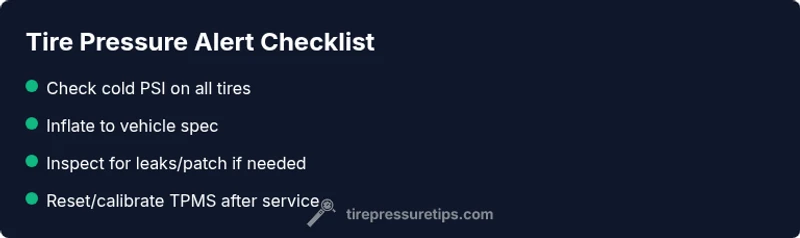
- Park safely on a flat surface and set the parking brake. 2) Confirm the recommended PSI on the door placard. 3) Inflate all tires to the specified cold PSI, starting with the lowest tire. 4) Drive 3-5 miles at a moderate speed to allow a proper reading and re-check pressures. 5) Inspect tires for visible damage or nails; repair leaks if possible. 6) If the TPMS light remains, reset or recalibrate the TPMS according to your owner’s manual, or have the system inspected by a technician. 7) After service, verify all four tires hold pressure for several days.
Safety and maintenance considerations
Safety comes first. Do not drive on underinflated tires for long distances; underinflation can cause overheating and blowouts. Use cold readings for accuracy and never release air abruptly from a hot tire. If you notice rapid pressure loss, pull over and inspect for external damage or punctures. When in doubt, consult a professional, especially if the TPMS light reappears after inflation. Regular maintenance reduces future alerts and improves fuel efficiency.
Proactive prevention tips to avoid future alerts
- Check tire pressures monthly and before long trips.
- Always use the vehicle’s recommended PSI, not a personal preference.
- Calibrate TPMS after tire rotation, replacement, or wheel service.
- Monitor temperature changes and how they affect tire pressure. Sudden weather shifts can trigger alerts.
- Keep a tire pressure kit in your trunk for on-the-road adjustments, and replace weak or old TPMS sensors as needed. The Tire Pressure Tips team emphasizes proactive checks as the best defense against unexpected warnings.
Steps
Estimated time: 25-40 minutes
- 1
Park and prepare
Find a safe, flat surface and engage parking brake. Retrieve vehicle placard PSI and your tire gauge. Make sure you’re wearing gloves and the area is clear of traffic.
Tip: Leave the engine off and wait a few minutes for cold tires. - 2
Check cold pressures
Remove valve caps and measure each tire’s PSI when cold. Record readings for all four corners and the spare if applicable.
Tip: Use the same gauge for consistency. - 3
Inflate to target
Inflate tires in small increments to the vehicle’s recommended PSI. Recheck after inflating to ensure accuracy and avoid overinflation.
Tip: If a tire is far below target, inflate that tire first. - 4
Recheck and inspect
Re-measure all tires after a short drive (3-5 miles) to confirm stability. Look for visible punctures, cracks, or bead leaks.
Tip: If you see sidewall damage, stop driving immediately. - 5
Reset TPMS
If your light remains, follow the manual to reset the TPMS or calibrate via the vehicle settings. A miscalibration can keep the warning on.
Tip: Some models require a specific sequence or tool. - 6
Seek professional help if needed
Persistent alerts after inflation or sensor recalibration warrant a technician’s inspection for leaks or sensor faults.
Tip: Professional calibration ensures accuracy and safety.
Diagnosis: Tire pressure alert light on after inflation
Possible Causes
- highUnderinflation due to temperature or slow leak
- mediumTPMS sensor battery or calibration fault
- lowRecent tire rotation or sensor mismatch
- lowOverinflation or rapid pressure change
Fixes
- easyRecheck all tires with a cold gauge and inflate to the recommended PSI, then recheck after 5-10 minutes of cooling
- easyInspect tires for nails, cuts, or slow leaks; repair punctures or replace a damaged tire as needed
- mediumTest the TPMS sensor battery and recalibrate or replace sensors if readings are inconsistent
- hardIf the light persists after thorough checks, schedule a professional diagnostic to verify sensor calibration and system integrity
Frequently Asked Questions
What causes a tire pressure alert to come on?
Alerts are triggered by underinflation, overinflation, slow leaks, punctures, or sensor faults. Start by checking cold pressures and inspect for leaks. If the sensor is faulty, professional calibration may be needed.
Tire pressure alerts come from underinflation, overinflation, leaks, or sensor faults. Begin with cold-pressure checks and visual inspection, then consider sensor calibration if needed.
Is it safe to drive with a tire pressure alert?
If the alert is due to mild underinflation, you can drive briefly to a safe location and adjust pressure. Do not drive long distances on underinflated tires, as it increases the risk of blowouts and poor handling.
Drive cautiously to a safe spot and inflate the tires, but avoid long trips while underinflated.
Can I reset the TPMS myself after inflating the tires?
Many cars allow a DIY reset from the vehicle’s settings menu after you inflate to the correct pressure. If the light stays on, you may need sensor recalibration or a professional diagnostic.
Yes, many cars let you reset TPMS in settings after inflating to the right PSI; if it stays on, professional help might be needed.
How often should I check tire pressure?
Check tire pressure at least once a month and before long trips. Temperature changes can affect readings, so inspect more often in extreme weather.
Check monthly and before trips; temperature shifts can alter readings.
What if the spare tire has a different pressure?
Spare tires, especially if they’re full-size, may have different targets. Check the spare’s PSI as recommended by your car’s manual and adjust if needed.
Check your spare’s pressure as per the manual; it may differ from road tires.
Watch Video
What to Remember
- Know your TPMS signals and act quickly
- Always verify cold PSI before inflating
- Inspect tires for leaks and damage promptly
- Calibrate TPMS after wheel service or tire changes
- Prioritize safety over convenience