What to Do When Tire Pressure Sensor Fault Occurs
Urgent, step-by-step troubleshooting for a TPMS fault. Learn quick checks, home diagnostics, and when to seek professional help to keep you safe on the road.


Start with the basics: check all tires with a reliable gauge to confirm they’re at the manufacturer’s recommended pressures, then reset the TPMS. If the warning stays on, don’t panic—move through our step-by-step guide to diagnose whether it’s a sensor issue, a dead battery, or a genuine underinflation condition. Act quickly to ensure safety and prevent tire wear.
Understanding TPMS faults and why they appear
According to Tire Pressure Tips, a TPMS fault occurs when the dashboard warning triggers even though you can't identify a safe low pressure, or when the system cannot read a sensor. Modern TPMS uses wheel-mounted sensors and a central module to monitor tire pressure. Fault codes can be caused by cheap batteries, sensor corrosion, or software glitches. Understanding what triggers a TPMS fault helps you respond quickly and safely. In this article, we break down how TPMS works, common fault scenarios, and the right steps to take—before you end up driving on underinflated tires or misreading tire status. The goal is to empower you to triage the issue without unnecessary delays and avoid unsafe driving conditions. By learning the typical failure modes, you can triage the issue before heading to the shop.
This section sets the stage for practical diagnostics and helps you distinguish between a true underinflation condition and a sensor fault, so you don’t waste time chasing the wrong problem.
Symptoms you might notice
A TPMS fault can manifest as a bright warning light, an intermittent chime, or a dashboard message stating 'TPMS fault' or ' Tire pressure warning.' In many cases, the light comes on even though the tires feel normal and the pressures measured with a gauge are near the target. You may also notice fluctuating readings across tires, sporadic readings after weather changes, or a warning that stays on even after inflating. Because sensors may fail gradually, the symptom may be subtle at first. The Tire Pressure Tips team notes that many drivers misinterpret these symptoms as weather-only effects rather than a system fault.
Safety-first: immediate steps
Your safety comes first. If the TPMS warning illuminates while you’re on the highway or in heavy traffic, find a safe place to pull over and assess. Check tire pressures with a gauge, visual inspection for bulges or nails, and avoid hard braking until you confirm tires are safe. If you’re near a service station, inflate to the recommended pressure and reset the TPMS per your vehicle manual. If any tire is visibly damaged or the pressure cannot be held, replace or repair before continuing.
Quick checks you can do at home
At-home checks begin with a cold-tire pressure measurement using a proven gauge. Inflate all tires (including the spare if your system supports it) to the vehicle’s recommended spec and verify with a second gauge for accuracy. Inspect valve stems and sensor housings for cracks, corrosion, or damage from curb impact. Clear frost, mud, or dirt around the sensors to ensure proper readings during a reset. Finally, verify that you’re using the correct target pressures for your load and driving conditions.
Diagnostic flow at a glance
The diagnostic flow helps you move from simple checks to deeper diagnostics without guessing. Start with basic inflation verification, then perform a TPMS reset as described in your owner's manual. If the light returns or remains on, test for sensor battery health and possible physical damage. If the fault persists after basic fixes, a professional scan may reveal a control-module fault or a sensor that needs replacement. This flow keeps you safe and on the road while avoiding unnecessary trips to the shop.
Step-by-step fix for the most common fault
- Check tire pressures with a reliable gauge and inflate to spec. 2) Reset the TPMS according to your vehicle manual (note that reset procedures vary by make and model). 3) Drive 5-10 minutes to allow the system to relearn the new pressures. 4) Recheck all tires with the gauge and ensure the warning light is off. 5) If the light returns, inspect the valve stems and sensors for obvious damage. 6) Consider sensor testing or replacement if readings are inconsistent across tires. 7) If the warning persists after replacement, have the system relearned by a professional. Tip: keep records of tire pressures and sensor replacements for easier service later.
Prevention tips to avoid future TPMS faults
Regular tire maintenance helps prevent TPMS faults. Keep tires inflated to the recommended pressure, perform periodic checks in all weather, and schedule sensor or battery replacements as sensors age. Clean sensor areas regularly to prevent corrosion, and note any changes after servicing the wheels. Consistent checks reduce surprise warnings and improve safety on the road.
When to see a professional and what to expect
If you’ve followed the steps and the TPMS fault persists, it’s time to seek professional diagnosis. A technician will typically relearn the sensors, calibrate the system, and check the battery health of the TPMS transmitters. They may also inspect valve stems, wheel modules, or software updates that could affect readings. Expect a diagnostic scan and potential sensor replacement if indicated.
Quick reference checklist for TPMS faults
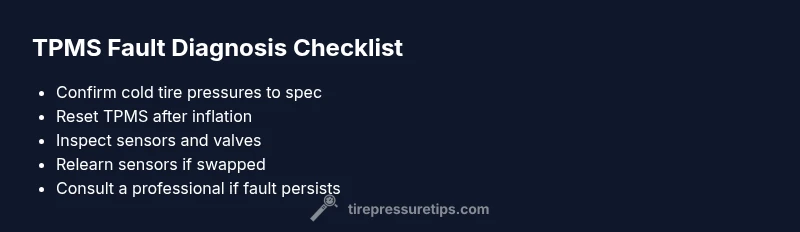
- Confirm all tires are at the recommended pressure when cold. - Perform a TPMS reset per your vehicle manual. - Inspect for visible damage to sensors or valves. - Relearn sensors after any service or replacement. - Seek professional help if the warning persists after basic fixes.
Steps
Estimated time: 45-90 minutes
- 1
Check tire pressures with a reliable gauge
Use a digital or dial gauge to measure each tire when cold. Compare readings to the vehicle's recommended pressure on the placard. Inflate tires to spec if underinflated and recheck with the same gauge to confirm accuracy.
Tip: Record the pressures for each tire to reference later. - 2
Inspect tires and sensors for damage
Look for nails, cuts, bulges, or obvious damage to the tire and sensor areas. Check valve stems for cracks and ensure the TPMS sensors are seated and not corroded. Damaged sensors often require professional replacement.
Tip: Avoid driving long distances on suspect tires; get a tow if a tire is unsafe. - 3
Perform TPMS reset after inflation
Follow your owner's manual to reset the TPMS; procedures vary by make and model. Some cars require ignition on without starting, others need a button or menu selection. Resetting informs the system of current pressures.
Tip: If the reset doesn’t work, try a full cycle of ignition on/off as described in the manual. - 4
Test sensor readiness and potential battery issue
If the light returns after a reset, the sensor battery or transmission could be at fault. A professional can test sensor battery health and signal strength using specialized equipment.
Tip: Battery life for TPMS sensors varies; plan for sensor or battery replacement if readings are inconsistent. - 5
Relearn or calibrate the system
Some vehicles require a relearn procedure after sensor work. This may involve a drive cycle or a specialized tool at a shop. Ensure all sensors are recognized by the ECU.
Tip: Bring any service history for TPMS sensors to the appointment. - 6
Seek professional diagnosis if the fault persists
If the TPMS fault remains after basic fixes, a technician will perform a deeper diagnostic scan, inspect the control module, and assess sensor integrity. Expect potential sensor replacement or module recalibration.
Tip: Persistent faults can indicate a hidden electrical issue or software fault that requires professional attention.
Diagnosis: TPMS warning light or message persists after inflation
Possible Causes
- highLow or fluctuating tire pressures
- mediumDead or weak TPMS sensor battery
- mediumDamaged or corroded TPMS sensor
- lowRecent tire service or wheel work triggering the system
- lowTPMS control module fault
Fixes
- easyInflate all tires to the recommended pressures and re-check
- easyReset the TPMS after inflating and verifying pressures
- mediumReplace TPMS sensors or battery if readings remain abnormal
- mediumHave the system relearned/calibrated by a professional if necessary
Frequently Asked Questions
What is a TPMS fault?
A TPMS fault means the tire pressure monitoring system is reporting a problem, either due to low pressures, a faulty sensor, or a communication issue with the control module. It requires verification and appropriate action to ensure safe driving.
A TPMS fault means the system is reporting a problem with the tire pressures or sensors. Check pressures and consider sensor or module issues.
Can I drive with a TPMS fault?
If the warning lights persist, limit high-speed driving and avoid aggressive braking. It’s best to address the fault promptly to confirm tire pressures are safe and the sensors are functioning.
Drive cautiously and address the fault soon to ensure tires are safe and sensors work.
Why does the TPMS light come on after inflating to the correct pressure?
The system may need a reset after inflation, or a sensor battery or wiring issue can trigger the light despite correct pressures. Follow a reset procedure and recheck readings.
Sometimes you need to reset the system after inflation, or a sensor issue can still show a fault.
How do I relearn TPMS sensors after maintenance?
Refer to your vehicle’s manual for the exact relearn procedure. It often involves a specific sequence of steps or a diagnostic tool at a shop.
Relearning sensors depends on your car; check the manual or visit a shop for the right steps.
How long do TPMS sensors last?
TPMS sensors have a variable lifespan and may require replacement during routine maintenance or after failure. Regular checks can help anticipate sensor issues before they trigger warnings.
Sensors can last many years, but they may fail and need replacement. Check them during service.
What’s the difference between direct and indirect TPMS?
Direct TPMS uses wheel-mounted sensors to measure actual pressure, while indirect TPMS uses ABS wheel speed data to estimate pressure. Both require maintenance and occasional relearning.
Direct uses sensors; indirect uses wheel speed data. Both need maintenance and relearning sometimes.
Watch Video
What to Remember
- Verify tire pressures first, then reset TPMS.
- Most faults come from battery or sensor issues.
- A professional relearn or calibration is sometimes required.
- Regular maintenance reduces false TPMS alerts.
- Drive safely and monitor tire conditions after fixes.