Tire Pressure Fault Troubleshooting: Quick, Safe Guide
Learn practical, fast steps to diagnose and fix tire pressure faults, TPMS warnings, and leaks. Safely restore correct pressures and prevent future issues.


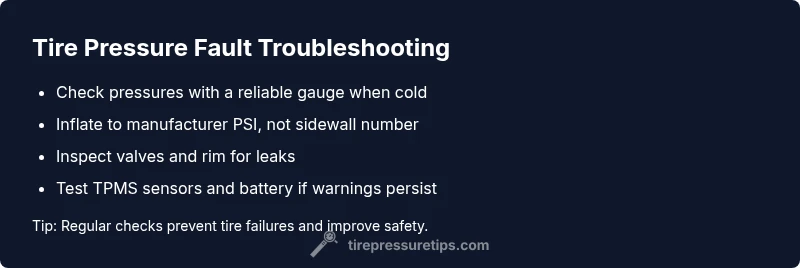
According to Tire Pressure Tips, a tire pressure fault is most often caused by underinflation that triggers the TPMS warning. Start by checking all tires with a reliable gauge, adjust to the vehicle's recommended pressure, and recheck. If the warning persists after a safe drive, inspect valves, TPMS sensors, and the rim for damage. Address leaks promptly and consider professional TPMS service if the fault remains.
Common causes of tire pressure fault
Tire pressure fault is not always a single issue; more often it results from a combination of wear, leaks, and sensor behavior. The most common cause is underinflation: cold weather, small punctures, or slow leaks can quietly drop pressure until the TPMS warns you. Another frequent factor is the use of incorrect or inconsistent gauges, which leads to false readings. A damaged valve stem can allow air to escape even when the tire seems inflated, and sidewall damage or bead leaks can create slow losses that are easy to miss during a quick visual check. Finally, some tire pressure faults originate in the sensing system itself: a faulty TPMS sensor, a weak battery, or corroded connections can trigger warnings even if the tire is within the correct range. According to Tire Pressure Tips, most potholes, curb impacts, and road hazards introduce micro-leaks that gradually reduce pressure over days or weeks, especially in colder months. By identifying which tire is affected and how quickly the pressure changes, you can prioritize your checks and avoid unnecessary tire removal.
How TPMS works and why faults happen
Most modern vehicles use two types of TPMS: direct sensors in each wheel and indirect readings from the ABS system. Direct TPMS has a sensor and battery inside the valve stem and transmits pressure data to the car's computer. Indirect TPMS relies on wheel speed sensors to infer pressure by comparing wheel circumference changes. Both can fail due to battery drain, corrosion, or damaged seals. External factors like temperature swings, frequent curb impacts, and long periods of inactivity can degrade sensors or cause slow leaks to appear. TPMS warnings may also occur if a tire is temporarily overinflated and then rapidly cooled, creating a false signal. Regular inspection of sensors, proper sealing, and periodic calibration help keep TPMS accurate. For most drivers, a simple check of pressure with a trusted gauge, plus a visual inspection, resolves many faults before any professional service is required.
Quick checks you can do safely
Before you get into tools, pull over to a safe, level surface and ensure the vehicle is off. Use a reliable digital or dial gauge to measure cold tire pressure on all four tires. Compare readings to the vehicle manufacturer specification found on the door jamb or owner's manual, not the number on the tire sidewall. If a tire shows a consistent drop, look for small punctures or bead leaks, nails, or screws. Inspect valve stems for cracks or looseness. Spares can also be involved if the spare is in use. If you spot nothing obvious but a warning remains, consider inflating all tires to spec, drive a short distance, and recheck; sometimes the system needs a reset after small changes.
Diagnostic approach for tire pressure fault
A practical diagnostic flow begins with confirming the symptom: is the TPMS light on, or is the gauge showing low readings in more than one tire? Start with the simplest causes such as weather, delayed gauge, or hot vs cold reading. Check the first tire that shows the fault, then verify with a second gauge for accuracy. If all readings are correct but the warning persists, inspect the valve stems and TPMS sensors for damage or leaks. In many cases the fault is due to a slow leak from a nail, a cracked valve core, or a sensor with a weak battery. If the fault cannot be resolved with inflation and inspection, plan a TPMS refresh or sensor service with a qualified technician.
Step-by-step overview: addressing the most common fix
- Park on a flat surface and turn off the engine. 2) Check cold tire pressures with a trusted gauge for all four tires. 3) Inflate each tire to the vehicle manufacturer recommendation; do not rely on sidewall numbers. 4) Recheck pressures once tires have cooled or after a short drive, as heat can inflate readings. 5) Inspect valves for cracks and the rim area for leaks. 6) If the TPMS warning remains, examine the TPMS sensor valves and batteries. 7) If necessary, reset the TPMS following the vehicle manual or seek professional service. 8) Monitor pressures over the next few days and recheck weekly.
Safety and precautions when handling tires
Working with tires and air pressure is safe when you follow basic precautions. Always park on a level surface, engage the parking brake, and wear eye protection. Never loosen a valve stem cap while the tire is inflated; release air slowly to prevent sudden bursts and avoid overinflation. If you suspect a severe leak or a damaged tire, stop driving and call for roadside assistance. When working near the wheel with the tire removed, use proper jacks and chocks.
Prevention: ongoing tire pressure maintenance
To prevent tire pressure faults, establish a monthly check routine. Use a reliable gauge, check when the tires are cold, and keep a record of PSI values. Temperature changes affect pressure, so adjust for winter and summer accordingly. Rotate tires as recommended, replace batteries in TPMS sensors on schedule, and check valve seals for wear. A proactive approach reduces the risk of flats, improves fuel economy, and extends tire life.
When to seek professional help and what to expect
If the TPMS warning returns after inflating and inspecting, or you notice persistent slow leaks, seek professional help. A tire shop can perform a leak test, inspect bead seals, replace TPMS sensors or valve cores, and reset the system. If you are unsure about the safety of driving with a suspected leak, avoid driving long distances and call for assistance. A professional check can prevent a tire failure and ensure the TPMS is correctly calibrated.
Steps
Estimated time: 25-40 minutes
- 1
Prepare a safe work area
Park on a level surface, engage the parking brake, and wear eye protection. Wait for tires to cool before handling air pressure. This reduces the risk of burns and inaccurate readings.
Tip: Tools should be within reach before you start. - 2
Check all four tires with a reliable gauge
Use a digital or dial gauge and record each tire's current pressure. Compare to the vehicle's recommended PSI found on the door jamb or owner manual.
Tip: Take readings when tires are cold for accuracy. - 3
Inflate to the manufacturer specification
Inflate each tire to the recommended PSI, not the sidewall number. Do not overinflate; leave a slight cushion for driving heat.
Tip: If one tire is low, inspect it for punctures before inflating fully. - 4
Recheck after cooling or short drive
Recheck pressures after tires have cooled or after a short warm drive. Temperature changes can skew readings.
Tip: Keep a small log of PSI changes over time. - 5
Inspect valves and rim area
Look for cracked valve stems, loose caps, or bead leaks around the rim. Tighten caps gently and replace damaged components as needed.
Tip: Do not overtighten valve cores. - 6
Check TPMS sensors and batteries
If readings remain inconsistent, inspect TPMS sensors for corrosion or battery weakness. A failing sensor can trigger false alerts.
Tip: Some vehicles require a specific reset procedure after work. - 7
Reset the TPMS if required
Follow the vehicle manual to reset the TPMS after inflation changes. If the light stays on, manual reset or professional service may be needed.
Tip: Always perform a quick road test after reset. - 8
Monitor and schedule follow up
Monitor tire pressures over the next week and recheck weekly. Schedule sensor maintenance if the fault recurs.
Tip: Regular checks prevent unexpected warnings.
Diagnosis: TPMS light on or tire pressure reading inconsistent across tires
Possible Causes
- highUnderinflation or air loss from a slow leak
- mediumDamaged valve stem or bead leaks
- mediumFaulty TPMS sensor or weak battery
- lowTemperature-related pressure changes
Fixes
- easyInflate all tires to the manufacturer specification and recheck after they cool
- easyInspect valves, stems, and bead area for leaks; repair or replace as needed
- mediumTest and replace TPMS sensors or batteries if readings remain inconsistent
- hardIf leaks persist, perform a professional leak test and TPMS calibration
Frequently Asked Questions
What is tire pressure fault?
A tire pressure fault is a warning that the tire pressure is outside the expected range or the TPMS cannot read it reliably. It can result from underinflation, slow leaks, or sensor issues.
A tire pressure fault means the system detected pressure outside the expected range or an unreadable sensor.
Why does TPMS warn when tires look fine?
TPMS can detect pressure anomalies that are not obvious visually. It may also warn due to sensor drift, battery issues, or recent inflations that temporarily confuse the system.
TPMS might warn about pressure issues even if the tires look fine because sensors can drift or batteries can be weak.
How do I reset TPMS after inflating?
Many vehicles allow a manual TPMS reset in the settings menu or with a dedicated button. Follow the owner manual for the exact procedure in your model.
Reset the TPMS according to your car manual after inflating to ensure the light clears.
Can a slow leak cause a tire pressure fault?
Yes, a slow leak can drop pressure gradually and trigger the TPMS. Inspect for punctures, valve leaks, or bead issues if the fault appears.
A slow leak can cause the fault by lowering pressure over time; inspect for punctures or leaks.
When should I seek professional help for TPMS?
If inflating and inspecting tires does not resolve the warning, or you suspect a sensor issue, visit a shop for a professional TPMS check and possible sensor replacement.
If the warning keeps coming back after you check, get a professional TPMS check.
Is it safe to drive with a low tire pressure?
Driving on underinflated tires is unsafe. It increases heat and the risk of a blowout. Reduce speed and seek to reinflate to spec as soon as possible.
No, driving on a low tire is risky. Reinflate to the recommended level as soon as you can.
Watch Video
What to Remember
- Start with a cold tire pressure check using a reliable gauge.
- Inflate to the manufacturer's PSI, not the sidewall number.
- Inspect valves and TPMS sensors if warnings persist.
- Drive briefly to check system reset requirements.
- Schedule regular checks to prevent future faults.