What’s Wrong With Low Tire Pressure: Troubleshooting Guide
Urgent, step-by-step troubleshooting for low tire pressure: diagnose causes, test for leaks, inflate safely, and prevent future incidents with maintenance tips and expert guidance from Tire Pressure Tips.


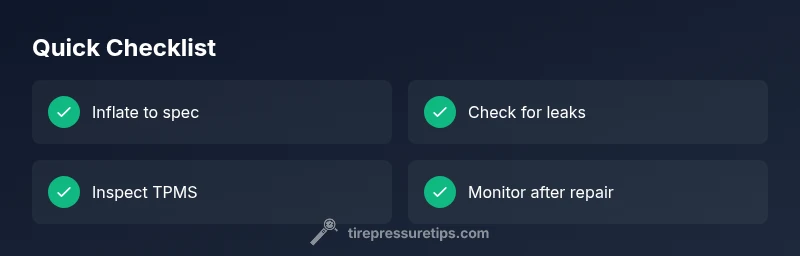
Low tire pressure can stem from slow leaks, temperature shifts, or faulty valves. The quickest fix is to inflate to the vehicle’s recommended PSI and inspect for obvious damage. If the warning persists after topping up, perform a leak test with soap solution and check TPMS sensors.
Why Low Tire Pressure Demands Urgent Attention
Low tire pressure is not just a minor inconvenience; it affects safety, handling, braking distance, and fuel efficiency. A tire that's underinflated by just a few PSI can overheat and wear unevenly, compromising grip in wet conditions and increasing the risk of a blowout at highway speeds. The Tire Pressure Tips team emphasizes that addressing this issue promptly saves you money on fuel, reduces tire wear, and keeps you safer on the road. Checking tire pressure regularly, especially when temperatures shift or after long trips, should be part of every driver’s routine.
- Safety: reduced cornering stability and longer stopping distances
- Efficiency: higher rolling resistance and lower fuel economy
- Longevity: uneven wear shortens tire life
- TPMS: a warning light is your cue to inspect promptly
Quick Home Checks (Before You Drive)
If you notice a TPMS warning or a soft-feeling tire, start with simple, safe steps before driving. Park on a flat surface, away from traffic, and gather a reliable gauge. Check each tire’s pressure when the tires are cold (or have not been driven more than a mile). Compare readings to the vehicle’s door placard; inflate to the recommended PSI when readings are low. If you detect a visible object or crack, do not remove objects that may fix a leak—return to a professional if there’s doubt. Always replace valve caps after inspection.
- Readings must align with the manufacturer’s spec
- Only inflate to the recommended PSI for safety
- Use a precise gauge; analog gauges can be inaccurate
- If the tire is visibly damaged, seek professional help
How to Verify a Slow Leak (Safe Methods)
To differentiate a slow leak from normal variation, perform a simple containment test. Inflate the tire to the recommended PSI, then wait 10–15 minutes and recheck. A drop in PSI indicates a leak. For a more precise locate, apply a soap-and-water solution to the tread, valve stem, and bead area; watch for bubbles forming at leaks. Mark the location with chalk or tape for monitoring over the next few days. Do not ignore persistent drops—these require professional assessment.
- Use a quality soap solution to detect bubbles
- Check the bead area and valve stem thoroughly
- Mark suspected spots for daily monitoring
- If uncertain, seek a tire technician’s help
Temperature and Driving: How They Affect Pressure
Ambient temperature strongly influences tire pressure. In colder weather, air contracts, and PSI can drop. In hot weather or after extended high-speed driving, pressure rises. The net effect is that pressure can fluctuate daily by several PSI, especially with cold starts. This is why temperature-aware checks are essential. Always check pressure when tires are cold and adjust seasonally if your climate swings dramatically. Understanding these dynamics helps you avoid misinterpreting a transient drop as a persistent leak.
Common Root Causes and How to Spot Them
Low pressure can result from several issues. Common culprits include slow punctures from nails or screws, a faulty valve stem, bead leaks at the rim, or TPMS sensor faults. Be vigilant for soft spots in the tread, unusual wear patterns, or a hissing sound near the wheel. A thorough inspection should include the sidewalls and rim seating. If you locate a puncture, assess whether repair is possible or if the tire must be replaced. Remember that repairs must meet safety standards and local regulations.
Step-by-Step Diagnostic Flow (At a Glance)
This section outlines a practical diagnostic sequence you can follow home or at a shop. Start with the simplest checks and progress to more involved tests. If at any point you feel unsure or encounter safety concerns, stop and consult a professional. The goal is a safe, accurate diagnosis that informs whether you can inflate and continue driving or need a tire service.
- Confirm PSI against the door placard and the pressure when cold
- Inspect for obvious damage or objects; do not pull objects embedded in the tire
- Inflate to spec and recheck; note any rapid changes
- Conduct a soap-test for leaks at tread, beads, and valve stem
- Check TPMS sensor status and battery health
- Decide on repair, replacement, or professional service
Fixes and Re-Check Procedures
Once you locate the cause, apply the appropriate fix. If the issue is a slow leak from a puncture, the tire may be repairable depending on location and size. For valve stems or TPMS concerns, replacement or recalibration is often required. After applying any fix, re-inflate to the recommended PSI and perform a leak test again to verify stability. Keep monitoring for the first 24–48 hours after repair. If the tire continues to lose air, stop using it and arrange a professional inspection.
Prevention: Maintenance Habits That Stop Leaks
Develop a routine to minimize the chances of recurring low pressure. Check tire pressure monthly and after temperature swings. Maintain even tread wear by rotating tires as recommended and keep tires within the wear limits. Replace worn valve caps and ensure TPMS sensors are calibrated. Avoid overloading the vehicle, which can increase tire stress. Finally, always carry a portable air gauge and know how to use it properly. A small habit now prevents big problems later.
Steps
Estimated time: 20-40 minutes
- 1
Check tire pressure with cold tires
Use a reliable gauge to confirm PSI matches the vehicle placard. Do this when tires are cold to avoid inflated readings. If readings are low, proceed to inflate to the recommended PSI.
Tip: Keep a dedicated gauge in your glove box for accurate readings. - 2
Inflate to the recommended PSI
Fill until the tire reaches the exact PSI listed on the door placard or owner’s manual. Do not exceed the recommended limit. Recheck with the gauge after inflation.
Tip: Use the right side of the gauge to verify the final reading. - 3
Inspect for obvious signs of damage
Look for nails, screws, cuts, or bulges in the sidewall. Do not attempt to drive long distances if damage is present. If you see a puncture, determine whether a temporary repair is possible or if you need a tire replacement.
Tip: Only attempt a temporary repair if it does not compromise safety. - 4
Test for leaks with soapy water
Mix soap with water and apply to tread, sidewalls, bead, and valve stem. Watch for bubbles that indicate leaks. Mark the spot and monitor over the next 24–48 hours.
Tip: Do not use a detergent that could corrode rubber; use a mild soap solution. - 5
Check TPMS sensor status
If the tire holds pressure but TPMS warns, the sensor or its battery might be failing. A technician can recalibrate or replace the sensor if needed.
Tip: Note the sensor location and battery age for service records. - 6
Decide on repair or professional service
If leaks are localized to a repairable area or patchable tread, a fix at a shop may be sufficient. If leaks persist or you’re unsure, seek professional inspection before driving.
Tip: When in doubt, prioritize safety and schedule a professional assessment.
Diagnosis: Tire pressure warning light on or tire feels underinflated after topping up
Possible Causes
- highSlow puncture from nail/screw or bead puncture
- mediumTemperature-related pressure drop (cold weather or nightly cooling)
- mediumValve stem leak or loose TPMS valve
- lowTPMS sensor fault or failed sensor battery
Fixes
- easyInflate to the vehicle’s recommended PSI and recheck after 10–15 minutes
- easyInspect for visible punctures or objects; remove only if safe and visible
- easyApply soap solution to detect leaks at tread, bead, and valve; mark and monitor
- mediumIf leak is at bead, rim, or TPMS, seek professional repair or replacement
Frequently Asked Questions
What causes a tire to lose air slowly?
Slow air loss can come from a small puncture, a faulty valve stem, or a poor bead seal at the rim. Temperature changes can also cause gradual pressure shifts. A thorough inspection helps pinpoint the exact cause.
Slow air loss often comes from a puncture, valve issue, or rim seal problem, with temperature playing a role. A quick inspection helps identify the cause.
Can temperature alone cause the tire pressure light to trigger?
Yes. Temperature fluctuations can drop or raise PSI, triggering a TPMS warning if the readings fall outside the expected range. Always verify with a cold tire measurement.
Temperature changes can trigger the TPMS warning by affecting psi, so check cold readings to confirm.
Is it safe to drive if a tire is underinflated?
Driving on underinflated tires is unsafe; it can reduce grip, increase heat buildup, and risk a blowout. If in doubt, avoid long trips and consult a tire professional.
No, driving on underinflated tires is unsafe. If unsure, seek professional help before continuing.
How often should I check tire pressure?
Check tire pressure at least once a month and after temperature changes or long trips. Regular checks prevent underinflation-related safety and efficiency issues.
Check your tires monthly and after big temperature shifts or trips.
What tools do I need to check tire pressure at home?
You’ll need a reliable tire pressure gauge, access to the vehicle’s PSI spec, and a pump or air compressor. For leaks, have soap and water ready to test for bubbles.
A good gauge, the vehicle spec, a pump, and soap water for leaks will cover most checks.
Watch Video
What to Remember
- Inflate to the vehicle’s recommended PSI.
- Temperature changes can cause PSI fluctuations.
- Use soap solution to locate leaks safely.
- If the tire won’t hold pressure, seek professional help.