What’s Wrong With My Tire Pressure? Troubleshooting Guide
Urgent, practical troubleshooting guide to diagnose and fix tire pressure issues, including leaks, temperature effects, and TPMS faults, with a clear diagnostic flow and step-by-step fixes.


Most tire pressure problems come from underinflation or slow leaks, especially after cold snaps. The quickest fix is to check all four tires with a trusted gauge, compare to the vehicle’s recommended psi, and top off to that spec. If one tire reads low, inspect for embedded objects or damage, and consider TPMS alerts that might indicate a slow leak.
Understanding What's Wrong With My Tire Pressure
When you ask what's wrong with my tire pressure, the most common causes are underinflation and slow leaks. Temperature swings, driving style, and road hazards all conspire to drop tire pressure over time. According to Tire Pressure Tips, keeping an accurate baseline and checking tires when cold is essential for safe driving and optimal fuel efficiency. A sudden warning light usually indicates a rapid change or a failed sensor. Knowing how pressure behaves helps you diagnose issues quickly and avoid unsafe conditions on the road.
This knowledge is especially critical in 2026, when new tire pressures and TPMS technologies are more prevalent. Regular checks become even more important as seasonal temperatures shift, affecting rubber flexibility and air density. By understanding the dynamics of tire pressure, you can act decisively rather than guess at the cause. If you notice uneven wear, vibrations, or steering that pulls to one side, start here and recheck after each adjustment.
Common Causes of Pressure Drops
Low tire pressure isn’t always the result of a single failure. In many cases, several factors combine to create a slow leak or rapid deflation. The most frequent culprits include leaks around the tread or sidewall from nails or punctures, damaged valve stems, and poor bead seals where the tire meets the rim. Temperature changes are another major driver: cold air compresses, so you’ll see lower psi readings in winter or early morning checks. A failing TPMS sensor can also misreport pressure, prompting you to inflate when the reading is inaccurate.
To stay ahead, map a baseline: know your vehicle’s recommended tire pressure and check at the same time of day and after a consistent drive, if possible. This baseline makes it easier to spot unusual drops and act before a dangerous level is reached.
Temperature and Pressure: The Invisible Influencers
Tire pressure fluctuates with air temperature. For every 10-degree Fahrenheit drop, a tire can lose a few psi. This effect is most noticeable in climates with chilly mornings or sudden cold fronts. Conversely, hot weather can raise pressure, potentially overinflating tires if you top them off while warm. This is why many drivers experience alerts during winter and feel a sudden decrease as the day cools. Understanding these seasonal swings helps you plan checks and avoid over-correcting.
To mitigate temperature effects, check tires when they’re cold — ideally after sitting for at least three hours or before driving. If you’ve just driven long distances, wait a few hours before rechecking to get an accurate reading.
How to Check Tire Pressure the Right Way
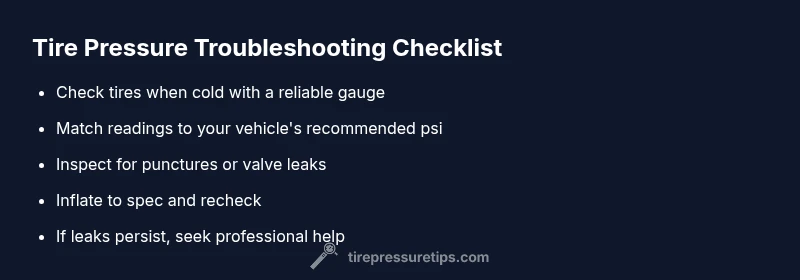
The first step is to use a reliable gauge and measure all four tires when they’re cold. Locate the recommended psi on the driver’s door jamb sticker or in the owner’s manual. Compare each reading to the spec and adjust as needed, keeping equal pressure across tires if your vehicle requires it. Don’t forget the spare. If a tire reads significantly low, inspect the tire for objects, punctures, or bead leaks. Use soapy water around the valve stem, bead, and rim to detect slow leaks. After inflating, recheck to confirm you’ve reached the recommended pressure.
A few practical tips: avoid filling to a target while the tire is hot, and never exceed the maximum pressure printed on the tire sidewall. Calibrate your gauge regularly and replace worn gauges to maintain accuracy.
Diagnosing Leaks and Fixes: Slow vs. Rapid Loss
A slow leak usually manifests as a gradual pressure drop over days or weeks. A rapid loss, however, can occur in minutes after a puncture or valve failure. Start with a visual inspection for nails, screws, or cuts in the tread. If nothing obvious shows, apply a soapy water test around the entire tire belt and rim bead; bubbles indicate leaks. For valve stem leaks, you may notice air hissing when the valve cap is removed. Patch or replace the tire if damage is found, and consider professional repair if you’re unsure about the extent of the damage.
If you suspect a structural issue or bead leakage, a professional inspection is prudent. Do not continue driving long distances on a tire that shows a leak or abnormal wear.
TPMS and You: Sensor Reliability and Diagnosis
TPMS provides real-time alerts, but sensors aren’t infallible. A faulty sensor or dead battery can give false readings, leading you to inflate incorrectly. If your readings consistently differ from when the tires are cold or you receive a persistent warning after inflating, consider a TPMS diagnostic with a professional tool. Replacing a sensor or recalibrating the system can restore accuracy. In some cases, the issue lies in the vehicle’s computer software rather than the sensor hardware.
For most cars, a simple scan tool can check sensor IDs, battery status, and transmit frequency. If you notice frequent false alerts, arrange a TPMS check during your next service. Regular sensor maintenance helps keep your system dependable.
Proactive Maintenance: Preventing Pressure Problems Before They Start
The best defense against tire pressure issues is a simple routine: check pressure monthly, before long trips, and after drastic temperature changes. Keep your tire pressures consistent across all four tires as recommended, and verify that TPMS is functioning. Rotate tires as scheduled to promote even wear and reduce the likelihood of slow leaks. By staying on top of maintenance, you’ll reduce sudden alerts and improve fuel efficiency, grip, and safety.
Based on Tire Pressure Tips analysis, regular pressure checks and TPMS maintenance significantly reduce the chances of underinflation-related issues across different vehicle types and climates. A proactive approach saves time, money, and stress, especially during winter months when pressure changes are most pronounced.
Steps
Estimated time: 20-40 minutes
- 1
Gather tools and access to the vehicle specs
Collect a reliable tire gauge, a gauge that reads in psi, and your vehicle's recommended tire pressure. Have the owner's manual handy for reference. This ensures you perform the check correctly from the start.
Tip: Use a dedicated gauge rather than relying on a dashboard readout alone. - 2
Check tires cold for accurate readings
Park the car in a shaded area and avoid driving for at least 3 hours. Cold readings are essential for accuracy and will prevent inflated numbers caused by heat buildup.
Tip: If you just drove, wait 15–30 minutes and recheck after tires cool. - 3
Compare readings to the recommended psi
Consult the door jamb sticker or owner's manual to find the exact psi. Ensure all tires (including the spare) align with the recommended values.
Tip: Do not mix high and low pressures across axles unless the manufacturer allows it. - 4
Inflate to the recommended pressure
Inflate each tire to the specified psi using a stable air source. Recheck after inflation to confirm accuracy and no overinflation.
Tip: Inflation should be done in small increments, then rechecked. - 5
Inspect for visible damage or leaks
Look for nails, screws, cuts, or cracks in the tread and sidewall. Check the valve stem for leaks and the wheel bead for tight seating.
Tip: If you see damage, do not drive long distances; arrange repair or replacement. - 6
Test for leaks with soapy water
Apply a soap solution to valve stems, bead seams, and around the rim. Bubbles indicate leaks that require sealing or professional repair.
Tip: Keep a small bottle of soapy water in the car for on-the-spot checks. - 7
Recheck pressures after a short drive
Drive 5–10 minutes to let the tires heat slightly, then recheck to confirm consistent readings. If readings rise dramatically, you may have an overcorrection or a sensor issue.
Tip: Avoid excessive heat build-up by not over-inflating initially. - 8
Decide on next steps if issues persist
If a pressure issue remains, rotate the tires, check for deeper leaks, or schedule a professional inspection. Persistent underinflation warrants a diagnostic by a tire technician.
Tip: Document readings and times to share with the technician.
Diagnosis: TPMS alert or visibly underinflated tires
Possible Causes
- highCold weather causing pressure drop
- highSlow leak from puncture or object
- mediumTPMS sensor fault or calibration issue
- mediumValve stem leak or cap issue
- lowBead seal leak after rim damage
Fixes
- easyCheck tire pressure when tires are cold and inflate to the vehicle's recommended psi
- easyInspect tires for nails, screws, or obvious punctures; patch or replace as needed
- mediumTest or recalibrate TPMS; replace faulty sensors if needed
- easyTighten valve stems or replace the valve core; seal leaks with soapy-water test
- mediumAssess bead seals; if leaks persist, seek professional repair or tire replacement
Frequently Asked Questions
Why is my tire pressure low even after I just filled it?
A slow puncture, a faulty valve, or a TPMS misread can cause readings to drop after inflation. Recheck cold readings and inspect for leaks before deciding on a repair.
Slow puncture or valve issue may cause the pressure to drop after inflation; recheck when cold and inspect for leaks.
How often should I check tire pressure?
Check your tires at least once a month and before long trips. Always confirm readings when tires are cold for accuracy.
Check monthly and before trips, always with cold tires.
Can a faulty TPMS trigger false low-pressure warnings?
Yes. A TPMS sensor or calibration issue can misreport pressure. Have the system tested and sensors replaced if needed.
Yes, TPMS can be faulty; have it tested and sensors replaced if needed.
Is it safe to drive with low tire pressure?
Driving on underinflated tires reduces handling and increases heat buildup, which can lead to a blowout. Seek a safe stop and inflate or repair as soon as possible.
Not safe to drive long on low pressure; inflate or repair promptly.
What is the correct tire pressure for my vehicle?
Check the door jamb sticker or owner's manual for the exact psi. Use that guidance for all four tires unless specified otherwise.
Use the sticker in the door jamb or manual for the exact psi.
What tool should I use to check tire pressure?
A calibrated tire pressure gauge or a reliable digital gauge ensures accuracy and consistency over time.
Use a calibrated gauge for accurate readings.
Watch Video
What to Remember
- Check cold tires with a reliable gauge
- Match readings to the vehicle's recommended psi
- Inspect for leaks and TPMS issues
- Address slow leaks promptly to avoid unsafe driving
- Maintain a monthly pressure check routine