Tire Pressure is Low: Quick Troubleshooting and Safe Fixes
Learn how to diagnose and fix low tire pressure quickly, protect your safety, and prevent future leaks with practical tips from Tire Pressure Tips.


Low tire pressure is most often caused by a puncture, a cold-weather drop, or a slow leak. Check all tires when cold, top each to the vehicle’s recommended PSI, and inspect for objects or valve leaks. If the warning persists after topping up, repair the puncture or visit a tire professional for a safe fix.
Why Low Tire Pressure Endangers Safety and Performance
According to Tire Pressure Tips, tire pressure is low not only affects fuel efficiency but also grip, braking distance, and heat buildup, which can lead to tire failure. When tires run underinflated, the contact patch widens, increasing rolling resistance and reducing steering response. This is especially dangerous in wet or icy conditions. In addition, underinflated tires wear unevenly, with inner or outer edges wearing faster. The Tire Pressure Tips team notes that many drivers underestimate the impact of small PSI losses; even a 1-2 PSI drop can compromise handling. So, you should treat every warning as urgent and address it before you drive further. In this guide, you will learn to identify the causes of low tire pressure, how to measure accurately, and practical steps to restore safe inflation levels. We’ll also cover TPMS nuances and when professional help is needed.
How to Measure Tire Pressure Accurately (Cold vs Hot)
Tire pressure changes with temperature and driving. To get a correct reading, measure when tires are cold, ideally before driving or after at least 3 hours of no driving. Use a reliable gauge; digital gauges are easier to read, but a good analog gauge works too. Compare readings to the PSI recommended on the door jamb sticker, not the tire's maximum pressure. If a tire reads low, inflate gradually and recheck after a few minutes to settle. Don't rely on a single reading; check all four tires plus the spare if you use it regularly. Remember that the center gauge can misread if the stem is old or damaged. The goal is to bring each tire to the recommended pressure for your vehicle, load, and driving conditions. Regular checks prevent the tires from slipping and ensure braking performance remains predictable.
Common Causes of Tire Pressure is Low
Punctures or nails are a leading cause of slow leaks that reduce tire pressure over days or weeks. Temperature drops, especially in fall and winter, can cause PSI to fall by about 1 PSI or more per 10-degree change, depending on the tire and environment. Damaged valve stems or TPMS sensor issues can also trigger false readings or actual leaks. Bead leaks where the tire seals at the rim can silently erode pressure, particularly on older wheels or after curb contact. Finally, aging tires with worn tread may have micro-leaks that gradually soften the seal. Recognize patterns such as pressure loss only after driving or after a long trip as red flags for specific causes.
Quick Home Checks You Can Do Now
Before you drive again, perform quick checks to narrow down the cause. Look for obvious objects embedded in the tread or sidewall; inspect the valve cap and stem for cracks. Visually inspect the rim edge for damage that could compromise the seal. Use soapy water on the tread edge, bead, and valve stem; bubbles indicate a leak. Listen for hissing sounds near the tire—this can signal a leak that isn’t obvious to the eye. If you find a puncture inside the tread, you may be able to repair it if it’s in an appropriate location and size; otherwise, plan for a professional repair or tire replacement. Check all tires and the spare to ensure the vehicle remains balanced.
Step-by-Step Plan to Restore Proper Pressure
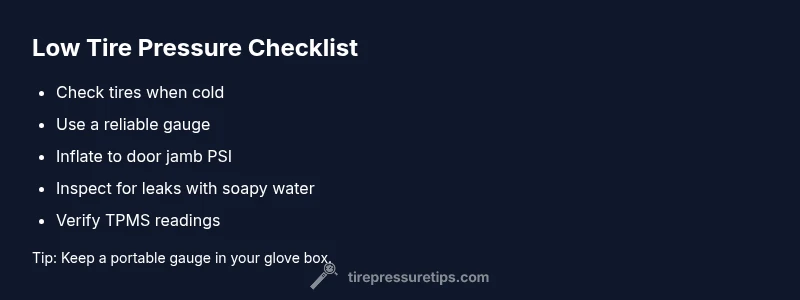
- Park on a flat surface away from traffic and set the parking brake. 2) Check all tires when cold using a trusted gauge. 3) Inflate to the recommended PSI slowly, rechecking after each adjustment. 4) Inspect for leaks with soapy water and address any bubbles immediately. 5) If TPMS continues to warn after inflation, reset the system or consult your manual for calibration steps. 6) If you can’t locate a leak or the tire cannot be repaired, replace the tire or seek professional service. 7) Recheck the pressures again after a short drive to ensure stability.
TPMS: Understanding the Warning and What to Do
The tire pressure monitoring system (TPMS) helps you catch leaks quickly, but it’s not infallible. A faulty sensor, a dead battery, or a dead tire can trigger false warnings. Always verify with a physical gauge, especially when the reading seems inconsistent with the vehicle’s behavior. If you replace a tire or sensor, ensure the TPMS is calibrated for your exact vehicle model. A TPMS warning is a cue to inspect rather than ignore; do not rely on hope that the system is right without verification.
Safety Precautions During Inflation and Repairs
Inflation should be performed with the engine off and the vehicle secure. Wear safety glasses and gloves if you are working near the wheel and road. Never exceed the tire’s maximum rating or the door jamb PSI. If the tire is visibly damaged or the sidewall is bulging, do not drive; call for roadside assistance and replace the tire. Use the proper air source and avoid rapid inflations that can heat the tire quickly. After any repair, recheck all pressures and test-drive gently to confirm the fix.
Prevention: Keeping Tire Pressure Stable Across Seasons
Make pressure checks part of your monthly routine. Temperature changes accentuate pressure loss, so increase vigilance during cold seasons and before long trips. Use a consistent gauge and a reliable inflator, especially if you use nitrogen or other air blends. Maintain tire rotation and alignment to prevent uneven wear that can mimic pressure loss, and replace aging tires before they become unsafe. Consider keeping a portable gauge in your glove box.
When to Seek Professional Help
If you cannot locate a leak after careful inspection, or if the tire continues to lose air despite correct inflation, seek professional help. A tire technician can identify slow leaks, bead leaks, or structural damage that isn’t obvious. Persistent low pressure with new tires may indicate an issue with the rim, TPMS, or other systemic problems that require equipment and expertise beyond at-home fixes.
Steps
Estimated time: 40-60 minutes
- 1
Safety first: park and locate
Park on a flat surface away from traffic. Engage the parking brake and switch off the engine. Place wheel chocks if available. Ensure you have adequate lighting and a clear area to work.
Tip: Wear gloves and eye protection when handling tires and tools. - 2
Check cold tire pressure with gauge
Remove the valve cap and firmly press the gauge onto the valve stem to get a reading. Repeat for all four tires and the spare if you commonly use it. Compare readings to the door jamb sticker values.
Tip: Record readings to track pressure changes over time. - 3
Inflate to recommended PSI
If pressure is low, inflate each tire gradually to the recommended PSI. Avoid overinflation; monitor the gauge as you inflate and check for even distribution across tires.
Tip: Use a single gauge for consistency and accuracy. - 4
Check for leaks and damage
Apply soapy water to the tire bead, valve stems, and rim edge to find leaks. Look for bubbles that indicate air escaping. If you locate a puncture or leak, assess repairability based on size and location.
Tip: Do not attempt risky repairs on damaged sidewalls. - 5
Test TPMS readings
Drive a short distance and observe whether the TPMS warning persists. If it does, the TPMS or the tires may need service. Compare TPMS readings with the gauge measurements.
Tip: Note any disparities between the gauge and TPMS readouts. - 6
Seek professional help if needed
If you cannot locate a leak or the tire remains underinflated after repair attempts, consult a tire professional. Persistent issues may indicate rim or bead damage or a faulty TPMS.
Tip: Carry proof of tire pressures and readings when visiting a shop.
Diagnosis: Tire pressure is low
Possible Causes
- highPuncture or nail causing slow leak
- mediumAmbient temperature drop causing PSI decline
- lowFaulty valve stem or TPMS sensor
- lowBead leak or rim issue
Fixes
- easyInspect tire for punctures with nails or objects; pressurize and check for leaks with soapy water
- easyInflate tires to the recommended PSI when cold using a reliable gauge, then recheck after a few minutes
- mediumCheck valve stems and TPMS sensors for damage or improper sealing; replace damaged components as needed
- mediumIf a leak or damage is found that isn’t easily repairable, seek professional repair or replacement
Frequently Asked Questions
What causes tire pressure to drop suddenly?
A sudden drop is often due to a puncture or a valve leak. Temperature changes can also cause temporary drops, especially in cold weather.
Low tire pressure is usually from a puncture or valve leak; temperature changes can also cause a drop, especially in cold weather.
Can TPMS be faulty and cause a false low-pressure warning?
Yes, a faulty TPMS sensor or a dying battery can trigger false warnings. If readings don’t match a manual gauge, have the system inspected.
A faulty TPMS can trigger false warnings; compare with a manual gauge and get it checked if inconsistent.
How often should I check tire pressure?
Check tire pressure at least once a month and before long trips. Also check when the tires are cold to get an accurate reading.
Check tire pressure at least monthly and before long trips when tires are cold.
What should I do if I can't locate a puncture?
If you can't locate a puncture and the tire keeps losing air, have a professional inspect for internal damage or bead leaks.
If you can't find a puncture but pressure keeps dropping, get a pro to inspect for bead leaks or internal damage.
Is it safe to drive with low tire pressure?
Driving on underinflated tires reduces grip and increases heat buildup. It’s safer to stop and address the issue as soon as possible.
Driving with low pressure is unsafe; stop and fix the tire to restore grip and prevent failure.
Should I replace a tire after a puncture or leak?
Punctures in the tread center can often be repaired, but sidewall damage usually requires tire replacement. A professional should assess the repairability.
Most tread punctures can be repaired, but sidewall damage often means replacement; consult a professional.
What to Remember
- Check cold tires first to verify low pressure
- Inflate to the recommended PSI with a reliable gauge
- Inspect for punctures and leaks with soapy water
- If leak persists, seek professional repair