Tire Pressure Sensor Fault Troubleshooting
Diagnose and fix tire pressure sensor fault quickly with practical checks, TPMS resets, sensor replacement guidance, and safety tips from Tire Pressure Tips.


Quick answer: A tire pressure sensor fault usually stems from a failing TPMS sensor, a weak battery, or a damaged wheel sensor. Start by confirming all tires are at the correct pressure with a gauge, then scan for TPMS fault codes and reprogram the sensor IDs if needed. If the fault persists, consider replacing the faulty sensor or resetting the system, and have a professional inspect if any warning lights stay on.
What a tire pressure sensor fault means
A tire pressure sensor fault indicates the TPMS cannot reliably read tire pressure or report it back to the vehicle computer. When this happens you may see the TPMS warning light, an audible chime, or a fault message on the dash. According to Tire Pressure Tips, these faults most often point to a failing sensor battery, a damaged sensor, or sensor ID mismatch after a wheel change. Treat the issue as urgent because incorrect pressure can affect handling, braking, and tire wear. While you wait for a diagnosis, verify that all tires are inflated to the recommended pressure when cold and keep a manual gauge in your glove box. This guide will help you identify the root cause, rank the likely suspects, and outline safe, practical steps you can take even if you don’t own a professional scan tool.
Common causes of TPMS faults
TPMS faults come from several sources, and understanding them helps you pick the right fix. The most frequent cause is a dying battery inside the sensor, which gradually loses its ability to transmit. Another common factor is a damaged or misread sensor, especially after tire rotations or wheel changes. Wiring harness damage or corrosion at the valve stem can also trigger faults. Calibration errors, wheel-ID mismatches, or using aftermarket sensors that aren’t fully compatible can generate false warnings. In rare cases, the TPMS control module itself may have a fault. From a maintenance perspective, note when the warning appears: after a tire change, after the tire has been heated, or only on certain roads. The Tire Pressure Tips analysis shows that addressing the battery and sensor hardware first solves most cases; software or calibration problems are less common but still important to verify.
How to confirm a TPMS fault (diagnostics)
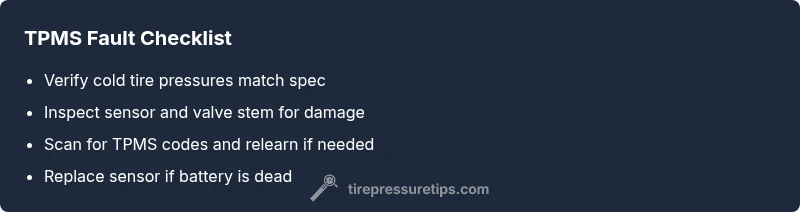
For confirmation, start with a reliable TPMS scanner. Read the fault codes and note which wheel position is affected. Compare the displayed pressures with a trusted manual gauge on each tire when cold. If the readings don’t match or codes point to a specific wheel, inspect the sensor visually for corrosion, a damaged valve stem, or a weak battery. Recheck after a road test and wheel rotation to rule out a temporary glitch. In many cases, clearing codes and performing a reset or relearn will resolve the fault, but if the warning returns, you may have a hardware issue that requires replacement.
Quick checks you can do safely
- Check all tires when cold to confirm they match the vehicle’s recommended pressures. - Look for visible damage to valve stems or wheels and inspect for corroded sensor mounting points. - Ensure wheel lug nuts are torqued to spec and the spare tire hasn’t contributed to a false reading. - If you recently rotated wheels or changed sensors, verify that the correct wheel positions are paired in the TPMS system. - Do not ignore the warning light; a stubborn fault often means a sensor or connection needs attention.
Diagnostic flow overview
- Symptom: TPMS warning light or inconsistent pressure readings. 2) Quick checks: verify pressures, inspect valves, confirm no obvious damage. 3) Diagnostics: read TPMS codes, confirm wheel IDs, test sensor batteries. 4) Targeted fix: replace or reprogram a faulty sensor, perform relearn. 5) Verification: drive cycle and recheck readings. 6) Professional help: if light returns after reset, if you’re unsure about battery replacement, or if code indicates multiple sensors.
Step-by-step fix for the most common cause
- Confirm the common cause: a weak or dead TPMS sensor battery. 2) Remove the affected wheel and inspect the sensor; replace the sensor or battery as needed. 3) Install the new sensor or battery and ensure the valve stem is intact. 4) Relearn or reprogram the sensor IDs to match your vehicle using the TPMS tool or your vehicle’s reset procedure. 5) Inflate tires to the recommended cold pressure and take a short drive to let the system update. 6) Verify that the TPMS light remains off after a complete drive cycle.
Safety, prevention, and safe driving tips
- Never ignore a persistent TPMS warning light; driving on underinflated tires can cause tire failure. - Perform TPMS checks when tires are cold to get accurate readings. - After any tire service, ensure the system relearns correctly and wheel IDs are updated. - Dispose of old sensors and batteries responsibly; many shops recycle them.
What to expect from professional service
A professional TPMS service will typically diagnose with a dedicated TPMS tool, confirm wheel IDs, and test the sensor battery life. Expect potential sensor replacement, sensor programming, and a relearn procedure. Costs vary by vehicle, region, and whether multiple sensors are involved. A professional inspection is advised if warning lights persist after a reset or if you notice tire pressure fluctuations that don’t align with weather or driving.
Final thoughts: maintain and monitor TPMS
Regular checks of tire pressures when cold, especially after seasons of temperature change, help prevent TPMS faults from surprising you. Keep spare sensors and a diagnostic tool handy if you’re comfortable with DIY maintenance, but don’t hesitate to seek professional service for complex issues or if the warning returns post-relearn.
Steps
Estimated time: 30-60 minutes
- 1
Gather tools and safety gear
Pull over to a safe, level area and turn on hazard lights. Gather a tire pressure gauge, TPMS tool, wheel chocks, and gloves. Ensure you’re working on a cold tire to avoid burns from hot components or unexpected tire pressure changes.
Tip: Wear eye protection and use wheel chocks to prevent rolling. - 2
Verify tire pressures with a gauge
Check every tire’s cold pressure against the manufacturer’s specification. Document any discrepancies, especially if one tire is significantly underinflated or overinflated.
Tip: Use a high-quality gauge for accuracy. - 3
Inspect the suspected sensor visually
Look for cracked sensor housing, corroded connections, bent valve stems, or obvious damage. If the sensor is loose, do not drive; tighten carefully after ensuring the wheel isn’t underinflated.
Tip: Do not force connectors; disconnect battery only if you’re trained. - 4
Run a TPMS diagnostic and relearn
Connect a TPMS scanner and read fault codes. If a single wheel is indicated, attempt a relearn/reprogram procedure per your vehicle’s manual or the scanner’s prompts.
Tip: Back up the car’s relearn steps in advance. - 5
Replace or reset as needed
If codes point to a specific sensor and the battery is dead or the sensor is physically damaged, replace the sensor. After replacement, relearn the system and verify readings.
Tip: Keep old sensor data to compare performance. - 6
Test drive and recheck
Take a short drive to allow the system to update. Recheck all tire pressures once cool, and monitor the TPMS light for any recurrence in the next drive.
Tip: If the light returns, repeat tests or seek professional help.
Diagnosis: TPMS warning light on or erratic tire pressure readings
Possible Causes
- highDead or weak sensor battery
- mediumDamaged or misread TPMS sensor
- lowWheel-ID calibration or sensor compatibility issue
- lowTPMS control module fault
Fixes
- easyReplace sensor battery or entire TPMS sensor; ensure valve stem is intact
- mediumRelearn or reprogram sensor IDs to match vehicle; run TPMS diagnostic and clear codes
- mediumInspect wiring, connectors, and wheel components for corrosion or damage; replace if needed
- hardIf unresolved, consult a professional for module-level diagnostics or sensor replacement
Frequently Asked Questions
What is a tire pressure sensor fault?
A TPMS fault means the system cannot read tire pressure accurately, often due to a dead battery, faulty sensor, or calibration issue. It requires diagnosis to identify the faulty component and the correct remedy.
A TPMS fault means the system can’t read tire pressure correctly, usually due to a bad sensor, dead battery, or calibration problem.
Can I reset TPMS myself?
Yes, many cars allow a manual relearn with a TPMS tool or built-in procedure. Some vehicles require dealer tools or codes. Always follow your vehicle’s manual or seek a professional if in doubt.
You can often relearn TPMS yourself with the right tool, but some cars need dealer help.
Why does TPMS warn after tire rotation?
Wheel rotation can misalign sensor IDs or trigger the system until the relearn procedure is completed. Reprogram or relearn the sensors after rotation to restore accuracy.
Rotation can misalign sensors; relearn them after rotating.
When should I replace a TPMS sensor?
Replace a sensor if the battery is dead, the sensor is damaged, or multiple diagnostic codes point to that unit. Sensor replacement is the most reliable fix when tested sensors fail.
Replace a faulty sensor when tests show it’s bad.
Is TPMS dangerous if warning lights stay on?
Yes, a persistent TPMS warning could indicate a tire pressure risk. Do not drive long distances under these conditions; have it inspected promptly.
Persistent TPMS warnings mean you should check tires soon.
Watch Video
What to Remember
- Address dead sensors quickly to avoid unsafe driving conditions
- Use a dedicated TPMS tool for reliable diagnostics
- Relearn IDs after any sensor replacement or reset
- Regular cold-pressure checks prevent many TPMS faults
- Seek professional help if warnings persist after relearn