How to Troubleshoot Tire Pressure Sensor Breakage
A comprehensive, urgent troubleshooting guide to diagnose and fix TPMS sensor breakage with actionable steps, safety tips, and when to seek professional help.


Most TPMS sensor failures begin with a weak battery or physical damage from impact. Start with a quick check: verify tire pressures, inspect for obvious damage, and scan for TPMS fault codes using a handheld scanner. If the warning persists after reinitialization, the sensor likely needs replacement or recalibration. A reset can clear the light temporarily.
How do tire pressure sensors break and why it matters
Tire pressure monitoring systems (TPMS) rely on small, battery-powered sensors mounted in each wheel to transmit real-time pressure data to the vehicle computer. When people ask how do tire pressure sensors break, the answer usually points to battery health, physical damage, and environmental wear. According to Tire Pressure Tips, the most common failures are battery degradation inside the sensor, corrosion at electrical contacts, and damage from road hazards that misalign or crack the sensor housing. Miscalibration after tire service is another frequent culprit. In practical terms, a degraded sensor can report inaccurate readings or stop transmitting altogether. Early warning signs include erratic pressure values, a slow update cycle, or a dash light that won’t go away. This article walks you through a diagnostic flow, list of fixes, and when replacement or professional service is required. The Tire Pressure Tips team emphasizes safety first—incorrect TPMS readings can mask underinflation hazards and increase the risk of tire damage on the road.
Common failure modes you’ll see
- Battery degradation: Many TPMS sensors have non-replaceable batteries that gradually lose capacity over years.
- Physical damage: Impact from potholes, curbs, or road debris can crack the sensor housing or bend the stem, causing leaks or misreads.
- Moisture and corrosion: Water ingress or road salt can corrode contacts, leading to intermittent or lost signals.
- Valve stem wear: Worn stems or seals can cause slow leaks and inaccurate readings.
- Post-service calibration issues: After tires are changed or sensors are replaced, relearning the system incorrectly can trigger faults.
- Sensor power loss: Loose wiring or fuse issues can starve the sensor of power, producing a warning light.
Electrical vs. mechanical failures
TPMS failures split roughly into electrical and mechanical categories. Electrical failures involve the battery, circuitry, antenna, or the TPMS control module failing to receive or transmit data. Mechanical failures refer to physical damage to the sensor body, valve stem, or mounting that prevents accurate pressure sensing or transmission. Electrical faults often show as random or intermittent readings, while mechanical issues tend to produce consistent but incorrect data or an immediate warning light after a curb impact. Understanding this distinction helps you prioritize tests and fixes. As a rule, start with simple checks (pressure, codes) before moving to sensor replacement, because many issues are resolved without invasive work. The goal is to confirm whether the problem lies with the sensor itself or with the system’s electronics.
Temperature, road debris, and sensor wear: real-world factors
Extreme temperatures shift tire pressure readings—hot tires show higher pressures, cold tires lower. This can trigger premature TPMS warnings or mask a creeping leak. Road debris can nick the sensor, especially on alloy wheels where the sensor sits close to the rim. Regular driving also ages sensors: the battery degrades, seals dry out, and the transmitter’s signal may weaken. Environment matters: salt, moisture, and road grime can corrode contacts and sensors over time. In practical terms, seasonal temperature changes and road conditions make it essential to check tire pressures more frequently during temperature swings and after noticeable impacts. The goal is to distinguish a real tire issue from a temporary fluctuation and to avoid chasing symptoms that aren’t sensor-related.
Practical checks you can perform at home
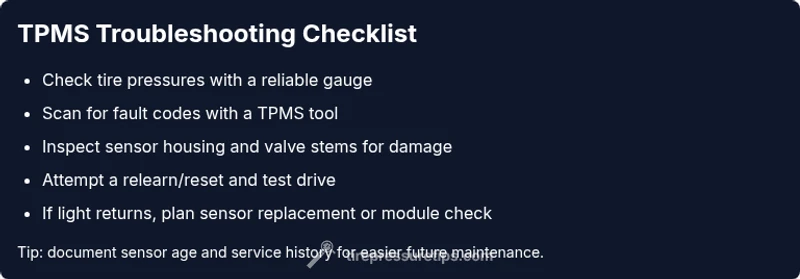
- Verify all tires are at the recommended pressure using a reliable gauge, including the spare if it has a TPMS.
- Use a handheld TPMS scan tool to read fault codes and determine which sensor or wheel is at fault.
- Visually inspect wheels and tires for damage, bent rims, or cracked valve stems after a noticeable impact.
- Attempt a TPMS relearn or reset following the vehicle’s manual, if the tool supports it.
- Note the sensor location, age, and any recent service to track wear and plan replacements.
- If readings are inconsistent or the light remains on, consider professional inspection to avoid driving on underinflated or overinflated tires.
A plan of action when the light stays on
When the TPMS light remains on after checks, follow a structured plan: (1) Confirm all tires are properly inflated. (2) Read fault codes and identify the faulty wheel. (3) Relearn the system or reset per the vehicle’s procedure. (4) Inspect or replace the sensor as needed, starting with the most damaged-looking wheel. (5) Drive short distances and recheck readings after the system recalibrates. If the light persists, a sensor replacement or module diagnosis by a professional is warranted. Safety is the priority; driving with a known TPMS fault can mask unsafe conditions.
Maintenance habits to extend TPMS life
- Schedule regular TPMS checks with tire rotations to catch issues early.
- Keep tires at the recommended pressure to reduce sensor strain and prolong battery life.
- Avoid unnecessary tire service disturbances that can mislearn or damage sensors.
- Record sensor age and plan replacements as the battery or seals approach the end of life.
- Use a high-quality scan tool to monitor sensor health and perform periodic relearns after service.
Steps
Estimated time: 60-120 minutes
- 1
Gather tools and ensure safety
Park on a flat surface, engage the parking brake, and assemble a reliable tire pressure gauge plus a TPMS scan tool. Wear gloves and use wheel chocks if available to prevent rolling. This setup reduces risk while you diagnose.
Tip: Have the vehicle manual handy for relearn procedures specific to your model. - 2
Check pressures and scan for codes
Measure all four tires with a trusted gauge and compare to the manufacturer spec. Use the TPMS tool to pull fault codes and identify the wheel with issues. Record the codes for reference.
Tip: If you see a wheel with a low or high reading, start there first. - 3
Inspect wheels and sensors
Remove the wheel cover if needed and visually inspect the sensor housing, valve stem, and mounting. Look for cracks, corrosion, or moisture around the contacts. A rattling sensor when the wheel is moved indicates loose mounting.
Tip: Check for bent rims or damaged stems as they can compromise sensor seals. - 4
Attempt relearn or reset
Using the scan tool or the vehicle’s menu, perform a relearn or reset for the TPMS. This helps the system re-associate the new readings with each wheel. Drive slowly for a short distance to let the system recalibrate.
Tip: If the tool shows a specific wheel fault, focus on that location first. - 5
Decide on replacement or repair
If codes point to a faulty sensor or if readings remain inconsistent, plan sensor replacement. In many cases, sensors are not easily serviceable and require replacement with a compatible unit or module recalibration.
Tip: Keep receipts and record sensor age and part numbers for future maintenance. - 6
Test drive and confirm
Take a short drive and re-check the readings. Confirm that the TPMS light stays off and that the readings match the tire pressures shown on a gauge. If the light returns, escalate to professional service.
Tip: Avoid aggressive driving until TPMS is verified to be accurate.
Diagnosis: TPMS warning light on or inconsistent readings
Possible Causes
- highWeak or dead sensor battery
- highPhysical damage to sensor from potholes or curb impacts
- mediumValve stem corrosion or moisture ingress
- lowCalibration or relearn errors after tire service
Fixes
- easyUse a handheld TPMS scanner to read fault codes and perform relearn/calibration
- mediumReplace damaged or degraded sensor and associated battery if serviceable
- mediumInspect wiring, fuses, and TPMS control module for faults and repair as needed
- hardSeek professional TPMS service for sensor replacement or module diagnosis if issues persist
Frequently Asked Questions
What does a TPMS fault light mean?
A TPMS fault light indicates the system has detected abnormal tire pressure readings or a sensor communication issue. It can result from a bad battery, damaged sensor, or calibration errors. Verify tire pressures first, then scan for fault codes to pinpoint the cause.
The TPMS fault light means the system detected an issue with tire pressure readings or sensor communication. Check pressures and scan for codes to identify the cause.
Can you reset TPMS without a scan tool?
Some vehicles allow a manual relearn via the infotainment system or pedals; however, many require a dedicated scan tool. If in doubt, follow the vehicle manual and use the appropriate tool for a reliable relearn.
Some cars can relearn without a tool, but many require a scan tool. Check your manual to follow the correct process.
Are TPMS sensors universal across vehicles?
TPMS sensors are not universally interchangeable. Sensor type, valve stem size, and vehicle-specific relearn procedures vary by model. Use compatible sensors and follow the manufacturer’s relearn steps for best results.
TPMS sensors aren’t universal. Use the right sensor and relearn steps for your vehicle.
How long do TPMS sensors last?
Sensor life varies, but many last several years depending on usage, road conditions, and maintenance. If a sensor requires frequent recalibration or shows intermittent readings, plan a replacement and check the battery health.
TPMS sensors last several years, but battery health and road wear affect lifespan. Consider replacement if readings are unreliable.
When should I replace TPMS sensors after a fault?
Replace sensors when the fault persists after relearn attempts, or if a sensor shows physical damage or battery failure. Always verify compatibility with your vehicle and have a professional confirm the replacement needs.
If relearn fails and faults persist, replace the sensor and verify compatibility with your car.
Watch Video
What to Remember
- Identify whether the issue is electrical or mechanical first
- Relearn after service to avoid miscalibration
- Inspect sensors and stems for visible damage
- Schedule sensor replacement when battery or seal life is compromised