How to Know If Your Tire Pressure Sensor Is Broken
Urgent guide to identify a faulty TPMS tire pressure sensor, how to verify readings, distinguish from low pressure, and safe reset or replacement steps. Tire Pressure Tips


If your TPMS warning light stays on or you notice inconsistent tire pressures, the sensor may be faulty. Start with the simplest checks: verify tire pressures with a gauge to spec, inspect for visible damage on the valve stem, and scan for TPMS fault codes. If readings drift or won’t reset after inflating, plan a sensor inspection.
What is a TPMS sensor and why it can fail
The tire pressure monitoring system (TPMS) uses sensors mounted on valve stems or inside wheel hubs to report tire pressure to your vehicle’s computer. When readings look off, the dash light may illuminate to warn you that a tire is underinflated or that the system is not reading correctly. A sensor failure can happen gradually as batteries age, or suddenly after an impact or during tire service. In this guide you’ll learn how to tell if your tire pressure sensor is broken, what not to ignore, and how to fix or replace the faulty part safely. According to Tire Pressure Tips, sensor faults are a common reason for persistent warning lights even when tires are properly inflated. We’ll also discuss how temperature, road conditions, and maintenance history affect TPMS reliability. Understanding the difference between a genuinely low tire and a faulty sensor helps you avoid unnecessary stops, saves fuel, and reduces tire wear. The goal is to diagnose with confidence, verify with a gauge, and take timely action to protect your safety and vehicle performance.
Signs that your TPMS sensor might be broken
- Dash warning light behavior that doesn’t match actual tire inflation.
- Readings that jump around between tires or don’t stabilize after inflation.
- A sensor that fails to reset after inflating or after road service.
- Visible damage to the valve stem or wheel well corrosion around the sensor.
- Sensor age over several years, which increases the chance of battery fatigue.
- Frequent false alarms even when tires are within spec.
Sensor faults vs. simple underinflation: how to tell the difference
Underinflated tires will always read low, but a broken TPMS sensor can report incorrect pressures, fail to update, or show inconsistent data across all tires. Temperature swings can also cause real pressure changes; however, sensor faults often do not reflect true pressure and won’t settle after a proper inflate. The key test is to cross-check with a trusted gauge and compare each reading to the actual measured pressure. If most readings are close to spec on the gauge but the dash shows otherwise, suspect the sensor or its transmitter.
Diagnostic flow: simple checks to advanced testing
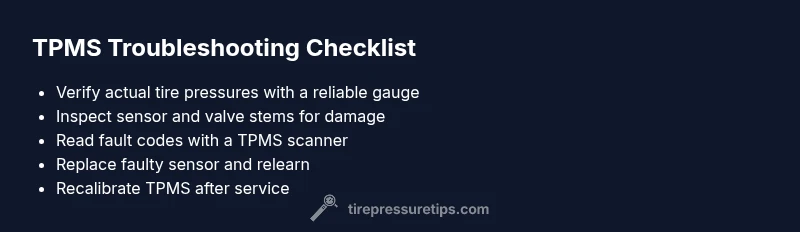
This diagnostic flow starts with basic checks and progresses to specialized testing. Start by confirming correct inflation on all tires using a reliable gauge. If the dash light remains or readings are erratic, inspect the valve stems for damage and ensure wheel accessories (valve caps, stems) aren’t leaking. If basic checks don’t resolve the issue, read the TPMS fault codes with a scan tool or dealership software. A stored fault code pointing to a specific sensor directs the next step: replace or reprogram that sensor. If codes are vague or show receiver problems, involve a professional. Always document dates of service and sensor replacements for future maintenance.
Step-by-step: testing and replacing a TPMS sensor
- Locate each TPMS sensor and verify the physical condition of the valve stem and mounting.
- Use a calibrated tire gauge to confirm that every tire meets the vehicle manufacturer’s specified pressure.
- Read fault codes with a TPMS diagnostic tool or a compatible OBD-II scanner. Note the sensor location if the code specifies one.
- Swap or replace the suspect sensor(s) and reprogram if required, following the vehicle’s service manual.
- Recalibrate or reset the TPMS after servicing to ensure the system learns the new readings.
- Roll the vehicle a short distance to allow the system to re-learn, then recheck readings with the gauge.
- If the warning persists, inspect the battery life inside the sensor or consider wheel hub electronics as the fault source.
- Schedule professional help if you’re uncomfortable performing any step or if codes indicate complex ECU issues.
Safety considerations and common mistakes to avoid
- Do not deflate tires or use tools near a rotating wheel without proper safety precautions.
- Avoid repairing a tire with a severe leak until you have replaced or repaired the tire, and the TPMS hasn’t masked underlying damage.
- Don’t ignore warning lights; a lingering TPMS fault could indicate a risk of blowout or degraded tire wear.
- Ensure compatibility of replacement sensors with your vehicle’s ECU and calibration requirements.
- Improper sensor handling can damage valve stems and wheel components; use the correct tools and follow the manufacturer’s torque specs.
Prevention: extending TPMS life and reliability
- Keep tires inflated to recommended pressure to reduce sensor strain and battery usage.
- Schedule periodic TPMS checks during regular maintenance, especially after wheel work or seasonal temperature changes.
- Use quality replacement sensors and ensure proper calibration to avoid repeat failures.
- Avoid rapid tire service changes that can disturb sensor alignment or re-learn data.
- Record sensor serial numbers and service dates for future reference.
Final checks and when to seek professional help
If your checks reveal a faulty sensor or an uncertain fault code, it’s wise to seek professional diagnosis. A certified technician can confirm sensor health, calibrate the TPMS, and replace a degraded battery if needed. Persisting warnings after all basic steps often indicate ECU or hub-level issues that require specialized equipment and diagnostic expertise.
Steps
Estimated time: 60-90 minutes
- 1
Verify basic pressures
Use a high-quality gauge to confirm that all tires are at the vehicle’s recommended pressure. This eliminates simple underinflation as the cause and sets a baseline for comparison.
Tip: Check cold tire pressures before driving to get an accurate reading. - 2
Inspect physical sensor and valve
Look for cracked stems, corroded caps, other visible damage, or signs of wheel contact that could have knocked sensors out of alignment.
Tip: Handle wheels carefully to avoid bending sensor stems. - 3
Read diagnostic codes
Connect a TPMS scanner or OBD-II tool to pull any fault codes. Note which sensor position is implicated and what the code suggests.
Tip: Some codes point to ECU communication rather than the sensor itself. - 4
Test by swapping or replacing sensor
If you have a known-good sensor or a replacement kit, install it and re-learn the system. This confirms whether the sensor was the fault.
Tip: Follow the vehicle’s manual for proper relearn procedure. - 5
Relearn and calibrate
After sensor replacement, perform the relearn procedure to teach the car which sensor is in which wheel. This is essential for accurate readings.
Tip: Some cars require dealer tools for relearn; verify before proceeding. - 6
Road test and recheck
Drive short distances to allow the TPMS to re-learn and then recheck using the gauge and the dashboard readout.
Tip: If the light returns, document the conditions and seek professional help. - 7
Document and plan next steps
Record sensor ages, service dates, and any ongoing issues for future maintenance and potential sensor replacement planning.
Tip: Replacement batteries often have a lifespan; plan early replacements. - 8
When in doubt, consult a pro
If you’re uncomfortable performing any step or codes indicate complex ECU issues, professional diagnosis is the safest route.
Tip: Professional service saves time and reduces risk of accidents.
Diagnosis: TPMS warning light on dash or erratic TPMS readings despite proper inflation
Possible Causes
- highDead or weak TPMS battery in sensor
- mediumDamaged valve stem or sensor mounting
- lowFaulty TPMS receiver or ECU communication
- mediumRecent tire service damaged the sensor or relearns failed
- lowExtreme temperature fluctuations affecting sensor data
Fixes
- easyCheck tire pressures with a reliable gauge and inflate to spec
- easyVisually inspect sensors, valve stems, and wheels for damage
- mediumUse a TPMS diagnostic tool to read fault codes and identify the faulty sensor
- hardReplace the faulty sensor or battery and reprogram/relearn as needed
- easyReset TPMS after service and allow the system to re-learn
Frequently Asked Questions
What is TPMS and what does it do?
TPMS monitors tire pressure and alerts you when levels are unsafe. It helps prevent flats and tire wear by signaling potential underinflation or system faults.
TPMS watches your tire pressure and warns you if it’s too low or if there’s a sensor problem, helping you stay safe and protect your tires.
Why is my TPMS warning light on even after inflating tires?
If the light stays on after inflation, the sensor or system may be faulty, or a recent tire service didn’t reset the system. Check for codes and reset as needed.
If inflating tires doesn’t turn the warning off, the fault is likely in the sensor or the system; you may need reset or replacement.
Can a dead TPMS battery cause warnings?
Yes, many sensors rely on a small battery. A dead battery can trigger warnings or sensor failure.
A dying battery in the sensor is a common cause of TPMS faults.
Is it safe to drive with a faulty TPMS sensor?
It’s not ideal to rely on TPMS readings if the sensor is faulty. Drive cautiously and have the system checked as soon as possible.
It’s not safe to ignore a TPMS fault; get it checked to avoid unsafe driving conditions.
How much does sensor replacement cost?
Replacement costs vary by vehicle and labor. A shop can advise on sensor or battery replacement options and timelines.
Costs vary; check with a qualified shop for an accurate estimate.
How long do TPMS sensors last?
Most TPMS sensors last several years, but battery life and exposure to road conditions affect reliability.
Sensors last years, but batteries wear out with time and use.
Watch Video
What to Remember
- Verify pressures with a gauge before diagnosing.
- Differentiate sensor faults from underinflation quickly.
- Sensor batteries and wiring are common failure points.
- Reset/relearn after service to ensure accurate readings.
- Consult a professional if the warning persists after basic checks.