TPMS Problems: Urgent Troubleshooting Guide
Urgent guide to diagnosing and fixing problems with tire pressure sensors (TPMS). Learn common causes, step-by-step fixes, safety tips, and when to seek professional help.


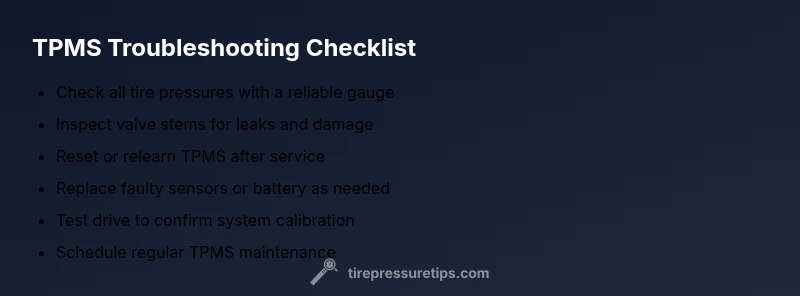
Most problems with tire pressure sensors (TPMS) begin with a weak battery, a leaking valve stem, or a damaged sensor that fails to transmit data. The fastest fix is to inflate tires to the recommended PSI, reset the TPMS if your car supports it, and inspect for obvious leaks; if warnings persist, seek professional diagnostic help.
Common TPMS Problems and Quick Checks
TPMS warnings can be alarming, but many times the root cause is not a failed sensor. According to Tire Pressure Tips, the most frequent culprits are low tire pressure after temperature swings, a dead or dying sensor battery within a wheel, or a damaged sensor that cannot communicate with the car's computer. Before blaming the TPMS module, start with the simplest checks you can perform in minutes. Use a reliable tire pressure gauge to verify each tire against the vehicle's door jamb sticker or owner's manual. If a tire reads below spec by even a few PSI, inflate it and recheck. If the light stays on after inflation and a reset (if available) or after several minutes of driving, the problem may be sensor-based. In that case, you should plan for a deeper inspection or professional service. Don't ignore persistent warnings; continuing to drive with incorrect pressures can harm handling and fuel economy.
Differentiating Sensor Faults from Simple Tire Issues
Not every TPMS warning means a faulty sensor. Temperature swings, recent tire rotations, or slow leaks can trigger the light even when sensors are healthy. Start by confirming uniform inflation across all tires and checking for slow leaks around valve stems. If pressures are correct and the light remains, assess sensor-related possibilities: dead battery, damaged sensor, or jammed relearn procedure. Remember that some vehicles require a specific relearn sequence after tire service; skipping this step can leave the warning active. By keeping a checklist handy, you can separate sensor faults from ordinary tire maintenance needs and avoid unnecessary sensor replacements.
Checking for Leaks and Valve Stems
Valve stems are common culprits of TPMS alerts. A corroded or cracked valve stem can cause slow leaks that drop pressure below the threshold, triggering the TPMS warning. To diagnose, inspect each valve stem for sign of cracking, residue, or looseness. Apply a soapy water solution and watch for continuous bubbles, which indicate a leak. Don’t forget the stem caps—missing caps can allow dirt inside and interfere with sealing. If you find a leak, tighten or replace the stem as needed and re-test with a gauge. After inflation, monitor for several days to ensure stability.
TPMS Reset and Relearning Procedures
If tires are inflated to spec but the TPMS light stubbornly stays lit, a reset or relearn often resolves the issue. Vehicle manufacturers provide specific steps that may involve turning the ignition, pressing a reset button, or using the driver information center. Because relearn procedures vary by model and whether you have indirect or direct TPMS, consult the owner's manual or dealer resources for the exact sequence. After a successful relearn, drive for a few miles to let the system recalibrate. If the light returns, it’s typically a sensor-related fault requiring inspection.
Sensor Replacement and Battery Life
TPMS sensors live in the wheel and can fail due to battery depletion, corrosion, or impact damage. While some sensors are designed to last many years, others may fail sooner due to harsh road conditions or frequent temperature fluctuations. If replacement is necessary, it’s usually best to replace sensors in pairs or all four at once to ensure uniform performance. Remember to use wheel balancing and a proper relearn procedure after installation. A trained technician can confirm sensor health with a diagnostic scan and verify communication with the vehicle’s ECU.
Safety, Maintenance, and Prevention
Regular tire maintenance is essential to avoid TPMS warnings. Check tire pressures at least monthly and after temperature shifts; keep a reliable digital gauge in your car for quick checks. Maintain valve stems and ensure TPMS sensors are clean and free of corrosion. When you service tires, insist on a TPMS relearn if sensors or wheels were disturbed. Finally, schedule periodic TPMS system diagnostics as part of your vehicle’s routine maintenance to reduce the risk of unexpected warnings on the road.
Steps
Estimated time: 45-60 minutes
- 1
Verify tire pressures with a gauge
Check all tires, including the spare if applicable, using a reliable gauge. Compare readings to the door jamb sticker and the owner's manual. Note any tire reading low.
Tip: Use the same gauge for consistency and take readings on cool tires. - 2
Inflate to the recommended PSI
Inflate each tire to the vehicle's specified PSI. Do not rely on memory; check the sticker again after inflation to confirm accuracy.
Tip: Inflation is most accurate when tires are cool (driven less than 1-2 miles since parked). - 3
Inspect valve stems and leaks
Check each valve stem for damage or corrosion. Apply soap solution and look for bubbles indicating a leak. Tighten or replace as needed.
Tip: Do not over-tighten valve caps; they prevent dust ingress and small leaks. - 4
Reset or relearn TPMS
If your vehicle supports TPMS reset, follow the manual steps to relearn sensors. Drive 5-10 miles to allow the system to recalibrate.
Tip: If you’re unsure, consult the dealer or a technician to perform the relearn. - 5
Assess sensor health
If the light returns after a reset, inspect the wheel for damaged sensor or battery failure. Consider a diagnostic scan to identify the exact sensor issue.
Tip: A professional scan can isolate whether the problem is sensor, module, or wiring. - 6
Plan replacement if necessary
If multiple sensors fail or one reads weak, plan sensor replacement and a relearn. Ensure you choose compatible sensors for your vehicle.
Tip: Warranty may cover sensor replacements if the vehicle is under coverage.
Diagnosis: TPMS warning light on dashboard despite tires appearing to be inflated to spec
Possible Causes
- highLow tire pressure in one or more tires
- mediumDead or faulty TPMS battery in a sensor
- lowDamaged TPMS sensor or sensor wiring
Fixes
- easyInflate all tires to the recommended PSI and recheck
- easyPerform TPMS reset/relearn per vehicle manual
- mediumReplace TPMS sensor or battery; seek professional service if unsure
Frequently Asked Questions
What is TPMS and why is it important?
TPMS stands for Tire Pressure Monitoring System. It alerts you when a tire's pressure drops below a safe threshold, helping you avoid unsafe driving conditions and potential tire damage.
TPMS alerts you when a tire is underinflated, helping you stay safe on the road.
Why does the TPMS light come on even when tires seem inflated?
The warning can be triggered by underinflation, a bad sensor battery, or a damaged sensor. Check pressure first, then inspect sensors and perform a relearn if needed.
The light can come on due to underinflation or a faulty sensor. Check pressures and reset if needed.
How often should TPMS sensors be replaced?
Sensor life varies by driving conditions and vehicle model. If a sensor or its battery fails, replacement is usually required, often with a relearn.
Sensor life can vary; replace a failing sensor and relearn as needed.
Can temperature changes trigger TPMS warnings?
Yes. Temperature shifts can affect tire pressure, potentially triggering TPMS alerts even when tires read acceptable on a gauge.
Temperature changes can cause pressure shifts and trigger TPMS warnings.
Is it safe to drive with a TPMS warning?
If the warning indicates underinflation, reduce speed and follow up promptly with pressure checks and repairs. If the warning persists, get the vehicle inspected.
Drive cautiously and seek a fix; don’t ignore a TPMS warning.
Should I trust a tire gauge over TPMS readings?
Use the gauge to verify pressures; TPMS is a valuable safety layer but can be fooled by leaks or sensor faults. Treat discrepancies as a cue to inspect further.
Use a gauge to confirm pressure and verify TPMS readings with inspection.
Watch Video
What to Remember
- Check pressures first; TPMS often flags underinflation.
- Rule out leaks before replacing sensors.
- Follow vehicle-specific relearn steps to reset TPMS.
- Schedule sensor replacement if warnings persist.