Tire Pressure Warning Light Troubleshooting and Fixes
Urgent guide to diagnose and fix the tire pressure warning light on your dashboard. Learn quick checks, TPMS basics, and safe prevention tips for 2026.


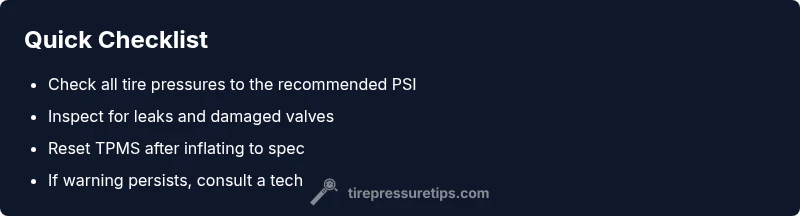
The tire pressure warning light usually signals that one or more tires are underinflated or that the TPMS sensor has a fault. Start by checking all tires with a gauge, inflating to the vehicle’s recommended PSI, and rechecking. If the light stays on after topping up, inspect for slow leaks or damaged valves, and consider resetting the TPMS.
What the Tire Pressure Warning Light Really Means
The tire pressure warning light on your dashboard is part of the vehicle's TPMS - tire pressure monitoring system. When it lights up, it is telling you that a tire's air pressure has fallen outside the acceptable range, or that the monitoring system detects a fault. For drivers, this is a safety signal: underinflated tires can affect handling, braking distance, and even tire wear. According to Tire Pressure Tips, the most common reason is underinflation, but you should not dismiss sensor faults or calibration errors as potential culprits. In cold weather, air pressure can drop by about 1 PSI for every 10 degrees Fahrenheit, so a warning light can trigger more readily in winter. Always approach the warning light as actionable intelligence, not alarm.
Primary Causes Behind the Warning Light
There are several reasons the tire pressure warning light can come on. The most frequent cause is underinflation in one or more tires. A slow leak from a nail, valve stem, or bead seal can drop pressure gradually until the TPMS notices. A damaged or failing TPMS sensor or a discharged battery in the sensor itself can also trigger the light. Finally, a recent tire rotation or replacement can lead to calibration mismatches if the TPMS wasn't reset properly. The Tire Pressure Tips team notes that temperature changes, road salt, and aging sensors all contribute to false alarms.
Quick Checks You Can Do Right Now
Before you panic, perform a quick sanity check. Park on a level surface away from direct heat. Check the tire pressures on all four tires (including the spare) with a reliable gauge, and compare to the door jamb placard or owner’s manual values. If a tire is noticeably low, inflate it to spec and recheck after a short drive. If the light persists, inspect tires for visible damage and listen for hissing sounds indicating a leak. In many cases, the fix is simply topping up air and resetting the TPMS after inflation. If you drive with an underinflated tire, you risk blowouts or tire failure—so take action fast.
How TPMS Works and Why It Can Trigger
TPMS uses sensors inside each tire to monitor pressure and transmit data to the vehicle's computer. The system can trigger for low pressure, rapid pressure loss, or a system fault. In older vehicles, TPMS resets can be required after inflating tires or rotating wheels. Modern systems may automatically recalibrate after a few miles of driving, but many require a manual reset using a dedicated menu. If the light stays on despite correct inflation, suspect a faulty sensor, dead battery, or a repeating leak that the system cannot ignore. The Tire Pressure Tips guidance emphasizes checking battery health of sensors where possible and replacing faulty components promptly.
Diagnostic Flow You Can Follow at Home
To avoid unnecessary trips to the shop, use a simple diagnostic flow. Start with the easiest checks: confirm tire pressures are correct, inspect for obvious leaks, and reset the TPMS after inflation. If the warning remains, move to a more thorough check: evaluate each tire for leaks with soapy water, check valve stems for damage, and measure the TPMS battery voltage if you can. If a sensor is dead or a leak is suspected, you may need professional service to repair or replace components. The aim is to identify whether the problem is related to inflation, leakage, or sensor hardware.
Step-by-Step Fix: Low Tire Pressure
- Locate the recommended tire pressure values for your vehicle from the door jamb placard or owner’s manual. 2) Use a precise gauge to measure all tires when cold. 3) Inflate each tire to the recommended PSI, checking for consistent readings across wheels. 4) Drive 1-2 miles to let the system re-check, then verify the light is off. 5) If the light remains, perform a TPMS reset using the vehicle’s menu or dedicated button. 6) If the warning persists, seek professional help for a sensor or calibration issue.
Replacing or Recalibrating a Faulty TPMS Sensor
A faulty TPMS sensor can keep the warning light on even when tire pressures are correct. Sensors die over time due to battery depletion, water intrusion, or physical damage. Recalibration or sensor replacement may be required, often by a dealer or tire shop with the proper scanning tool. In many cases, smart TPMS systems require reprogramming to match the vehicle's VIN. The Tire Pressure Tips team recommends checking sensor function and battery status during every tire service.
Safety Precautions and Common Mistakes
Never drive long distances on an underinflated tire; this can cause heat buildup and blowouts. Do not inflate beyond the recommended maximum PSI to “fix” the light—overinflation can cause a harsher ride and uneven wear. Avoid using the tire as a lever to open a tire valve stem, and never ignore the warning in poor weather or at night. Always use a calibrated gauge and verify readings twice.
Prevention and Maintenance to Avoid False Warnings
Regularly check tire pressures at least once a month and before long trips. Temperature changes, weather, and load can shift pressures quickly. Consider a tire pressure gauge with a digital readout for accuracy. If your vehicle has a TPMS warning light, consider scheduling a periodic TPMS inspection along with tire maintenance. Tire Pressure Tips recommends keeping a spare tire pressure check kit in the trunk for quick reference.
Real-World Scenarios and Takeaways
In real life, you may see the tire pressure warning light after a cold night or after a long highway trip. A common scenario is a slow leak from a nail or curb impact that gradually drops pressure. In many cases, inflating to the correct level and performing a TPMS reset resolves the warning quickly. If a warning recurs after a repair, it’s usually a sensor issue rather than a tire problem. These practical tips come from Tire Pressure Tips and are aimed at helping you stay safe on the road.
Steps
Estimated time: 30-60 minutes
- 1
Find the recommended tire pressure
Look at the door jamb placard or owner’s manual to determine the correct PSI for front and rear tires.
Tip: Use a reliable gauge; cold tires give the most accurate readings. - 2
Check all tires evenly
Measure each tire with a digital gauge and record readings to compare with the recommended values.
Tip: Don’t forget the spare tire; it may be monitored by TPMS in some vehicles. - 3
Inflate to spec
Add air gradually and recheck until you reach the exact recommended PSI on all affected tires.
Tip: Avoid overinflating; small increases can impact handling. - 4
Drive to recheck TPMS
Take a short drive (1-2 miles) to allow the system to re-evaluate the tire pressures.
Tip: If your light stays on, you may need to reset TPMS. - 5
Reset TPMS if needed
Use the vehicle’s TPMS reset procedure or a diagnostic tool to reinitialize the system.
Tip: If unsure, consult the owner’s manual or a technician. - 6
Assess if the light remains
If the warning persists after steps 1-5, inspect for leaks or sensor faults and seek professional help.
Tip: Persistent warnings warrant a professional TPMS check.
Diagnosis: Dashboard tire pressure warning light is on while driving
Possible Causes
- highOne or more tires are underinflated
- mediumTPMS sensor fault or calibration issue
- lowRecent tire rotation or replacement causing TPMS code mismatch
Fixes
- easyCheck all tire pressures with a gauge and inflate to the recommended PSI
- mediumInspect tires for leaks, punctures, or damaged valve stems and repair as needed
- easyReset TPMS after inflation or have a professional calibrate or replace faulty sensors
Frequently Asked Questions
What does the tire pressure warning light look like?
Typically a flat-tire icon or the letters TPMS. It can illuminate in yellow or red depending on the vehicle. If it stays on, check tire pressures and TPMS health.
The tire pressure light looks like a tire with an exclamation mark. Check pressures and TPMS if it stays on.
Can I reset TPMS myself?
Many vehicles allow a manual TPMS reset via the car's menu or a button. If you recently inflated tires to spec, a reset can help the light go off.
Yes, many cars let you reset TPMS from the menu or a button after inflating to spec.
Why does the warning light come on when temperatures drop?
Cold weather lowers tire pressure, triggering TPMS. Recheck and inflate as needed after allowing tires to warm up.
Cold temperatures lower air pressure, which can trigger TPMS. Re-check when warm.
How often should I check tire pressure?
Check at least once a month and before long trips. Temperature changes and loads can cause pressure shifts.
Check tire pressure at least monthly, especially before trips.
Is it safe to drive with the warning light on?
In most cases short trips with correct pressure are okay, but driving on underinflated tires risks blowouts and poor handling.
Light on? It can be safe briefly, but get to a gas station to fix pressure.
What should I do if the light stays on after inflation?
If inflating to spec doesn't extinguish the light, there may be a faulty sensor or a slow leak. Seek professional TPMS service.
If it stays on after inflation, get it checked by a pro.
Watch Video
What to Remember
- Check tires when cold, not hot
- Inflate to vehicle spec, then reset TPMS
- Don't override the light with overinflation
- Sensor faults require professional service
- Regular maintenance reduces false warnings