Why the Tire Pressure Light Is On: Causes, Fixes, Prevention
Urgent guide to the reasons why tire pressure light is on, how to diagnose low pressure and TPMS faults, step-by-step fixes, safety tips, and prevention for reliable tires in 2026.


The tire pressure light usually means one or more tires are underinflated, or the TPMS sensor detected a change. Quick fix: check all tires with a reliable gauge, inflate to the recommended pressure, and recheck. If the light stays on, inspect for leaks or damaged TPMS sensors and consider professional service if needed.
Why the Tire Pressure Light Is On
Understanding the tire pressure light is essential for safe driving. In this guide, we explain the reasons why tire pressure light is on and how to fix it quickly. According to Tire Pressure Tips, the light is triggered when the TPMS detects a pressure deviation beyond its threshold. The Tire Pressure Tips team found that most drivers encounter this warning after a noticeable drop in pressure due to weather or a small leak. The quick fix is to calm your nerves and start with a careful check of all tires and the system. While it’s tempting to assume a single tire is to blame, the TPMS monitors all four corners and even the spare in many vehicles, meaning the culprit could be anywhere.
Safety note: don’t ignore the light. Driving with significantly underinflated tires increases heat buildup, reduces traction, and accelerates wear. If you notice a tire visibly low or has an obvious puncture, pull over safely, avoid hard braking, and address the issue before continuing your trip.
The Most Common Causes
There are several plausible reasons why the tire pressure light comes on. The most frequent is underinflated tires due to regular wear, weather changes, and slow leaks:
- Underinflation in one or more tires from everyday driving and seasonal temperature shifts
- Temperature changes that lower air pressure inside tires
- Slow punctures or bead leaks that reduce air over time
- TPMS sensor fault or dead sensor battery leading to erroneous readings
- Recent tire rotation, replacement, or repairing a tire that requires sensor relearning
Less common but possible causes include a damaged valve stem or a misread sensor after a wheel service. Understanding these possibilities helps you prioritize checks and avoid unnecessary replacements.
Quick Safety Checks You Can Perform
Before you dive into diagnosis, park on a flat surface, engage the parking brake, and turn off the engine. Grab a reliable tire pressure gauge and a flashlight if needed. Check the air pressure of all four tires (and the spare if your vehicle supports TPMS for it) when the tires are cold. Look for obvious issues like bulges, cuts, or objects lodged in the tread. If any tire appears dangerously low or damaged, do not drive—call for roadside assistance or have it repaired on the spot if you can do so safely. Remember: the goal is to confirm whether the warning is tied to underinflation, and not to chase a mystery sensor fault that could mimic a safe tire.
How TPMS Works and What Triggers It
TPMS sensors monitor tire pressure and report deviations to the vehicle’s computer. When pressure falls below a manufacturer-defined threshold, a warning light illuminates. Temperature swings, new tires, or sensor battery wear can cause the light to blink or stay on even if tires appear fine. In some cases, the warning is triggered after a rapid change caused by a single event, such as a long trip in cold weather or heavy load conditions. This section explains the logic behind the light and how to interpret it in real-world scenarios. According to Tire Pressure Tips analysis, most episodes of warning lights are tied to underinflation or slow leaks rather than outright sensor failure, though both occur with some frequency.
Diagnostic Flow Overview
A logical, stepwise approach helps you pinpoint the cause without guessing:
- Symptom check: Light on or flashing, any tire look low?
- Immediate action: Verify with gauge, inflate to manufacturer spec
- Intermediate check: Look for leaks or damaged components
- TPMS-specific checks: Relearn sensors if applicable
- Final action: If unresolved, seek professional service
This structured approach reduces safety risks and ensures you’re addressing the right problem.
Step-by-Step Fix for the Most Common Cause (Underinflation)
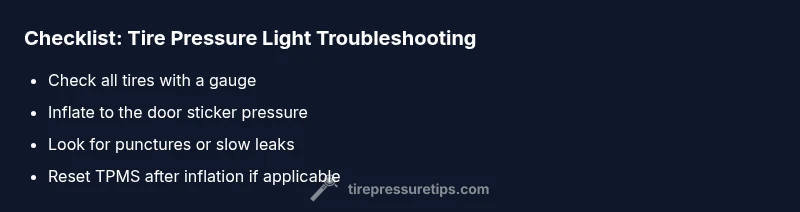
- Park on a level surface and turn off the engine. 2) Locate the door jamb sticker for recommended cold tire pressure and grab a quality gauge. 3) Check all tires including the spare if applicable and note any that are low. 4) Inflate each tire to the recommended pressure and recheck with the gauge. 5) Drive a short distance to let the TPMS relearn if your vehicle supports automatic relearn; otherwise, perform the relearn procedure per the owner’s manual. 6) Reassess the TPMS light; it should turn off if inflation and relearning were successful. 7) If the light remains on, inspect tires for punctures or leaks and consider replacing or repairing the affected tire. 8) When in doubt, seek professional help. Tip: never over-inflate beyond the sticker value, and always double-check the gauge accuracy.
Estimated time: 30-60 minutes.
TPMS Sensor Issues and Relearns
If after inflating you still see the light, TPMS-related problems could be at fault. Common sensor issues include a dead battery, corrosion on the wheel sensor, or a loose connection. Some cars require a manual relearn procedure at the steering wheel controls, a USB tool, or a dedicated button in the glove box. Relearn can be needed after tire rotation, replacement, or sensor replacement. If your vehicle’s manual specifies a relearn process, follow it exactly to prevent misreads. If you have a long list of symptoms or you’re unsure, a professional service is the safest option.
Safety, Warnings, and When to Seek Help
Safety is the priority. Do not ignore a TPMS light, especially if you notice vibration, pulling, or a tire visibly low. Temporary driving with underinflated tires can cause overheating, tread separation, and blowouts. If you’re unsure or the light remains after inflation and relearn attempts, stop driving and contact roadside assistance or a tire shop. Regular maintenance and timely checks reduce the likelihood of sudden failures. Endurance drivers and fleet operators should adopt a proactive maintenance schedule to mitigate risk.
Prevention and Maintenance
To minimize the chances of a future TPMS warning, adopt a simple routine: check tires monthly or after long trips, inspect for damage, ensure the door jamb sticker pressure is followed, and maintain a consistent inflating habit with a reliable gauge. Temperature changes between seasons can affect pressure, so adjust before driving in extreme weather. Replace TPMS sensors at manufacturer intervals or when a failure is detected. Routine maintenance reduces risk and improves fuel efficiency and tire longevity.
Quick Pull-Checklist Before Driving Away
- Confirm all tires are within the recommended range
- Ensure TPMS light is off after a relearn or adjust procedure
- Inspect for visible damage or leaks
- Take a short, controlled test drive to verify safety
Steps
Estimated time: 30-60 minutes
- 1
Park on level ground and gather tools
Ensure safety by parking on a flat surface; set the parking brake before you start. Gather a reliable tire gauge, a flashlight, and the vehicle’s manual for reference. This ensures you’re prepared to measure accurately and follow the correct procedure for your model.
Tip: Use a calibrated gauge for accuracy. - 2
Check all tires against the door sticker
Locate the recommended cold tire pressure on the driver’s door jamb sticker or in the owner’s manual. Check each tire, including the spare if applicable, when tires are cold. Note any tire that’s clearly low or visibly damaged.
Tip: Always compare to the sticker value, not last inflated pressures. - 3
Inflate tires to recommended pressure
Inflate each tire to the manufacturer-recommended level using a reliable gauge. Do not exceed the maximum pressure shown on the tire sidewall. Recheck after inflation to confirm accuracy.
Tip: Inflate in small increments and recheck frequently. - 4
Recheck all four tires and the spare
Take another measurement after inflation to ensure all tires meet the spec. If a tire won’t hold pressure, inspect for slow leaks or punctures and address immediately.
Tip: A leak can appear only after pressure changes; verify with a soap test if needed. - 5
Reset or relearn the TPMS if required
Some vehicles auto-relearn after driving; others need a manual procedure. Follow the owner’s manual to replay the relearn sequence and confirm TPMS data is accurate.
Tip: If you’re uncertain, a shop can perform the relearn quickly. - 6
Test drive to confirm the light status
Take a short, moderate drive to allow TPMS to update. Watch for any new warnings and listen for changes in ride or handling that might indicate a tire issue.
Tip: If the light returns, don’t push the drive; pull over safely and reassess. - 7
Inspect for damage or leaks
If any tire appears defective or continues to lose pressure, inspect for punctures, cuts, or bead leaks. Repair or replace the tire as required by safety standards.
Tip: Nails near the tread edge are common leak culprits. - 8
Call for professional help if unresolved
If you cannot identify or fix the issue, contact a tire service or road assistance. A professional can run a precise check and replace sensors if needed.
Tip: Safety first—avoid driving on faulty tires.
Diagnosis: Tire pressure light on
Possible Causes
- highUnderinflated tire(s)
- mediumTPMS sensor fault or dead battery
- mediumTemperature drop causing pressure loss
- lowSlow puncture or leak
- lowSensor relearn required after tire rotation or replacement
Fixes
- easyCheck all tires with a gauge and inflate to the recommended pressure
- easyInspect tires for punctures or leaks and repair or replace as needed
- mediumReset or relearn TPMS according to the vehicle manual; replace any faulty sensor batteries
- mediumIf the light persists, seek professional tire service for a precise diagnosis
Frequently Asked Questions
What does the tire pressure light really mean?
The tire pressure light indicates the TPMS detected a potential underinflation or a sensor fault. Start by checking all tires with a gauge and inflating to the recommended level, then inspect for leaks if the light remains.
The tire pressure light usually means a tire is underinflated or the TPMS sensor has a fault. Check the tires with a gauge and inflate to spec, then inspect for leaks if the light stays on.
Should I drive with the light on?
If the light is on, avoid long trips and pull over safely to check your tires. Short drives to a nearby station are acceptable if the tires are within a safe range and there are no obvious issues.
Don't drive long distances when the light is on. If it's safe, pull over and check the tires or call for help.
How do I reset TPMS after inflating?
Many vehicles relearn automatically after driving a few miles; others require a manual procedure in the instrument cluster or using a reset button. Check your owner’s manual for exact steps.
Most cars relearn automatically after a short drive, but some need a manual reset—check your manual for steps.
What if one tire has a puncture?
Repairable punctures can be fixed if the tire rating allows. If not, replace the tire. Any ongoing air loss may keep the TPMS light on until the tire is repaired or replaced.
If you have a puncture, get it repaired if possible. If not, replace the tire and recheck the TPMS.
Can temperature changes trigger the light?
Yes. Cold weather lowers tire pressure, which can trigger the TPMS warning. Check tires after temperature changes and adjust as needed.
Yes, cold weather can trigger the TPMS light. Check and adjust tire pressure after temperature changes.
When should I replace a TPMS sensor battery?
TPMS sensors can last several years, but battery life varies by vehicle and use. If the light persists after inflating and relearning, sensor replacement may be needed.
Sensor batteries last years, but if the light sticks around after reset, the sensor may need replacement.
Is driving with low tires dangerous?
Yes. Underinflated tires overheat, wear faster, and can fail suddenly. Stop driving if the tire looks unsafe and address the issue immediately.
Driving with low tires is risky. Stop and fix the pressure safely.
What should I do if the light comes back after fixes?
If the light returns after inflating and relearning, there may be a slow leak, sensor fault, or other issue. Seek professional service for a definitive diagnosis.
If the light returns, there could be a leak or sensor problem—get it checked by a pro.
What to Remember
- Check all tires and inflate to spec when the light comes on
- TPMS issues require relearn or sensor service
- Safety comes first; stop and inspect if anything looks unsafe
- Prevent future warnings with routine checks and maintenance