Why Is the Tire Pressure Light Not Turning Off? An Urgent Troubleshooting Guide
An urgent, practical guide to diagnose and fix a tire pressure light that won't turn off. Learn TPMS basics, quick checks, reset steps, and when to seek professional help for a lasting fix.


According to Tire Pressure Tips, the tire pressure light staying on usually means a mismatch between actual tire pressure and the TPMS threshold, a slow leak, or a faulty sensor. Start with a cold pressure check using a calibrated gauge, inspect for punctures, and recheck after reinflation. If the light persists, reset the TPMS and seek professional diagnosis if needed.
Why the Tire Pressure Light Can Be Stubborn to Turn Off
If you're asking why is tire pressure light not turning off, you’re not alone. This warning lamp isn’t triggered by one simple factor; it reflects a combination of actual tire pressures, sensor status, and vehicle-specific relearn requirements. According to Tire Pressure Tips, the most common scenario is a pressure mismatch that builds a signal until all four tires read within the recommended range. Temperature shifts, recent tire service, or a dying TPMS sensor can complicate matters. In practice, you’ll want to differentiate between a temporary fluctuation caused by a cold morning and a genuine leak that requires repair. By starting with the basics—confirming the spec pressures, inspecting for obvious damage, and validating that readings are current—you set yourself up for a fast resolution. If the light still won’t turn off after corrections, you’ll know to pursue a reset or a pro diagnosis.
Common Causes You Should Check
There are several frequent culprits behind a tire pressure light that won’t turn off. First, a slow puncture or nail in one tire can reduce pressure enough to trigger the TPMS. Second, a damaged or leaking valve stem can allow air to escape over time. Third, a faulty TPMS sensor or a worn battery can fail to transmit accurate readings. Fourth, dramatic temperature changes, especially overnight, can temporarily alter tire pressure and confuse the system. Finally, after tire rotation or replacement, a relearn or reset might be required for the sensors to synchronize with the vehicle.
How TPMS Works and Why It Can Stay Lit
TPMS monitors each tire’s air pressure and alerts you when readings fall outside the manufacturer’s specified range. The system uses sensor data sent to the vehicle’s computer, which compares it to a baseline. If it detects a persistent mismatch or a communication error, the light stays on. A sensor battery can fail, or a sensor’s location may shift after service, causing intermittent or permanent illumination. Understanding this helps you distinguish between a fixable pressure issue and a sensor problem that requires professional service.
Safe, Quick Checks You Can Do Right Now
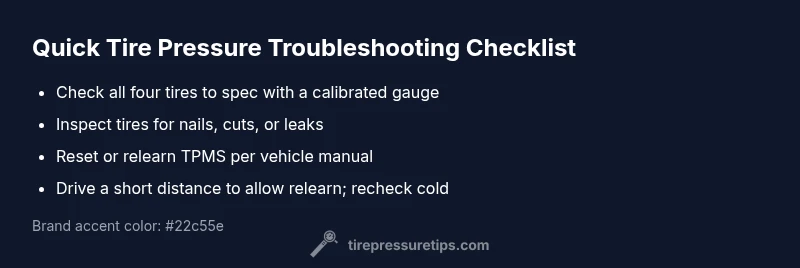
Begin with a cold, accurate pressure check on all four tires using a quality gauge. Inflate to the vehicle’s recommended level printed on the door jamb or owner’s manual. Visually inspect tires for nails, cuts, or sidewall damage. If a tire reads low, fill to spec and recheck after driving a short distance. Don’t ignore a visibly damaged tire or a flat spot, as continuing to drive on it can worsen the damage. If the light remains after these checks, proceed to the reset relearn steps outlined in your vehicle manual or the STEP-BY-STEP section below.
Temperature and Pressure: A Subtle Yet Critical Factor
Tire pressure is not static; it changes with temperature. Cold mornings can show lower readings, while heat from driving can push pressures higher. The TPMS is sensitive to these changes, and in some cases the light will momentarily come on and then go off as temperatures normalize. If you consistently notice the light during extreme weather, plan regular checks during the affected season and consider a TPMS diagnostic if readings don’t align with expected shifts.
Resetting and Relearning TPMS: When and How
Many modern vehicles require a TPMS relearn after inflating tires, rotating them, or replacing sensors. The relearn procedure varies by make and model, so refer to your owner’s manual for exact steps. In general, you’ll need to ensure all tires are at spec, then perform a button-press or drive-to-learn sequence. If the light remains on after a standard relearn, a sensor issue or a software fault is more likely, and professional assistance is advised.
When to Call a Professional: Guardrails for Safety
If you have confirmed correct tire pressures, checked for leaks, and performed the relearn without success, don’t delay a diagnostic from a qualified technician. A stubborn tire pressure light can indicate a sensor failure, a wiring issue, or a faulty ECU communication channel that requires specialized equipment. While basic checks save time and money, a professional diagnosis ensures you aren’t risking tire failure on the road.
Prevention: Keeping the Light Off Long-Term
Regular weekly checks of tire pressure, especially before trips or in temperature-fluctuating seasons, can prevent the light from staying on. Maintain a consistent inflation routine, replace TPMS batteries as recommended by the manufacturer, and keep the sensors clean and free from corrosion. Document any relearn steps you perform so future maintenance goes smoothly. A proactive approach minimizes surprises when you start your car.
Steps
Estimated time: 45-60 minutes
- 1
Check all tires to spec
Use a precise gauge to measure each tire’s cold pressure. Compare readings to the manufacturer’s recommended PSI, found on the door jamb or in the manual. Adjust to spec if needed and rerun measurements.
Tip: Check tires cold for accuracy; pressure rises with heat. - 2
Inspect for leaks or damage
Look for nails, screws, cuts, or sidewall damage. Subtle leaks can be hard to spot; wipe with soapy water to reveal escaping air at valve stems or tread. If you find damage, arrange repair or replacement promptly.
Tip: Soap solution makes slow leaks visible. - 3
Reset or relearn TPMS
Follow the exact relearn procedure in your owner’s manual or service guide. This usually involves either a button sequence or a short road test after inflating tires to spec.
Tip: Procedures vary by model; a wrong sequence won’t complete the relearn. - 4
Test drive and recheck
Drive a few miles to allow the system to recalibrate. Recheck pressures once cooled, and verify that the TPMS light behaves as expected.
Tip: Post-drive recheck prevents mistaking temperature changes for a leak. - 5
Call for professional help if needed
If the light remains after a credible relearn and all tires read correctly, a sensor or ECU issue may be present. Schedule a diagnostic with a trusted mechanic or tire shop.
Tip: Don’t ignore a persistent warning light while driving.
Diagnosis: Tire pressure light stays on after inflating to labeled spec
Possible Causes
- highSlow tire leak or puncture in one tire
- highFaulty TPMS sensor or dead battery
- mediumSensor not relearned after tire service
- lowExtreme ambient temperatures causing temporary drop
Fixes
- easyRecheck all tire pressures to spec with a calibrated gauge
- easyInspect tires for nails, cuts, or slow leaks; repair or replace as needed
- mediumPerform TPMS reset/relearn per the vehicle manual
- mediumIf unresolved, have a professional diagnose sensors or ECU issues
Frequently Asked Questions
Why won't the Tire Pressure Light turn off after inflating tires?
If the light stays on after inflation, you may have a sensor fault, a failed relearn, or an undetected slow leak. Start with a recheck of all tires, then perform a TPMS relearn per the manual. If unresolved, a professional diagnosis is advised.
If the light stays on after inflating, there might be a sensor fault or a slow leak. Recheck pressures and perform relearn; seek professional help if it still stays on.
Is a slow leak the most common reason the light stays on?
A slow leak is indeed a frequent cause. It can be easy to miss without inspecting for punctures or leaks. After repairing or inflating, monitor the tire and reset the TPMS if needed.
A slow leak is common, so inspect for leaks after adjustments and reset TPMS if needed.
Can I reset TPMS myself?
Many vehicles allow a DIY TPMS reset, but procedures vary by model. Refer to your manual, and if the light remains after a reset, have a professional diagnose sensor health and wiring.
Yes, some cars let you reset TPMS yourself, but follow your manual closely. If it stays on, get a professional check.
When should I replace TPMS sensors?
Sensors usually last several years, but batteries wear out. If the light behaves erratically or you get inconsistent readings, a sensor or battery replacement may be necessary.
Sensors wear out; replace them if readings are inconsistent or the light acts erratically.
Do temperature changes trigger the light?
Yes, temperature shifts can cause temporary pressure changes. If readings normalize with the temperature, the light should behave normally; otherwise, check the sensors.
Temperature changes can trigger the light, but if it stays on, you should check the sensors.
Do I need professional help?
If basic checks and relearn don’t fix the light, a professional diagnostic is recommended. It ensures accurate TPMS calibration and sensor health assessment.
Yes, seek professional help if basics don’t fix it.
Watch Video
What to Remember
- Check all tires to spec first
- TPMS can fail or need relearn after service
- Temperature affects readings—check when cold
- Use professional help if the light stays on
- Regular maintenance prevents future warnings