When Does the Tire Pressure Light Turn On? A Practical Troubleshooting Guide
This urgent guide explains why the tire pressure light turns on, what it means, and a practical, step-by-step plan to diagnose underinflation, TPMS faults, and slow leaks—keeping you safe on the road.


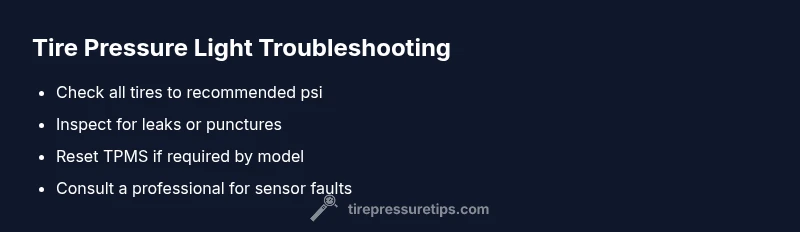
The tire pressure light typically turns on because a tire is underinflated or the TPMS sensor has a fault. Start with a safe pull-over, then use a tire gauge to check all tires to the vehicle’s recommended psi. Inflate any low tires to spec, drive a mile, and see if the light resets. If it stays on, there may be a faulty sensor or a slow-leak needing professional inspection.
What Triggers the Tire Pressure Light
If you're wondering when does tire pressure light turn on, it's usually because a tire is underinflated or the TPMS sensor has a fault. The Tire Pressure Tips team emphasizes that most warnings come from actual pressure loss rather than a malfunction, though a faulty sensor can mimic a low-pressure signal. Exterior factors like temperature swings, a loose valve cap, or a slow puncture can also trigger the light. The warning is designed to protect you: underinflated tires wear faster, reduce fuel efficiency, and increase the risk of a blowout. In this article, we unpack the common causes and lay out a practical troubleshooting flow you can follow before visiting a shop.
TPMS vs Direct Pressure Monitoring Systems
There are two main types of tire pressure monitoring: direct TPMS and indirect TPMS. Direct TPMS uses sensors in each tire to report real-time pressure, while indirect TPMS estimates pressure by monitoring wheel speed and comparing it to a baseline. Direct systems provide a precise pressure reading, but sensors can fail or become sluggish if the battery dies. Indirect systems depend on the vehicle’s ABS/system data and can misreport in cases of tire size changes or significant wear. Understanding which system your vehicle uses helps tailor your diagnostic steps and expectations.
Quick At-Home Checks Before the Road
Before you head out again, perform a quick, safe pressure check. Ensure you’re using a reliable gauge and refer to the door jamb sticker or owner’s manual for the recommended psi. Inspect tire sidewalls and valve stems for cracks or damage, and check for nails, screws, or slow-leak indicators. If you’ve driven recently in cold weather, remember that ambient temperature can affect pressure readings. As always, don’t drive far on a tire that appears visibly flat or damaged. The Tire Pressure Tips team recommends documenting your readings and correlating them with temperatures and recent mileage to spot trends over time.
Step-by-Step: Resetting the TPMS Light
If you’ve inflated tires to the recommended pressure and the light remains on, perform a basic reset or relearn procedure if your vehicle supports it. Step-by-step, you’ll typically: (1) verify all tires are at the correct pressure, (2) drive at a steady speed above 30 mph for 10–15 minutes to relearn, (3) perform a manual reset via the vehicle’s menu or button if required, and (4) recheck pressures after cooling down. Always consult your owner’s manual for exact steps, as procedures vary by make and model. The goal is to complete a proper relearn so the system recognizes the current pressures.
Diagnosing Common Causes: Slow Leaks, Temperature Effects, and Valve Caps
Underinflation is the most common trigger, but slow leaks from nails, punctures, or damaged valve stems can produce the same warning. Valve caps should be snug; a missing or cracked cap can allow air to escape slowly. Temperature swings—especially overnight or in winter—also affect readings, so a light may come on when tires contract. In some cases, corroded sensors or a degraded TPMS battery are the culprit. The key is to differentiate real pressure loss from sensor-related fault signals by methodically checking pressures and conducting a visual inspection.
Temperature Effects on Tire Pressure
Ambient temperature changes noticeably affect tire pressure. Colder conditions cause tires to lose psi, triggering the warning even if the tires aren’t visibly low. This is why many drivers see fluctuation in readings with seasonal shifts. Tire Pressure Tips highlights that keeping consistent pressure checks, especially during weather changes, can prevent unnecessary warnings. If you’ve just had a temperature drop, recheck pressures after tires have cooled to confirm accuracy.
Safety Considerations and When to Stop Driving
If the light comes on and you notice a hissing sound, a bulging tire, or visible damage, pull over safely and inspect the tire. Do not continue driving long distances on a tire that appears compromised. If the light remains on after inflating to spec and performing a relearn, treat it as an imperfect signal and seek professional inspection. Persistent TPMS warnings can indicate a faulty sensor, a dead TPMS battery, or recurring slow leaks that require a tire repair or replacement. Your safety comes first; when in doubt, reduce speed and head to a service center.
Prevention: Regular Checks and Maintenance
Create a routine to check tire pressures at least monthly and before long trips. Use a reliable gauge, and record readings to detect slow pressure losses. Keep valve caps on all tires, watch for signs of wear, and replace damaged sensors promptly. Regular alignment checks and tire inspections complement pressure monitoring, helping the TPMS function reliably. Tire Pressure Tips recommends building a quick, repeatable inspection routine to minimize last-minute surprises on the road.
Steps
Estimated time: 30-60 minutes
- 1
Pull over safely and locate the recommended pressure
Find the correct psi value on the driver’s door jamb sticker or in the owner’s manual. This is the target pressure for all four tires unless the manual specifies otherwise. Use hazard lights if you’re on a busy road, and avoid sharp movements while parked on the shoulder.
Tip: Verify the sticker pressures for cold tires, as hot tires read higher. - 2
Check each tire with a reliable gauge
Remove the valve cap, press the gauge onto the valve stem, and note the reading. Repeat for all tires, including the spare if your vehicle has one. Compare readings to the target pressures.
Tip: If you’re unsure about gauge accuracy, verify with a second gauge. - 3
Inflate tires to the recommended PSI
Inflate any tire below the target pressure to spec. Do not exceed the maximum pressure listed on the tire sidewall. Recheck all tires after inflation to ensure even pressure.
Tip: Cool tires for a few minutes before final recheck if you’ve just inflated. - 4
Drive to relearn the TPMS
If your vehicle uses a relearn process, drive at a steady speed (often 30 mph or higher) for several minutes to allow the system to recalibrate. Some cars require a manual reset from the settings menu or a dedicated TPMS button.
Tip: Consult the owner’s manual for the exact relearn procedure for your model. - 5
Recheck pressures after driving
After the car has cooled, re-check all four tires to confirm the pressures hold. If a tire continuously loses air, inspect for punctures or leaks and address promptly.
Tip: If a leak is suspected, avoid driving long distances before repair. - 6
Assess whether the light goes off or persists
If the light shuts off, monitor for a few days and recheck periodically. If it stays on, this could indicate a sensor fault or recurring leak that requires professional inspection.
Tip: Document readings and timestamped checks to aid the technician.
Diagnosis: Tire pressure warning light on after inflating tires to recommended pressure
Possible Causes
- highActual underinflation in one or more tires
- mediumTPMS sensor fault or dead battery
- mediumSlow puncture or nail in a tire
- lowTemperature-related pressure change
Fixes
- easyCheck all tire pressures with a reliable gauge and inflate to the manufacturer’s spec
- easyInspect tires for nails, cuts, or leaks; replace or patch if needed
- easyReset or relearn the TPMS per the vehicle manual after inflating to spec
- easyHave the TPMS sensor or battery inspected if the light stays on after proper inflation
Frequently Asked Questions
Why did the TPMS light come on even after I inflated the tires?
Inflation corrections can trigger a relearn need in the TPMS. If pressures are correct but the light remains, a sensor fault or slow leak could be the cause. Use the diagnostic flow to verify and reset as needed.
Inflation corrections sometimes require a TPMS relearn; if the light stays on, it may be a sensor fault or a slow leak.
Can temperature changes trigger the TPMS light?
Yes. Colder temperatures can lower tire pressure and trigger the warning even when tires look normal. Recheck pressures after tires have cooled and compare with baseline readings.
Yes, temperature swings can trigger the TPMS warning. Recheck after tires cool down.
Should I reset the TPMS after inflating tires?
Many vehicles require a relearn after inflating to the correct pressures. Follow your owner’s manual instructions or use the vehicle’s TPMS menu to complete the relearn.
Yes, reset or relearn the TPMS after inflating to the correct pressures.
Is it safe to drive long distances with the TPMS light on?
If the light is on due to a known, corrected inflation issue and the tires look fine, you may continue cautiously. If the light persists or you suspect a leak, limit driving and seek professional inspection.
Drive cautiously if you’ve verified pressures; otherwise, get it checked soon.
What should I do if a TPMS sensor battery dies?
A dead battery in a TPMS sensor requires sensor replacement. A professional can replace the sensor and calibrate the system to ensure accurate readings.
If the sensor battery is dead, replace the sensor and recalibrate the system.
Does replacing a tire require re-learning the TPMS?
Yes. When you replace tires or sensors, you usually need a TPMS relearn to sync the new components with the system. Check the owner's manual or visit a shop for the procedure.
Yes, relearn the TPMS after tire or sensor replacement.
Watch Video
What to Remember
- Check all tires first when the light comes on
- TPMS faults require sensor inspection beyond inflation
- Temperature changes and leaks commonly trigger warnings
- Regular maintenance prevents unexpected outages