How Often Should the Tire Pressure Light Come On: A Practical Guide
Learn why the tire pressure light appears, what it signals, and how to diagnose and respond with simple, actionable steps. Practical guidance from Tire Pressure Tips to keep tires safe and efficient.


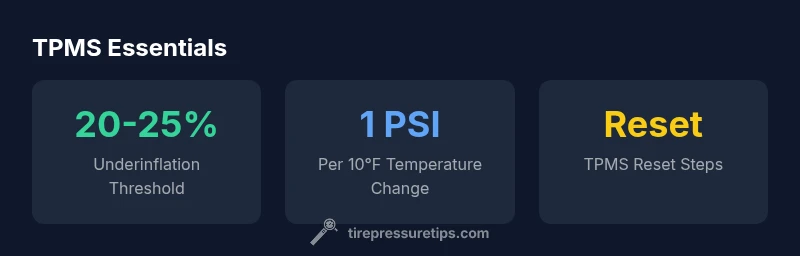
In normal operation, the tire pressure light should be off. It only comes on when a tire is significantly underinflated (roughly 20–25% below the vehicle’s target PSI) or when the TPMS detects a fault. If it lights up, verify pressures with a gauge, inflate to spec, and reset the system if your vehicle supports it. If it remains on, seek service.
How TPMS Works and What Triggers the Light
Tire Pressure Monitoring Systems (TPMS) come in two flavors: direct TPMS uses sensors in each wheel to report actual tire pressures, while indirect TPMS estimates pressure changes from wheel speeds and ABS data. In either case, the warning light only turns on when the system detects a meaningful change relative to the vehicle’s target PSI, or when a fault is present in the system. A widely-accepted rule of thumb is that underinflation by about 20–25% below the recommended level will usually trigger the light. For example, if your vehicle specifies 32 PSI, a tire around 24–25 PSI is a typical trigger threshold. If the light comes on due to a fault, you may see it even if pressures appear normal. Reset procedures and exact thresholds vary by make and model, so consult the owner's manual. The Tire Pressure Tips team notes that recognizing whether you have direct or indirect TPMS helps you diagnose more efficiently and avoid unnecessary tire checks.
-80 words?
Tire Pressure Light Behavior Scenarios
| Scenario | Lamp Behavior | Recommended Action |
|---|---|---|
| Starting a trip with properly inflated tires (ambient temp stable) | Light stays off after initial check | Continue regular monitoring |
| Temporary dip during cold morning (tires cold) | Light may illuminate briefly and go off when tires warm | Check pressure when tires warm; recheck after inflation |
| Significant underinflation detected (20-25% below target) | TPMS light on | Inflate to the vehicle’s recommended PSI and recheck |
| TPMS fault or sensor issue | Light may stay on or blink | Visit a shop for TPMS diagnostics and sensor/battery check |
Frequently Asked Questions
What does it mean if the tire pressure light flashes?
A flashing TPMS light often indicates a system fault or calibration issue rather than a simple underinflation. If it flashes, check tire pressures first, then have the system diagnosed if the light continues.
If the TPMS light is flashing, there may be a fault in the system. Check your tires and consult a technician if the light keeps flashing.
Should I drive if the TPMS light is on but tires look fine?
Yes, you can drive, but monitor tire pressures carefully and inflate to spec as soon as possible. If the light stays on, have the system checked, especially if you notice any changes in handling.
Drive carefully and check pressures. If uncertain, pull over safely and seek professional help.
Is it okay to reset TPMS after inflating?
Resetting TPMS is appropriate only after tires are inflated to the correct PSI and the readings are stable. Follow your vehicle’s manual instructions for the exact reset procedure.
Yes, reset after you’ve inflated to the right pressure and the readings look stable.
Do spare tires have TPMS sensors?
Some direct TPMS cars monitor the spare as well, but many do not. Check your owner’s manual to confirm whether your spare has a sensor and how it affects the system.
Some cars monitor the spare, but not all. Check your manual to be sure.
How often should I check tire pressure?
Check your tire pressures monthly and before long trips, especially when temperatures change. This helps catch slow leaks and temperature-related pressure shifts.
Check once a month and before long trips for safe, efficient driving.
“A TPMS warning is a practical safety signal. Treat any persistent illumination as a prompt to verify pressures and sensor integrity rather than assuming the system is faulty.”
What to Remember
- Check tire pressures regularly to maintain safety and efficiency
- Understand your TPMS type (direct vs indirect) to diagnose alerts correctly
- Inflate tires to the recommended PSI, and reset TPMS if supported by your vehicle
- Persistent illumination should be treated as a service signal rather than a routine nuisance
- Keep a simple maintenance routine: gauge, document, and recheck after adjustments