Why the Tire Pressure Light Stays On: A Practical Troubleshooting Guide
Urgent, practical guidance to diagnose why the tire pressure light stays on, including common causes, TPMS tips, and safe, step-by-step fixes from Tire Pressure Tips.


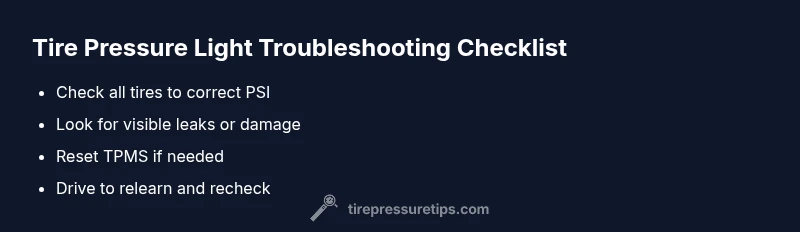
If the tire pressure light stays on, the likely causes are low tire pressure, a slow leak, or TPMS sensor issues. Start by checking every tire with a reliable gauge, inflate to the vehicle’s recommended PSI, and inspect for leaks or damage. If possible, reset the TPMS and drive a few miles to relearn. If the light remains on, seek professional help. why tire pressure light stays on
What the Tire Pressure Light Really Means
The tire pressure light is part of your vehicle’s TPMS, designed to alert you when a tire’s air pressure falls outside the manufacturer’s recommended range. When it comes to the question why tire pressure light stays on, the most common culprits are underinflated tires, a slow leak, or a faulty TPMS sensor. In some cars the light can also illuminate after a tire rotation or replacement if the system hasn’t relearned the new configuration. According to Tire Pressure Tips, understanding the distinction between a temporary fluctuation and a true issue helps you respond quickly and safely. The first step is to verify whether the pressure readings are actually low or if the light is signaling a sensor problem. Always compare readings to the door jamb placard or owner manual, not the tire sidewall or a visual guess. Remember that even a small decrease can trigger the alert depending on the system’s thresholds.
Common Causes That Keep the Light On
- Low tire pressure in one or more tires (often the primary cause). Even a small drop can trigger the TPMS, especially in newer vehicles with tighter thresholds.
- Slow leaks from nails, screws, or tire damage that might not be visible at a glance.
- Short-term changes due to temperature or altitude that reduce air pressure.
- A TPMS sensor fault or dead sensor battery, especially in older vehicles.
- A recent tire service where the sensor wasn’t relearned after mounting or balancing.
Tire Pressure Tips notes that while the light can signal several issues, starting with a precise pressure check is the fastest route to a fix. Verify each tire when cold and fill to the manufacturer’s recommended PSI.
How to Check Tire Pressure Correctly
Start with the basics: a reliable gauge, cold tires, and the vehicle’s own PSI specification. Step-by-step:
- Find the recommended pressure on the door placard or in the owner manual.
- Use a gauge to measure each tire’s pressure, including the spare if your car has a full-size spare.
- Inflate tires to the recommended level, checking both front and rear axles as appropriate.
- Inspect tires for damage, nails, bubbles, or sidewall cracks that could cause slow leaks.
- Replace a damaged valve stem if you feel air escaping when you press on it.
- After inflating, drive for 5–10 miles to allow the TPMS relearn, then recheck pressure.
Drive with caution if a tire remains soft; lack of air can cause handling issues and increased wear. If you cannot reach the target PSI, seek professional help.
TPMS vs Tire Pressure Sensor Issues
TPMS uses sensors in each wheel to monitor pressure and sometimes temperature. A light staying on can point to a sensor that is physically damaged, has a dead battery, or is not communicating properly with the car’s computer. In some cases, the system needs a relearn procedure after tire service or battery replacement. Even if pressures are correct, a faulty sensor can keep the light lit. In that case, you’ll need to inspect individual sensors or have the system tested with a scan tool at a shop.
Temperature, Weather, and Driving: Reading Variations
Air expands with heat and contracts with cold, so PSI readings naturally drift with weather. A drop in temperature overnight can reduce tire pressure by 1–2 PSI in many tires, enough to trigger the TPMS. High temperatures can do the opposite. To minimize surprises, check pressures when tires are cold, and recheck after a long drive or a weather shift. Remember that driving conditions, such as loaded cargo or high-speed driving, can temporarily change pressures as well.
When to Call a Pro and Prevent Recurrence
Whenever you suspect a leak, damaged sensor, or failed TPMS relearn, seek professional help. A tire shop can perform a leak test, sensor diagnostics, and a TPMS reset. Regular preventive steps include monthly pressure checks, using the correct gauge, and ensuring that TPMS sensors are exercised during tire service. Keeping a log of PSI readings and noting temperature changes helps you recognize trends before the light turns on unexpectedly. By adopting a routine, you reduce the odds of surprises and improve overall tire safety.
Real-World Scenarios: When the Light Comes On Unexpectedly
In practice, many drivers encounter the tire pressure light during seasonal transitions or after mounting new tires. For example, a car owner inflates all tires to spec, yet the light remains on due to a sensor relearn issue. Another common scenario is a slow puncture that isn’t immediately visible; the light warns you before a sudden deflation. These real-world cases underscore the importance of a systematic approach: verify pressure, inspect for damage, and confirm the TPMS status with proper tools or professional help.
Quick Fixes to Try Before a Visit
If you’re in a pinch, you can recheck pressures, top them off to spec, and perform a TPMS relearn if your vehicle supports it. However, if you notice a visible puncture, vibration, or rapid deflation, pull over safely and call for assistance. These checks are designed to be performed quickly and safely, with an emphasis on not ignoring the warning.
Steps
Estimated time: 30-60 minutes
- 1
Find the correct tire pressures
Locate the recommended PSI on the door placard or owner’s manual. Note the values for both front and rear tires as specified by your vehicle. If your tires show a different spec, prioritize the manufacturer’s numbers for optimal handling and safety.
Tip: Use cold tires for the most accurate measurement. - 2
Check all tires with a reliable gauge
Measure each tire’s pressure one by one. Compare the readings to the recommended values and identify any tire that’s low by 1–2 PSI or more. Don’t forget the spare if your car requires a full-size spare check.
Tip: Keep a small gauge in the glove box for convenience. - 3
Inflate to the specified PSI
Fill each tire to the recommended PSI, ensuring equalization across front and rear as required by your vehicle. Avoid overinflation; overinflated tires can cause uneven wear and poor traction.
Tip: Inflate gradually and recheck with the gauge after each adjustment. - 4
Inspect for damage and leaks
Look for nails, screws, GPS or wheels, or any sidewall damage. A slow leak may not be obvious, but a quick press on the tread area can reveal air escaping from the valve stem or bead.
Tip: If you hear air escaping from the valve stem, replace the valve core or stem. - 5
Attempt TPMS relearn if supported
Some vehicles require a relearn procedure after inflation or tire service. Check your manual for the exact steps or use the car’s menu to initiate the TPMS relearn.
Tip: A short drive after relearn helps the system recognize the new pressures. - 6
Assess safety and decide on next steps
If all tires show the correct pressure but the light remains, consider sensor issues. If you observe rapid deflation, pull over safely and consult a pro.
Tip: Don’t ignore warning lights; prioritize safety over convenience.
Diagnosis: Tire pressure light stays on after inflating tires to the recommended PSI
Possible Causes
- highAt least one tire is underinflated or has a slow leak
- mediumFaulty TPMS sensor or dead battery
- lowSensor relearn required after tire service or wheel swap
- lowTemperature-related pressure changes triggering the alert
Fixes
- easyRecheck all tires with a precise gauge and inflate to the recommended PSI on the placard/manual
- easyInspect tires for slow leaks, punctures, or damaged valves and address as needed
- mediumReset or relearn the TPMS according to the owner's manual or a service tool
- mediumIf the light persists, have the TPMS sensors and batteries tested by a professional
Frequently Asked Questions
What should I do first if the tire pressure light stays on after inflating all tires?
Recheck every tire with a precise gauge, inflate to the recommended PSI, and inspect for any visible leaks or damage. If the light remains, perform a TPMS relearn if available or seek professional help.
First, recheck all tires with a precise gauge, inflate to spec, and inspect for leaks. If it stays on, try a TPMS relearn or visit a shop.
Can I reset the TPMS myself?
Many vehicles offer a TPMS reset or relearn option in the settings. If yours doesn’t, use the recommended procedure in the owner’s manual or ask a professional for assistance.
Yes, many cars have a TPMS relearn option in the settings; check your manual or ask a technician if unsure.
Why does temperature affect tire pressure readings?
Air expands with heat and contracts with cold, so PSI fluctuates with weather. A cold morning can drop PSI enough to trigger the TPMS even if the tires are fine during the day.
Temperature changes can alter PSI; cold mornings can lower readings enough to trigger the TPMS.
What could cause a TPMS light to come on without a puncture?
Sensor battery death, wheel sensor damage, or communication issues with the car’s computer can trigger the light independent of tire condition.
A faulty sensor or communication issue can trigger the light even without a puncture.
Is it safe to drive with the TPMS light on?
If all tires are at or near the recommended PSI and you don’t notice handling issues, driving to a safe location is usually fine. Avoid aggressive driving and monitor the tires closely.
Drive cautiously to a safe spot and monitor tires; if in doubt, stop and seek help.
When should I replace TPMS sensors or tires?
If sensors are damaged or batteries are dead, or there is persistent leakage from a tire, replacement or professional service is recommended.
If sensors fail or leaks persist, a professional replacement is advised.
Watch Video
What to Remember
- Check all tires to confirm actual PSI vs. recommended PSI.
- Know the difference between a low-pressure event and a TPMS fault.
- Use TPMS relearn procedures after service for quick reset.
- Regularly monitor PSI and temperature effects to prevent future lights.