What to Do When the Tire Pressure Light Comes On: A Practical Guide
Learn step-by-step how to respond when your tire pressure light comes on, how to verify PSI, inflate correctly, and when to seek help. Practical guidance from Tire Pressure Tips.


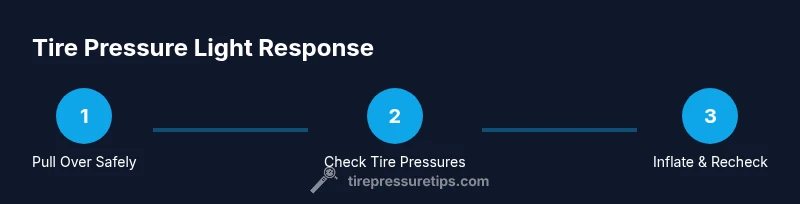
According to Tire Pressure Tips, the first step when the tire pressure light comes on is to pull over safely and inspect the tires. Check for obvious flats or punctures, then use a gauge to confirm the current PSI. Inflate to your vehicle’s recommended pressure, usually listed on the door jamb, and recheck. If the light remains, seek professional help.
Understanding the Tire Pressure Light
The tire pressure light is part of your vehicle’s TPMS. It can come on for a variety of reasons, not all urgent, but it always means you should check tire pressures. If you’re wondering what to do when the tire pressure light comes on, this guide covers practical steps. According to Tire Pressure Tips, TPMS compares sensor readings to a baseline and a manual pressure check is essential. The light can trigger after temperature changes, seasonal shifts, a slow leak, or sensor recalibration. The door jamb sticker or owner's manual lists the recommended PSI for your vehicle, and maintaining those values improves safety, fuel economy, and tire life.
Immediate Safety Steps When You See the Light
Safety should come first. If the light comes on while you're driving, find a safe place to stop as soon as feasible—ideally a flat area away from traffic. Turn on hazard lights and apply the parking brake. Avoid abrupt maneuvers or continuing to drive on underinflated tires, especially at highway speeds. After stopping, you can begin a careful check of tire pressures and look for obvious damage or objects that may have punctured a tire.
Differentiating TPMS Signals and Direct Tire Pressure
There are two main possibilities when the light comes on: a TPMS fault or actual low tire pressure. A TPMS fault occurs if the sensor isn’t reporting correctly, which may require a reset or sensor replacement. Actual low pressure means one or more tires are underinflated and potentially unsafe. The distinction matters because a faulty TPMS might require service even if the pressures are fine. A manual pressure check ensures you know the real condition.
Checking Tire Pressure: Tools and Techniques
To verify pressure, you need a reliable tire gauge and access to a pump. Digital gauges are easier to read, but any gauge can work if used correctly. Remove the valve cap, place the gauge on the valve stem, and read the PSI. Compare this number to the vehicle's recommended PSI. If a tire is much underinflated, you’ll feel handling changes and see a soft, bulging sidewall. Always check all four tires, including the spare if your vehicle's system uses it.
Knowing the Right PSI for Your Vehicle
The correct pressure is not a universal number; it varies by vehicle and tire. Check the sticker on the door jamb or the owner's manual for the recommended PSI for front and rear tires. Some tires require a higher pressure for load or performance, while winter tires may have slightly different targets. Do not inflate beyond the maximum printed on the tire sidewall, as that can cause failure. If in doubt, contact a qualified technician.
How to Inflate Tires Correctly and Safely
When inflating, aim for the recommended PSI rather than the number on the gauge’s display. If your tire is substantially low, fill gradually and recheck as you go. After inflating to the target PSI, recheck the pressure on all tires. If a compressor seems to struggle, take breaks and avoid overheating the tire bead. Some stations have built-in gauges that may be less accurate; prefer a personal gauge for final confirmation.
Rechecking and Recalibrating: The Waiting Game
After inflating, drive a short distance (about 3–5 miles) to let the tires seat and the TPMS sensor recalibrate. Do not rely on a single reading; recheck pressures again when you stop. In cold weather, pressures can drop when you park overnight, so be mindful of temperature effects. If the light returns, there may be a slow leak or sensor issue.
When the Light Won't Reset: Common TPMS Faults
If the light stays after you’ve inflated, you may have a TPMS fault or a puncture that’s slowly losing air. Some vehicles require a manual TPMS reset after inflating or after changing a tire. Others recalibrate automatically once all tires are within spec and you drive. If the light refuses to reset, schedule a diagnostic at a tire shop.
Spare Tires and Other Considerations
Some vehicles unlock or designate a spare that does not include TPMS, so it may not trigger the light. If you used a temporary spare, remember it has a lower speed and distance limit. Always address the spare situation quickly and return to normal tires as soon as possible.
Driving with Low Tire Pressure: What to Watch For
Low tire pressure can increase rolling resistance, reduce handling, and increase tire wear. On road surfaces, maintain a safe speed and avoid aggressive braking or steering. If you notice harsh ride or vibration after inflating, recheck the tire and consider a professional check. Regular monthly checks reduce the chances of the light coming on unexpectedly.
Prevention and Maintenance Routine
Create a simple routine to check tire pressure monthly and before long trips. Use the same gauge each time for consistency, and keep a mini-gauge in your glovebox for quick checks. Temperature changes can affect pressure, so check in both hot and cold weather. Scheduling routine inspections with a tire shop helps catch slow leaks, faulty sensors, and mounting issues before they become emergencies.
Tools & Materials
- Tire pressure gauge (digital or analog)(Calibrated and easy to read)
- Air pump or access to a gas station compressor(Prefer one with a built-in gauge for confirmation)
- Vehicle owner's manual or door jamb PSI sticker(Contains the recommended PSI values for your car)
- Valve caps(Keep caps to prevent dust and moisture)
- Notebook or app to track pressures(Optional but helpful)
Steps
Estimated time: 25-40 minutes
- 1
Pull over safely
Find a safe, flat area to stop, turn on hazards, and set the parking brake. This reduces the risk of a tire-related emergency and keeps you out of traffic while you check pressures.
Tip: Don’t rush; a calm stop helps you accurately read gauges. - 2
Inspect tires for obvious damage
visually look for punctures, nails, bulges, or cuts on each tire’s sidewall and tread. Any obvious damage warrants cautious handling and professional evaluation.
Tip: Avoid touching sharp objects or hot tires; use gloves if available. - 3
Find the recommended PSI
Refer to the door jamb sticker or owner’s manual for the target pressure. Note that front and rear tires can have different values.
Tip: If you drive a load-heavy vehicle, the target may differ from standard passenger cars. - 4
Read current PSI with a gauge
Remove the valve cap, place the gauge on the valve stem, and read the PSI. Record this for all four tires.
Tip: Make sure the gauge is seated squarely on the valve stem to avoid false readings. - 5
Inflate to target PSI
Add air gradually, stopping to recheck after small increments. Do not overshoot the target by large amounts.
Tip: Small adjustments prevent overinflation and tire bead damage. - 6
Recheck after inflation
Recheck all four tires once again to confirm uniform pressure and ensure no single tire is over- or under-inflated.
Tip: Pressure can change as you drive, so multiple checks help. - 7
Drive a short distance to recalibrate
Drive about 3–5 miles at moderate speeds to seat tires and allow the TPMS to recalibrate.
Tip: Avoid high speeds or aggressive driving during calibration. - 8
Reset TPMS if required
Some vehicles need a manual TPMS reset after inflating; others recalibrate automatically after a drive.
Tip: Consult the owner's manual for the exact reset procedure. - 9
Assess if professional help is needed
If the light remains on after inflation or you suspect a slow leak or damaged sensor, schedule service.
Tip: Document any readings and changes to share with a technician.
Frequently Asked Questions
Is it safe to drive with the tire pressure light on?
Driving on underinflated tires can affect handling and tire wear. If possible, pull over safely and address the issue promptly.
Low tire pressure can affect handling, so pull over and fix it as soon as you can.
What is the recommended tire pressure for most cars?
Most vehicles have different front and rear PSI values; check the door jamb sticker or owner's manual for exact targets.
Check the door sticker for the right PSI.
What could cause TPMS to trigger without a leak?
TPMS faults can happen due to sensor issues, battery life, or temperature changes, not just leaks.
Sensor issues or temperature changes can trigger it.
Should I replace tires after low-pressure alerts?
If the tire shows a slow leak or damage, repair or replacement may be needed after inspection.
Slow leaks may require repair or replacement.
Do spare tires have TPMS?
Some temporary spares lack TPMS; follow the vehicle and tire manufacturer guidelines for safe use.
Spare tires may not have sensors.
Watch Video
What to Remember
- Pull over safely when the light comes on
- Check actual PSI with a gauge before driving further
- Inflate to the vehicle’s recommended PSI and recheck
- Drive 3-5 miles to allow TPMS to recalibrate
- If the light returns, seek professional inspection
- Regular checks reduce surprises