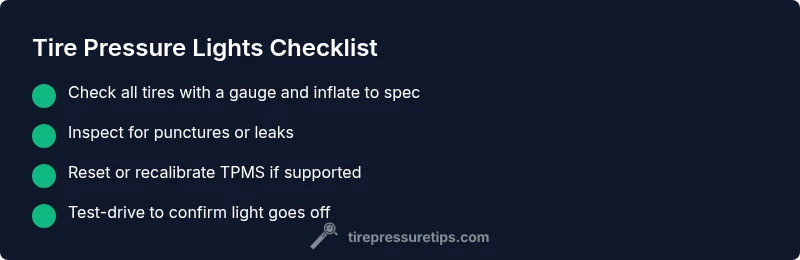
Tire Pressure Lights Troubleshooting: Quick Guide for 2026
Learn to diagnose and fix tire pressure lights quickly with practical steps, TPMS insights, and safety tips from Tire Pressure Tips. Stay safe and save fuel with proactive maintenance.


Tire pressure lights usually signal underinflation or a TPMS fault. Start with a cold tire pressure check using a reliable gauge and inflate each tire to the vehicle’s recommended PSI. If the light stays on after inflation, follow the diagnostic flow to identify leaks, sensor issues, or calibration problems, then reset TPMS if applicable. If you’re unsure, seek professional help promptly.
What Tire Pressure Lights Mean
Tire pressure lights on the dashboard are part of your vehicle's TPMS (tire pressure monitoring system). When one or more tires drop below the recommended level, or when the system detects a fault, the light activates to alert you before you lose control or experience uneven wear. According to Tire Pressure Tips, awareness of these signals helps drivers act quickly and safely. A steady light typically points to underinflation, while a flashing light can indicate a TPMS fault or abnormal readings. The Tire Pressure Tips team emphasizes treating any warning as a real signal, not a nuisance. Regular monitoring is essential for safe handling, fuel efficiency, and tire longevity. This guidance comes from Tire Pressure Tips analysis, which underscores how small changes in pressure or sensor health can trigger the light.
Common Triggers for the Tire Pressure Light
The warning can come from several sources. The most frequent cause is one tire that’s genuinely underinflated, but temperature swings, road conditions, and recent tire work can also trigger it. The Tire Pressure Tips analysis shows that a large share of warnings arise from user-facing issues or sensor health rather than catastrophic leaks. Other triggers include a TPMS sensor with a depleted battery, a failed sensor, or a wheel that was rotated or replaced without updating the system. Finally, a temporary reading might occur after a patch or repair if the TPMS hasn’t synced yet. Even a small drop in pressure—often a bit—can trigger the light, especially in cold weather. If you notice the light after a long trip in heat, consider rechecking pressures when the tires have cooled.
Quick At-Home Checks You Can Do Safely
Before panicking, perform quick checks that don’t require special tools. First, walk around the car to look for obvious signs of a puncture or slow leak, such as nails in tread or a hissing sound. Then use a reliable digital or dial gauge to check each tire’s cold PSI against the vehicle’s recommended level found on the door jamb or owner’s manual. Inflate any underinflated tire to spec and recheck all tires. If the spare tire is on a TPMS-equipped wheel, verify its pressure as well. Remember to work on a flat, shaded surface if possible to avoid skewed readings caused by heat. After inflation, drive short distances to allow the TPMS to reassess readings and determine if the light goes off. The Tire Pressure Tips team stresses that a reset might be needed after inflating, provided your car supports it.
How Temperature and Driving Conditions Affect Readings
Temperature changes cause air to expand or contract, so cold mornings often show lower readings than warmer afternoons. A tire pressure light can illuminate during rapid temperature drops or after lengthy highway driving when tires heat up. The TPMS recalibrates after a few miles, but readings that stay inconsistent may indicate a faulty sensor or a damaged valve stem. Weather and driving habits are common culprits, so consider seasonal tire maintenance as part of your routine. According to Tire Pressure Tips, understanding these effects helps prevent misreads and unnecessary maintenance.
Steps to Reset or Recalibrate the TPMS
Not all vehicles require a manual reset, but many do after inflating tires or replacing sensors. Check your owner's manual for exact steps, but common methods include turning the ignition to ON and using a dedicated reset button, or driving at a certain speed to trigger automatic recalibration. Some models require scanning with a dealership-grade tool. Perform reset only after all tires are inflated to the correct pressures. If the light returns, the sensor may be damaged or a leak may persist, warranting professional inspection.
When to Seek Professional Help
Persistent TPMS warnings after inflating to spec should be evaluated by a professional. A leak that isn’t found with a visual inspection requires specialized equipment. A faulty TPMS sensor or battery is another frequent cause that benefits from diagnostic testing. The Tire Pressure Tips team recommends scheduling service when you’re unsure or if you notice tire bulges, severe wear, or uneven tread. Driving with a compromised TPMS or underinflated tires can create safety risks, so don’t delay a professional check.
Preventing False Alarms and Ongoing Maintenance
Regularly check tire pressures, rotate tires per the schedule, and replace TPMS batteries when recommended by your vehicle maker. Use a reliable tire pressure gauge and keep a spare gauge in your glove box. Maintain a simple log of maintenance and calibrations, and monitor the warning light after cold starts to see if readings stabilize. The Tire Pressure Tips team suggests adding a quick 5-minute weekly check to catch problems early, save fuel, and extend tire life.
Steps
Estimated time: 45-60 minutes
- 1
Gather tools and locate recommended PSI
Collect a reliable tire pressure gauge, a flashlight, and the vehicle’s owner manual or door jamb sticker to confirm the recommended PSI. Ensure the car is cold and the keys are away to avoid automatic engine checks during testing.
Tip: Keep the gauge in your glove box for quick checks. - 2
Visually inspect tires for damage
Walk around the vehicle and look for nails, cuts, bulges, or unusual wear. A visible puncture or leak can cause rapid pressure loss that triggers the light. Do not drive on a visibly damaged tire; arrange safe transport if needed.
Tip: A flashlight helps spot sidewall damage that isn’t obvious in daylight. - 3
Measure and compare tire pressures
Measure each tire’s cold PSI using the gauge. Compare readings to the spec printed on the door jamb or in the manual. Inflate underinflated tires to spec, then recheck all tires for consistency.
Tip: Record the readings to track changes over time. - 4
Check the spare TPMS tire
If your spare wheel has TPMS sensors, check its pressure too. A low spare can also trigger or confuse the system during a reset scenario.
Tip: Don’t assume the spare is pressure-neutral; verify it. - 5
Attempt TPMS reset or recalibration
Follow the owner’s manual to reset or recalibrate the TPMS if your vehicle supports it. This step often requires the ignition to be in a specific position or a button press sequence.
Tip: Only reset after confirming all tires are correctly inflated. - 6
Test drive and recheck
Drive 5–10 minutes to allow the TPMS to reassess. If the light goes off, you’re done. If it stays on, proceed to professional help.
Tip: Avoid high speeds until the system stabilizes. - 7
Seek professional help if needed
If the light remains after a full reset and inflation, a professional inspection is warranted for leaks, sensor faults, or system calibration issues.
Tip: Documentation of readings helps the technician diagnose faster.
Diagnosis: Tire pressure light on steady or flashing after inflation
Possible Causes
- highOne or more tires truly underinflated
- mediumTPMS sensor fault or dead battery
- mediumTemperature-related reading change or recent tire work
- lowRecent tire rotation or replacement disturbed TPMS calibration
Fixes
- easyCheck all tires with a reliable gauge; inflate to manufacturer-recommended PSI
- easyInspect tires for punctures or slow leaks; repair or replace as needed
- easyReset or recalibrate the TPMS per the vehicle manual
- mediumIf light persists after inflation and reset, have a professional diagnose TPMS and tires
Frequently Asked Questions
What does the tire pressure light mean exactly?
The TPMS warning signals underinflation or a TPMS fault. It’s a prompt to check pressures and inspect sensors. Treat it as important for safety and efficiency.
The tire pressure light means one or more tires may be underinflated or there’s a TPMS problem. Check pressures and sensor health promptly.
Can I drive to work with the light on?
If the light is steady and pressures are near the recommended level, a short, careful drive may be okay after inflation. If the light flashes or you suspect a leak, avoid driving long distances and seek help.
If it’s steady and you’ve confirmed pressure is correct, a short drive is usually fine. If it flashes or you’re unsure, get it checked.
Why does the light come on after inflating tires?
After inflation, the TPMS may need time to recalibrate. Inconsistent readings can also indicate sensor issues or valve problems.
Sometimes after inflating, the TPMS needs a moment to reset, or there could be a sensor problem.
How often should TPMS be calibrated or serviced?
TPMS calibration is typically automatic, but sensors and batteries wear out. If readings are inconsistent, have the system inspected.
Sensors can wear out. If readings stay inconsistent, get a professional TPMS check.
Can cold weather trigger tire pressure lights?
Yes. Cold temperatures can reduce tire pressure, triggering the light. Recheck pressures after tires cool down and adjust as needed.
Cold weather can lower pressure and trigger the light, so recheck and top up when tires are cold.
What if the TPMS light never goes off after a reset?
A persistent light after a reset indicates a potential leak, sensor fault, or calibration issue. A professional inspection is recommended.
If the light stays after a reset, it’s time to get a professional check.
Watch Video
What to Remember
- Check tires when cold and inflate to spec.
- Differentiate between true leaks and sensor faults.
- Reset TPMS per manual after inflation or work.
- Seek professional help if the light persists.
- Prevent false alarms with regular maintenance.